The Sunday Morning Standoff
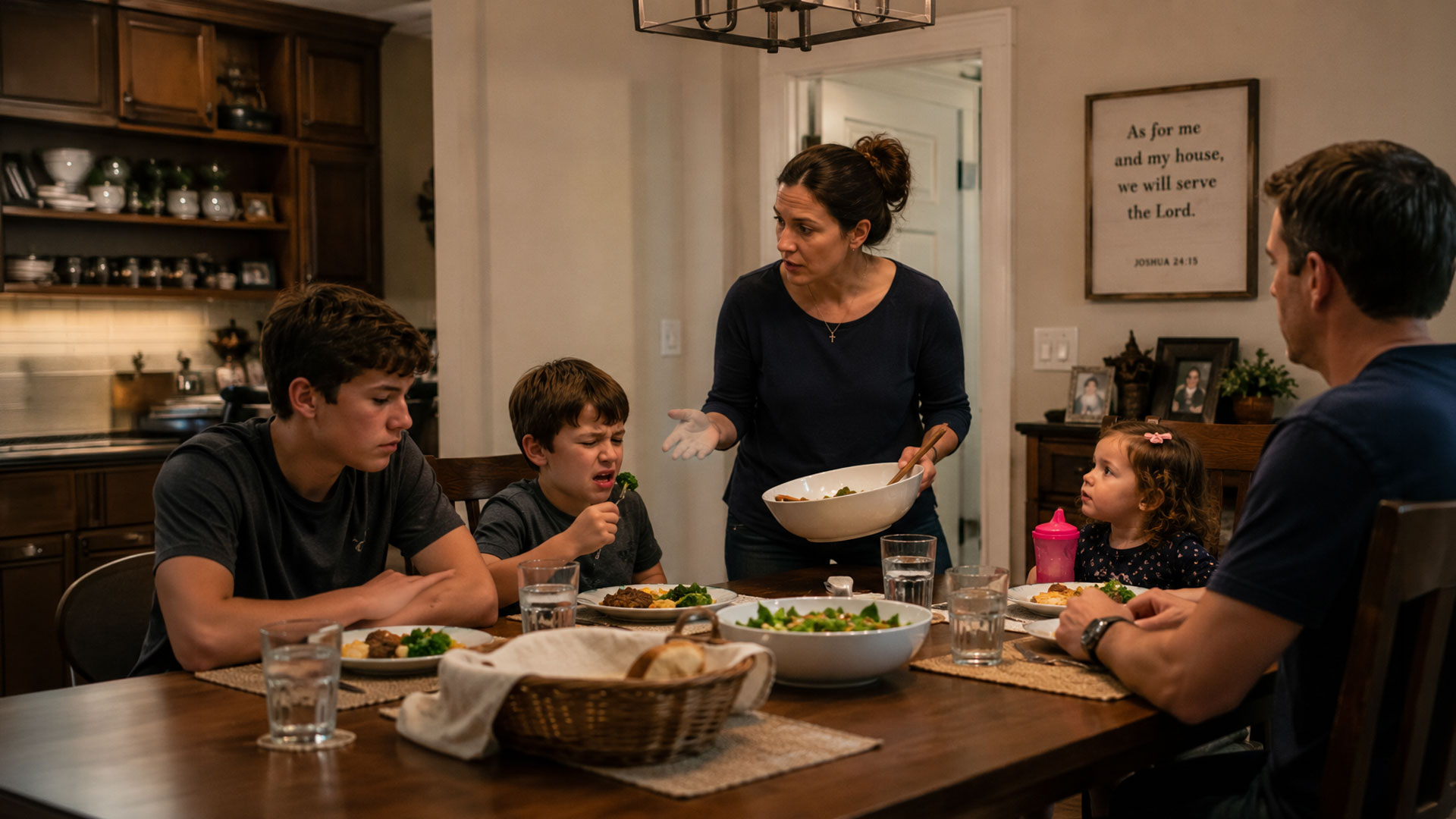
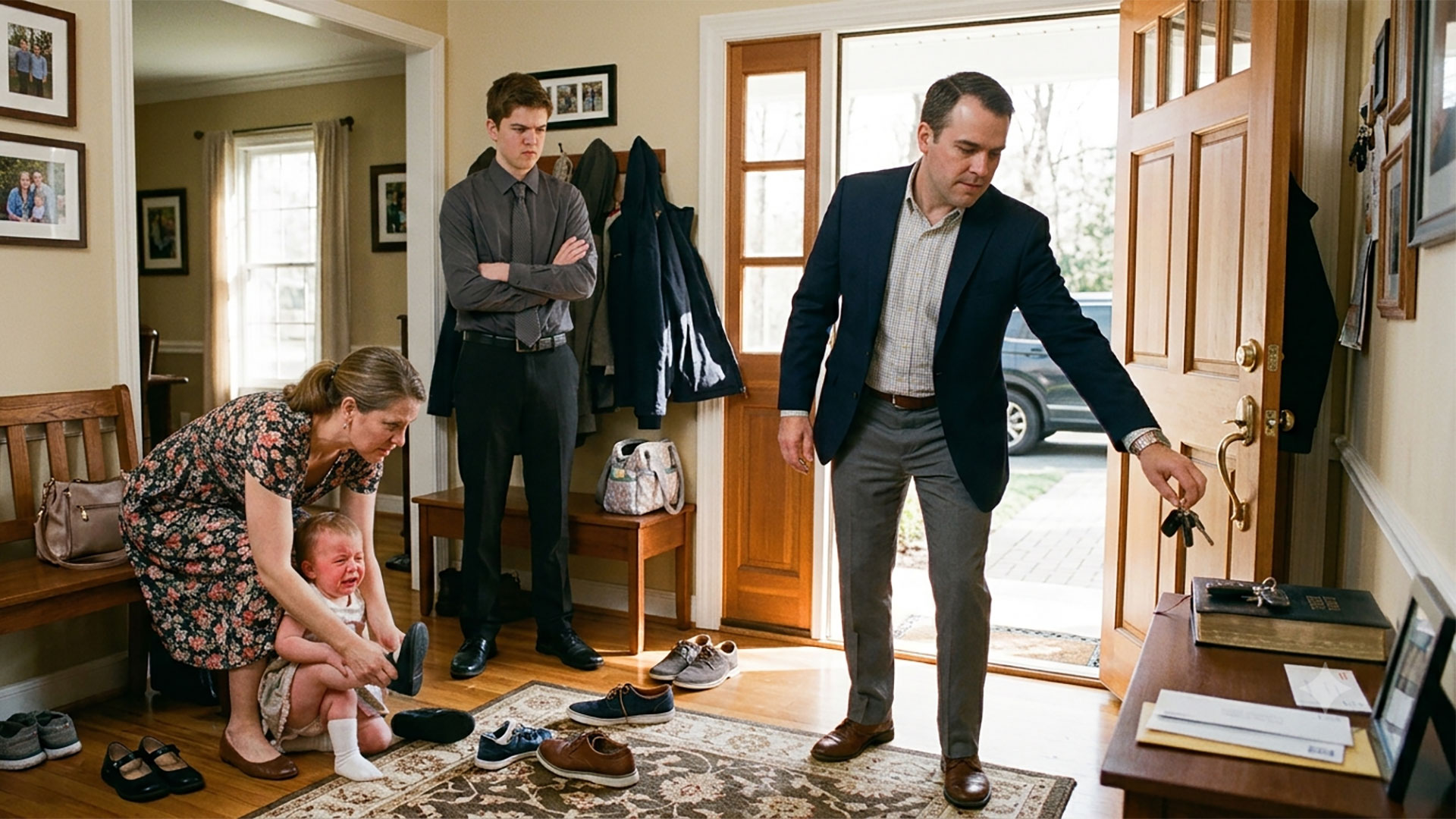
It’s 9:12 a.m. and the church shoes are mysteriously missing. The toddler’s crying. Your teenager just muttered, “Why do we even have to go?” again. You’re already five minutes late, and no one looks holy. You scan the room, wonder if you’re the only one dragging unwilling people to worship, and ask the question no one wants to say out loud: Is this even doing anything?
The eye rolls. The slouching in the pew. The whispered “This is so boring.” The way they sprint out the door before the final hymn starts. You wonder if any of this matters, if they’re absorbing anything beyond frustration.
But here’s the truth: It matters more than you can see.
This article isn’t about quick fixes for church resistance. It’s not a three-step plan to make your kids love the liturgy. It’s a reminder that showing up, again and again, with love and conviction, is one of the most important ways you form their soul.
Because faith isn’t just taught in moments of enthusiasm. It’s formed in rhythm. In repetition. In witnessing someone you love choose the sacred even when it’s hard.
And one day, those eye rolls will soften into something deeper, if you don’t give up.
Why the Resistance Isn’t Always Rebellion
When kids resist church, it feels personal. But it often isn’t.
Sometimes they’re tired. Sometimes they’re overwhelmed by the silence. Sometimes they don’t understand what’s happening. Sometimes they’re just bored.
And sometimes, they’re resisting something else entirely, a pressure to be perfect, a sense of shame, a spiritual dryness they can’t name yet.
The key is to not treat every complaint like a crisis. It’s formation. Formation includes pushback.
Your job isn’t to force reverence. It’s to keep them within reach of grace.
That means staying calm. Staying steady. And staying faithful.
Even when they look like they’d rather be anywhere else.
Don’t Confuse Performance With Formation
It’s tempting to equate outward behavior with inward belief. If they’re kneeling straight, singing loudly, following the prayers, you feel like it’s “working.”
But true formation takes time. And it often doesn’t look tidy.
A fidgety six-year-old isn’t irreverent. A distracted teen isn’t apostate. A bored middle schooler isn’t beyond hope.
They’re learning. Watching. Absorbing. Testing limits. Wondering what this all means.
And you’re teaching them something powerful, not by demanding perfection, but by modeling persistence.
When they see that you keep showing up, week after week, not out of guilt but out of love, it sinks in.
You’re telling them: “God is worth showing up for, even when you don’t feel like it.”
That’s a lesson that will last far longer than a perfect Sunday morning.
Your Consistency Is the Catechism
You may not feel like a teacher. But every week, your presence at Mass is saying something.
It’s saying: “This matters more than sports, sleep, or screen time.”
It’s saying: “We don’t worship only when it’s convenient.”
It’s saying: “This is where we meet God, and this is where we grow.”
Your kids might not grasp the Eucharist yet. They might not listen to the readings. But they’ll remember what you valued. What you prioritized. What you were willing to fight for, gently, quietly, faithfully.
That’s the real catechesis: habit rooted in love.
Don’t Lecture, Live It
One of the biggest temptations when kids push back on church is to preach at them.
“You should be grateful.”
“You don’t even know what the Mass means.”
“Other kids have it way worse.”
But lectures rarely change hearts. What changes hearts is witness.
Let them see you pray. Let them see you wrestle with faith. Let them catch you lighting a candle at home or reading Scripture on your lunch break.
Let your tone at Mass be joyful, not mechanical. Let your conversations after church be curious, not critical.
Ask them what they noticed. Ask what confused them. Ask what they thought about the homily, not to quiz them, but to include them.
Faith grows best in a climate of belonging, not performance.
When It Feels Like a Fight Every Week
There are seasons when getting to church feels like dragging a rock uphill. The arguments. The eye rolls. The Sunday dread.
You start to ask: Is it worth the battle?
Yes. But only if you change how you see the battle.
This isn’t you versus them. It’s you for them. You standing between your child and the lie that faith is optional. That worship is a lifestyle choice. That God is something we fit into the margins.
So hold the line. Kindly. Calmly. Firmly.
You don’t need to argue. Just repeat: “This is what our family does. We give God our Sunday.”
Eventually, that rhythm, especially when delivered with love, becomes security. Even if it starts in protest.
Give Them a Job, Not Just a Seat
One way to ease the resistance is to give your child a role. Not just a place to sit, but a purpose.
Have them:
Choose a prayer intention before Mass.
Hold the hymn book.
Help you follow along in the missal.
Light a candle for someone they care about afterward.
Greet a lonely parishioner with you before or after.
When children are engaged, they’re more likely to participate. And when they feel useful, they’re less likely to feel trapped.
Let them serve in small ways. Let them feel needed.
Mass isn’t a performance they watch, it’s a gift they help offer.
Celebrate the Wins, Don’t Just Survive the Trip
If you finish a Mass without a meltdown, without yelling in the car, or with one thoughtful comment from your teen, celebrate it.
Say, “I’m proud of how you sat through that.”
Or, “Thank you for being respectful today.”
Or, “What did you think of that reading?”
Don’t let every Sunday be something you just “get through.” Make it a win.
Build a culture around it, Sunday breakfast after Mass, a weekly walk to talk, lighting a candle at home afterward and offering a short prayer as a family.
The more joy you build around the habit, the more memory, and virtue, you create.
Even reluctant kids want to feel like they’re succeeding. Give them that space.
Let the Church Become Familiar
Part of why kids struggle with church is because they don’t understand it yet. And they don’t understand it because they haven’t lived in it long enough.
Familiarity doesn’t mean casualness. It means comfort.
Let your kids walk the church when no one’s there. Let them sit near the statues. Show them how to genuflect. Whisper to them what’s happening at each part of the Mass, not like a lecture, but like you’re sharing a secret.
Make the sacred feel approachable, not distant.
When the church becomes a space they know, where they’ve laughed, sat, prayed, cried, they begin to feel ownership. It becomes their home, not just your obligation.
And that changes everything.
When They Say They Don’t Believe Anymore
This might be the hardest season. When a teenager, or even a younger child, says they don’t believe in God. That they think it’s all nonsense. That they don’t want to go to church anymore.
Your job is not to panic. Your job is not to argue them back into faith. Your job is to love and lead.
Don’t treat doubt like disobedience. Treat it like searching.
Say: “I understand. But I’m still going. And I’d still like you to come with me.”
Say: “I’ve had doubts too. That’s part of faith. But I still show up. Because God still shows up.”
Let your home be a place where questions are welcome, but the habits don’t break.
The habit of Mass. The habit of prayer. The habit of hope.
That’s what will carry them through the season of eye rolls into the season of return.
Because most prodigals don’t come back because of lectures. They come back because they remember the love that waited.
You’re Not Alone in the Pew
When you feel like the only family in the parish fighting to keep your kids engaged, remember: you are not alone.
Every parent hiding a sigh during the Gloria. Every mom quietly bribing her toddler with Cheerios. Every dad whispering “Please be quiet” for the fifth time. Every grandparent bringing the same teenager week after week with quiet, stubborn love.
You’re part of something ancient. Something beautiful. Something worth defending.
You’re not just raising kids. You’re raising worshipers. And that is holy ground.
Keep going.
The Pew Is Worth It
They’ll roll their eyes. They’ll slouch. They’ll mumble. They’ll resist.
And still, bring them.
Bring them when they’re tired. Bring them when they’re angry. Bring them when they say it’s pointless. Bring them even when you’re not sure you’re doing it right.
Because the habit is forming them. The witness is teaching them. The presence is anchoring them.
You are giving them roots.
One day, maybe when they’re parenting their own child who rolls their eyes, they’ll remember.
They’ll remember that you never gave up. That you kept showing up. That you brought them to the altar again and again, not to punish them, but to give them access to a love deeper than they could yet understand.
And when grace finally breaks through, they’ll know where to go.
Back to the pew. Back to the table. Back to the God you introduced them to, not through perfect prayers, but through persistent presence.
So keep showing up.
It matters.