Is Your Child ‘Difficult’ or Just Different? Understanding Temperament to Parent Better
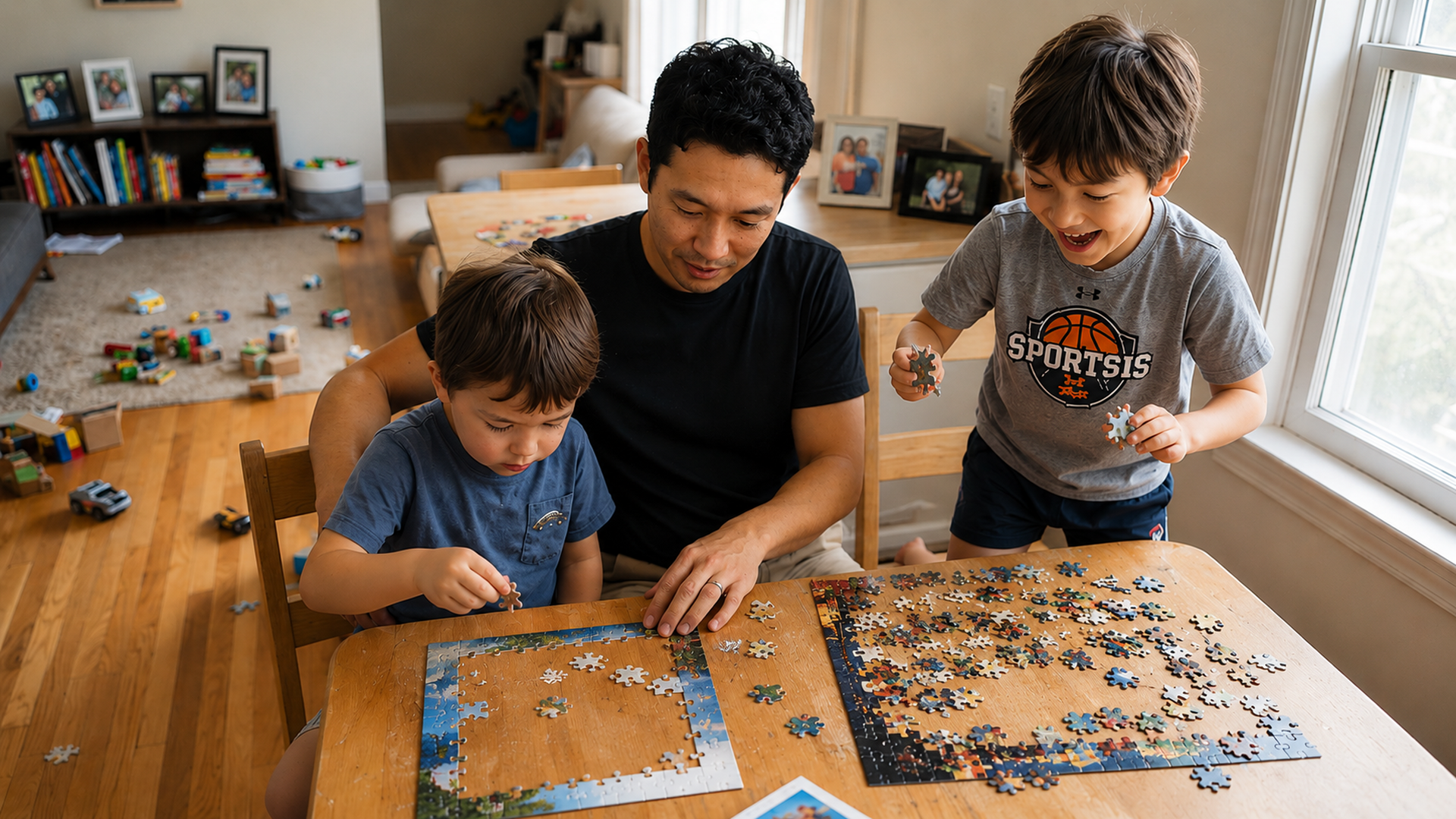
I remember a Saturday morning not too long ago. My wife and I were sitting at the kitchen table, nursing our coffees while our two boys were in the living room. The older one was meticulously building a complex Lego starship, following the instructions page by page. He was quiet, focused, a portrait of concentration.
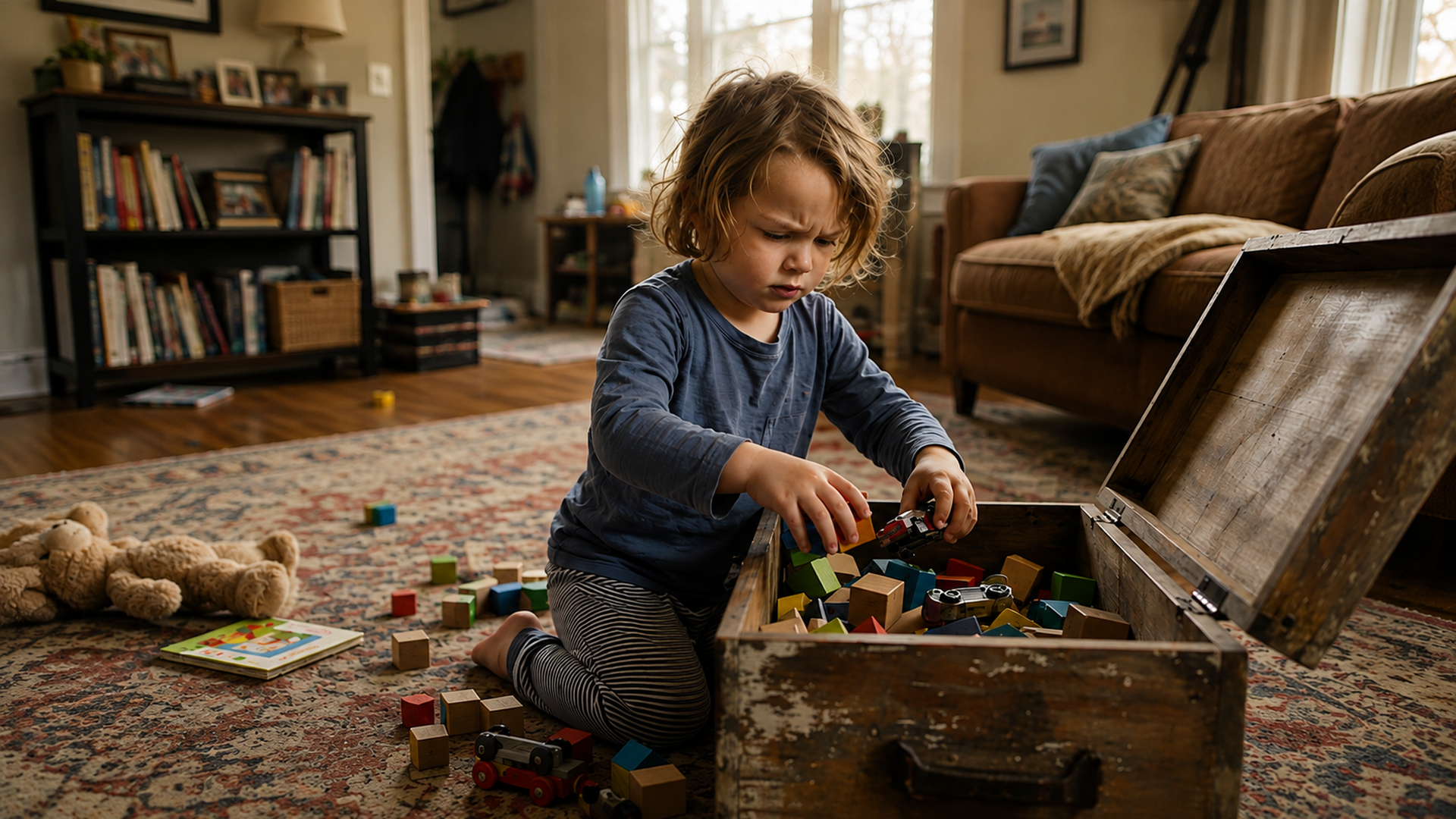
His younger brother, meanwhile, was creating a whirlwind of chaos. He had dumped out three different bins of toys, was wearing a cooking pot for a helmet, and was narrating a loud, epic battle between a stuffed dinosaur and a fire truck.
My wife looked at me over her mug and said, with a sigh that could power a small city, “Why can’t he just be more like his brother?”
It’s a thought most of us have had, even if we don’t say it out loud. We have one child who is orderly, obedient, and easy to manage, and another who seems to be a walking, talking agent of chaos. We love them both to pieces, but we find ourselves constantly comparing them, wondering why our parenting methods work so well for one and seem to bounce right off the other.
We start to worry. We label one the “easy” kid and the other the “difficult” one. But what if we’ve got it all wrong? What if the child we see as difficult isn’t difficult at all, but simply… different?
The Myth of the ‘Difficult’ Child
Let’s get one thing straight right from the start: there is no such thing as an intrinsically ‘difficult’ temperament. It’s true that every child is unique, a one-of-a-kind creation with their own personality. But in the absence of illness or disability, a child isn’t born ‘difficult.’
What we often perceive as difficulty is simply a mismatch. It’s a clash between our expectations and our child’s natural way of being. It’s the friction that occurs when our parenting style, which works wonders for one child, completely misses the mark with another.
Think of Jane and Mark. Their oldest son, David, was orderly, quiet, and obedient. Jane, who read all the parenting books, had a clear method, and it worked perfectly for him. But then came Peter. He was disorganized, messy, and didn’t respond to the same directions.
Jane was deeply worried, seeing him as a problem to be solved. What she struggled to see was that Peter was also cheerful, imaginative, and kind. The problem wasn’t Peter; it was the one-size-fits-all formula she was trying to apply to two very different boys.
This is where so many of us get stuck. We think our job is to sand down our children’s rough edges until they fit neatly into the box we’ve prepared for them. But our real job, the more challenging and far more rewarding one, is to understand the unique person we’ve been given and help them flourish.
It’s about formation, not just behavior management. It means shifting our perspective from “How do I fix this?” to “Who is this person, and how can I help them become the best version of themselves?”
Getting to Know Your Kids (For Real This Time)
Truly knowing our children is about more than memorizing their favorite foods or the names of their friends. It’s about discovering their inner world: their moods, their inclinations, the places their imagination goes. It begins with a radical act of acceptance.
The primary message we must send, in our words and our actions, is: “It is good that you exist.” This acceptance can’t be conditional. It can’t depend on them getting good grades, cleaning their room, or having a personality just like ours. We have to accept them totally, as they are, with all their unique gifts, limitations, and quirks.
This kind of deep knowledge requires time. And I don’t mean the frantic, scheduled, check-the-box variety our culture calls “quality time.” Children know when they’re just another item on our busy schedule.
The real magic happens in the unscheduled moments—the quiet car rides, the lazy afternoons, the five minutes before bed. It happens when we are simply present and available, doing our own thing but with an open door to their world. A child who knows their mom or dad is nearby and accessible feels a profound sense of security.
More than anything, getting to know our children requires us to listen. Really listen. Not while scrolling through our phone or half-watching the news, but with our whole being.
It means putting down what we’re doing, making eye contact, and suspending our criticism until they’ve finished what they’re trying to say. It means observing their posture, their expression, the look in their eyes.
When we interrupt, disregard their “prattle,” or rush to judgment, we send a clear message: your view of things isn’t important. But when we offer attentive silence, we create a safe space where they feel secure enough to find the right words and show us who they really are.
An Ancient Tool for Modern Parents: The Four Temperaments
Once we’ve committed to this deeper way of knowing our children, we can start looking for a map to help us navigate their unique personalities. One of the most helpful tools I’ve ever found is a framework that’s over two thousand years old, first identified by the Greek physician Hippocrates.
It’s the classical theory of the four temperaments: Choleric, Sanguine, Melancholic, and Phlegmatic.
Now, this isn’t about putting your child in a rigid box. Most people are a blend of temperaments. Think of this as understanding your child’s “default setting.” It’s their natural predisposition to react in certain ways.
Are they quick-tempered or easy-going? Intensely focused or easily distractible? Do they draw energy from being with people or from being alone?
Understanding this can be a game-changer. It helps you realize that your child’s behavior is often a normal expression of their temperament, not a sign that something is seriously wrong. It’s the key to tailoring a parenting approach that builds on their strengths instead of just battling their weaknesses.
Meet the Choleric: The Natural Leader
If you have a Choleric child, you know it. This is your classic “Type A” personality, the born leader. They are strong-willed, determined, and love a challenge. They learn quickly and have a natural desire to take charge.
These are the kids who organize the neighborhood games, direct their siblings in elaborate plays, and aren’t afraid to tell you exactly what they think. Their drive and confidence can be awe-inspiring.
The flip side is that this same child can be impatient, stubborn, and quick-tempered. A defining feature of the Choleric is that they love to argue. For many parents, this is alarming; we assume it’s a sign of disrespect. But for the Choleric, debating is as natural as breathing.
The worst thing you can do is engage in a power struggle or try to control them with an iron fist. An overbearing approach is almost guaranteed to provoke angry rebellion.
Parenting a Choleric child is about channeling their immense energy and natural leadership. Give them responsibility and let them be in charge of tasks appropriate for their age. Offer them choices whenever possible to give them a sense of autonomy. When they argue, try not to take it personally. Instead of shutting them down, teach them how to debate respectfully.
Your goal isn’t to break their powerful will, but to form it, helping them become a leader who is not just strong, but also just and empathetic.
Meet the Sanguine: The Life of the Party
The Sanguine child is a whirlwind of bright, fun-loving, enthusiastic energy. They are the social butterflies, the optimists who make friends easily and are eager to please. They react quickly, feel things intensely in the moment, and then move on just as fast, rarely holding a grudge.
Their cheerfulness and generosity can light up a room, and their inquisitive minds are always looking for the next exciting thing.
The challenge with a Sanguine is that their love for stimulation can make them seem distractible and superficial. T
hey can be the chatty kid in the classroom who tries the teacher’s patience, and their impulsive nature can lead them into trouble if left unchecked. They might start a dozen projects with incredible enthusiasm but struggle to finish a single one. Their focus is on the fun and excitement of the now.
To parent a Sanguine well, you need to provide structure, limits, and clear guidance. They thrive on routine, even if they protest against it. Your role is to be the gentle, steady hand that helps them go deeper.
Teach them to pause and reflect before they act. Help them learn the satisfaction of finishing what they start. Don’t try to extinguish their joyful spirit, but help them see the deeper realities of life and form their intellect to match their big heart. They need you to be their anchor in a sea of exciting possibilities.
Meet the Melancholic: The Deep Thinker
The Melancholic child is the serious, introverted soul of the family. They are often content to be by themselves, lost in a book or their own rich inner world.
If you have a Melancholic, you are likely blessed with a sensitive, spiritual, and often artistic child who is capable of great depth and loyalty. But to access that world, they need plenty of space, quiet, and solitude to process their thoughts and recharge after a busy day.
These children are slow to react, but when the reaction comes, it is intense and long-lasting. This can make them seem moody or withdrawn. They are prone to perfectionism and can be highly critical of themselves and others, which can lead to a fear of trying new things. Pushing them into a loud, boisterous social setting and expecting them to “perform” is a recipe for anxiety.
Their feelings run deep, and they can be easily wounded by criticism or perceived failure.
Parenting a Melancholic requires a gentle touch and immense patience. Respect their need for privacy and quiet time. When they need to face a new situation, prepare them ahead of time and ease them into it.
Instead of criticizing, focus on encouragement and praise their efforts, not just the results. Your job is to be their safe harbor, to acknowledge the depth of their feelings without letting them get lost in them, and to gently encourage them to step out of their comfort zone and share their incredible gifts with the world.
Meet the Phlegmatic: The Peacemaker
The Phlegmatic child is the easy-going peacemaker of the family. They are often described as “such a good baby.” They are peaceful, quiet, cooperative, and reliable. They rarely get into fights, can entertain themselves for hours, and seem to go with the flow.
They are steady and persistent, remaining calm even under pressure. Having a Phlegmatic in the house can bring a wonderful sense of peace and stability.
The hidden challenge of the Phlegmatic is that they can blend into the background so well that you have no idea what they’re really thinking or feeling. Their desire to avoid conflict can lead them to be sluggish, unmotivated, or apathetic.
They can become too comfortable with the status quo and procrastinate on tasks that seem difficult or might cause friction. It’s easy for their needs and potential to be overlooked in a busy family.
With a Phlegmatic child, your role is to be the gentle motivator. You have to intentionally draw them out, ask for their opinions, and listen patiently for the answer. Encourage them to take on new challenges and even leadership roles to show them what they are capable of.
Praise their steady, reliable nature, but don’t let them use it as an excuse to disengage. Many Phlegmatics never reach their full potential simply because no one ever pushed them, with love and encouragement, to step outside themselves and take a risk.
When Temperaments Collide: You, Your Partner, and Your Kids
Understanding your child’s temperament is only half the equation. You also have to understand your own. Often, the greatest friction in a family comes from a clash of temperaments between parent and child.
A Choleric mother, baffled by her Melancholic daughter’s hesitancy, might become overbearing, crushing the very initiative she wants to see. A Melancholic father, with his tendency toward perfectionism, might nag his slow-moving Phlegmatic son to the point of stubborn resistance.
Remember Mark, the father who took his boys to the amusement park? He was thrilled by his son Peter’s boldness on the rides. But he couldn’t understand his other son David’s fear. He pushed David onto a ride that made him sick, calling him a “scaredy cat” and comparing him unfavorably to his younger brother.
Mark wasn’t trying to be cruel; he simply couldn’t see the world through his quiet, sensitive son’s eyes. His own temperament blinded him to David’s needs, and he ended up wounding his son instead of building him up.
This is why it is so crucial for you and your spouse to be on the same page. You need to talk about each child as an individual. What are their strengths? What are their struggles? How does your personality interact with theirs? It’s vital to present a united front, agreeing on an approach that is tailored to each child.
This process requires humility—the willingness to admit that your natural way of reacting might not be what your child needs from you. It requires you to adapt, to stretch, and to love your child in the way they need to be loved, not just in the way that comes most easily to you.
From Temperament to Character: Building on Their Strengths
In the end, this isn’t just an interesting personality quiz. Identifying your child’s temperament isn’t the goal; it’s the starting point. The ultimate purpose is character formation. Understanding their natural inclinations gives you the insight you need to help them build virtue upon the foundation of their God-given nature.
You can help your Choleric child turn their assertiveness into courageous leadership. You can guide your Sanguine child to transform their social energy into genuine charity and generosity.
You can help your Melancholic child channel their depth into a noble purpose and perseverance. And you can encourage your Phlegmatic child to build upon their peacefulness to become a steady, reliable source of strength for others.
This approach changes everything. It reframes parenting from a battle of wills to a collaborative project of formation. It allows you to see your children not as problems to be fixed, but as unique individuals to be understood, cherished, and guided. It’s a long-term investment, a commitment to knowing and loving the person you’re raising.
By building on their natural strengths and gently helping them with their weaknesses, you are giving them the confidence to set out into the world, secure in the knowledge that they are loved and accepted for exactly who they are.