More Than Just ‘Quality Time’: How to Truly Connect with Your Child
I remember a Saturday morning a few years back. The week had been a blur of work deadlines and school logistics, and I was determined to make up for it. This was going to be a “guys’ day out” with my two sons.
I had it all planned: the amusement park, the junk food, the whole nine yards. It was going to be an epic father-son bonding day. At least, that’s what I told myself as we walked out the door.
My younger son, a little daredevil, was in heaven, dragging me from one spinning ride to the next. My older boy, however, was more cautious. He looked at the Tilt-A-Whirl like it was a medieval torture device. “Come on,” I said, trying to sound encouraging. “Don’t be a scaredy-cat! Your little brother’s been on it three times!” I grabbed his hand and pulled him toward the car, ignoring the look on his face.
He was quiet for the rest of the day, and the forced fun I’d engineered curdled into a tense, exhausting afternoon that ended with tired kids, frayed nerves, and a profound sense of failure on my part. I had spent the entire day *with* them, but I hadn’t connected with either of them. I hadn’t even really *seen* them.
We’ve all been there, haven’t we? We’re sold this idea of “quality time,” these high-pressure, Instagram-worthy moments that are supposed to forge an unbreakable bond. But if we’re honest, those scheduled blocks of time often feel like just another item on our packed to-do list. And our kids can feel it. They know when they’re a project. The truth I’ve learned, often the hard way, is that real, lasting connection isn’t forged in the grand gestures. It’s built quietly, in the steady, unassuming moments of everyday life.
The Myth of ‘Quality Time’
The pressure to manufacture memorable experiences is immense. We feel guilty for the long hours at work or the time we spend just keeping the household running, so we try to compensate with a concentrated dose of fun. But children, especially young ones, have a different currency. Theirs is not a currency of events, but of presence. The truly remarkable moments, the ones that lodge themselves in our memory and theirs, are almost always unscheduled.
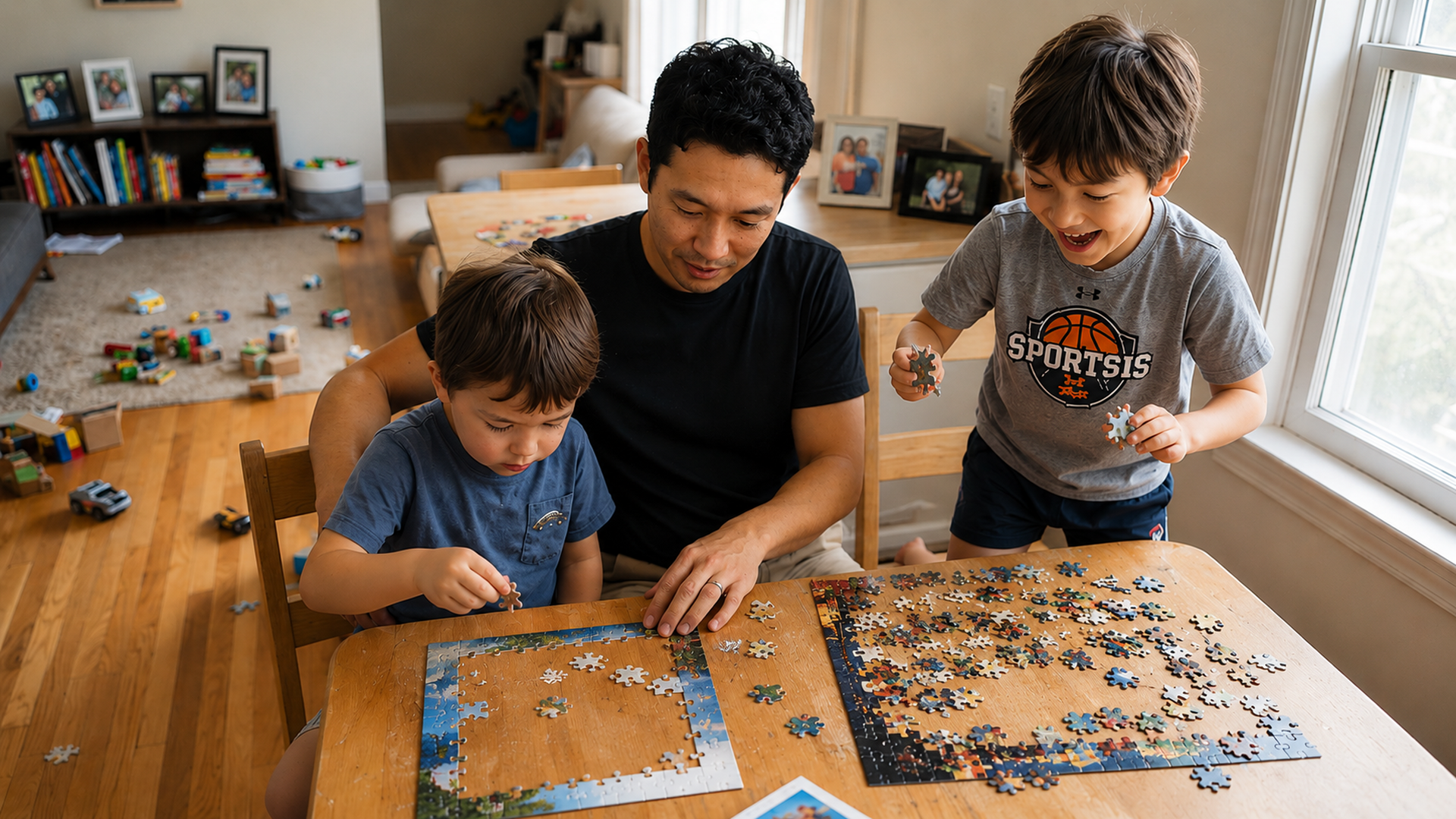
A young child needs the physical presence of their parents. It’s not about being entertained by them 24/7. In fact, they need time alone to develop their own imagination and independence. It’s about them being aware of your availability. It’s the simple security of knowing you’re in the next room, doing housework or reading a book, but you are *there*. You are an anchor in their world.
This idea completely reframes our role. It’s not about being a cruise director, planning the next activity. It’s about being a steady, warm presence. This kind of connection can’t be outsourced or delegated. You can have the best daycare or the most loving grandparents, but nothing replaces the security a child feels from their own mother and father. That sense of belonging, of being under the watchful, loving care of their primary people, is the bedrock of their entire emotional world. Parental love is not something that can be delegated.
The First Message: ‘It Is Good That You Exist’
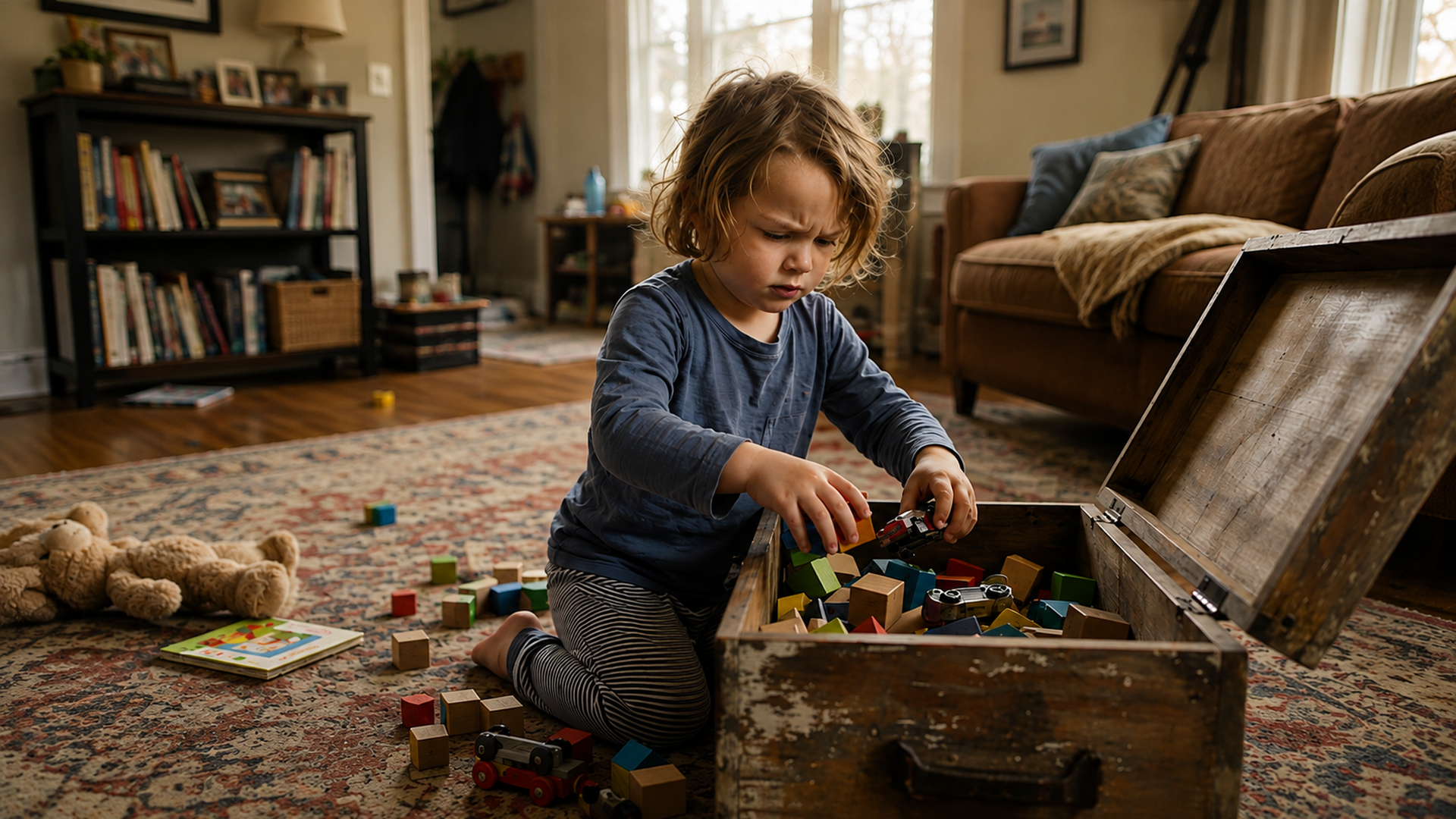
Before we can even think about connection, we have to start with acceptance. It sounds simple, but it’s one of the most profound and challenging parts of being a parent. One of the biggest surprises of having more than one child is just how different they can be. One might be orderly and quiet, the other a whirlwind of creative chaos. It’s tempting to try and fit the square peg into the round hole, to wish the messy one were neater, or the quiet one more outgoing.
This is where we have to be careful. Our children’s first understanding of who they are comes from us. They look at us as a mirror, and the reflection they see becomes their reality. As the source material wisely states, the primary message we must send, above all others, is this: “It is good that you exist.” This isn’t, “It is good that you exist when you get good grades,” or “when you behave,” or “when you are like your brother.” It is a simple, unconditional statement of their intrinsic worth.
A child should have a deep, unshakable sense that their parents accept them totally, as they are, and that this acceptance doesn’t depend on fulfilling certain conditions. This means we have to make an effort to discover their unique gifts and way of being. We have to learn to love their quirks, their limitations, and even their defects.
We can and should teach them virtues like patience and self-control, but we must resist the urge to make them conform to our own personality or preferences. We might be outgoing and talkative; they may be quiet and reflective. Our job is not to create a mini-me, but to help them flourish into the best version of themselves.
When a child feels this unconditional love, they develop a good self-image. They become active, curious, trusting, and adaptable. They have the confidence to try new things and the resilience to handle failure. This creates a virtuous cycle: they try, they succeed, their confidence grows, and they’re empowered to try again. It all starts with that foundational belief, reflected in our eyes, that they are a gift.
Editing the Soundtrack of Their Childhood
If our children’s self-image is a reflection of us, then our words and actions are the brushstrokes painting that portrait. This requires us to become conscious editors of the daily soundtrack of our family life. The constant, low-grade commentary we provide has a massive impact. The important question we must continually ask ourselves is not, “Do I love my child?” but rather, “Does my child *know and feel* my love?”
The source material offers a powerful challenge: “Edit out harmful comments and increase the words designed to improve a child’s image and value.” This is intensely practical. It means paying attention to the throwaway lines that can inflict deep cuts. Think about the casual labels we use. Calling a child “the little stinker” because of a dirty diaper, or “clumsy” when they spill their milk, or “a mess” when they come in from playing. To them, these aren’t just descriptions; they are definitions. They are a verdict on who they are.
We have to be especially careful with irony and sarcasm. These forms of humor are poison to a young child’s developing sense of self because they can’t yet distinguish the intended meaning from the literal words. All they hear is the sting.
The same goes for constant negative refrains: “You’re always in the way!” or “You break everything!” or a weary “Not again…!”
These phrases may seem harmless in the moment, but they accumulate, forming a narrative in the child’s mind that they are a burden or incapable.
So what do we replace them with? We increase the words of value. We tell them we’re glad to have them with us. We praise the effort, not just the result. And perhaps most powerfully, we model humility by asking for their forgiveness when we get it wrong. Saying, “I’m sorry I lost my temper. I was tired and I shouldn’t have yelled,” doesn’t undermine our authority. It strengthens the relationship. It teaches them that love is bigger than our mistakes and that no one is perfect, not even Mom or Dad.
The Art of Attentive Silence
If you truly want to know your child—to discover their inner world, their moods, the places their imagination goes—you have to master the art of listening. And I don’t mean the kind of listening we do while scrolling through our phone or prepping dinner. I mean real, attentive listening. It’s the single most powerful tool for connection we have.
To get there, we first have to discard the habits that cause what the source calls “internal deafness.” We’ve all been guilty of them. There’s the disregard, where our words or gestures signal that their “prattle” isn’t worth our time.
There’s pre-emptive judgment, where we cut them off with a final sentence like, “You’re not trying,” before they’ve even finished their thought. And the most common one in our modern world: distraction, where we listen with half an ear while our mind is somewhere else.
These habits tell a child, louder than any words, that they are not important.
Positive listening is an active choice. It means deciding to put aside what you’re doing and listen with your whole being—with your eyes, as the source so aptly puts it. It starts with suspending criticism and just letting your child finish what they are trying to say, no matter how long it takes. Critical interruptions teach them that their perspective doesn’t matter and that it’s not safe to share it.
This is where attentive silence comes in. By simply making eye contact, offering an affectionate glance, and nodding, you create a safe “space” in which your child can find the right words.
You’re not rushing to fill the void or solve their problem. You’re just being with them in it. You watch their expression, their posture, their gestures. You validate their emotions instead of dismissing them with a quick, “Don’t worry” or “You’re fine.”
For a child who is upset, their problem is the only issue in the world at that moment. Gently helping them focus on it, while showing you understand their feelings, is a profound act of love and respect.
Love They Can See
Our children learn what love is from two primary models: the love we show them, and the love we show our spouse. Both need to be visible, tangible, and consistent.
The love we show them is demonstrated through those small sacrifices of time and attention we’ve been talking about. It’s a father who gets up early to have breakfast with the family because he won’t be home for bedtime. It’s cheerfully giving your toddler a bath instead of seeing it as another chore. It’s putting down the newspaper or phone when they’re bursting with energy in the morning and want to tell you something. It’s respecting their inclinations when making family plans, rather than treating them like appendages to be dragged along on our errands.
These small acts are tokens of our love. They communicate value more than any expensive toy or planned outing. They show our children that they are a priority, not an interruption. It requires us to slow down, to avoid the rush and hurry that are our own adult neuroses, not theirs. Respecting their nap times, their pace, their internal clock—this is love in action.
But the most important model of all is the love between a mother and a father. A child’s sense of security is deeply tied to the stability of their parents’ relationship. A child needs to see that her parents love each other.
They need to witness that the most important person in her mother’s life is her father, and vice versa. They need to see that their parents are considerate of one another, that they make each other happy, and that they prioritize time to be alone together.
A child who lives surrounded by this kind of love from the start will know how to love. They will learn that to love is to give, to cheerfully put others first. They will possess the secret of a happy life because they’ve seen it lived out right in front of them.
Connection in the Chaos
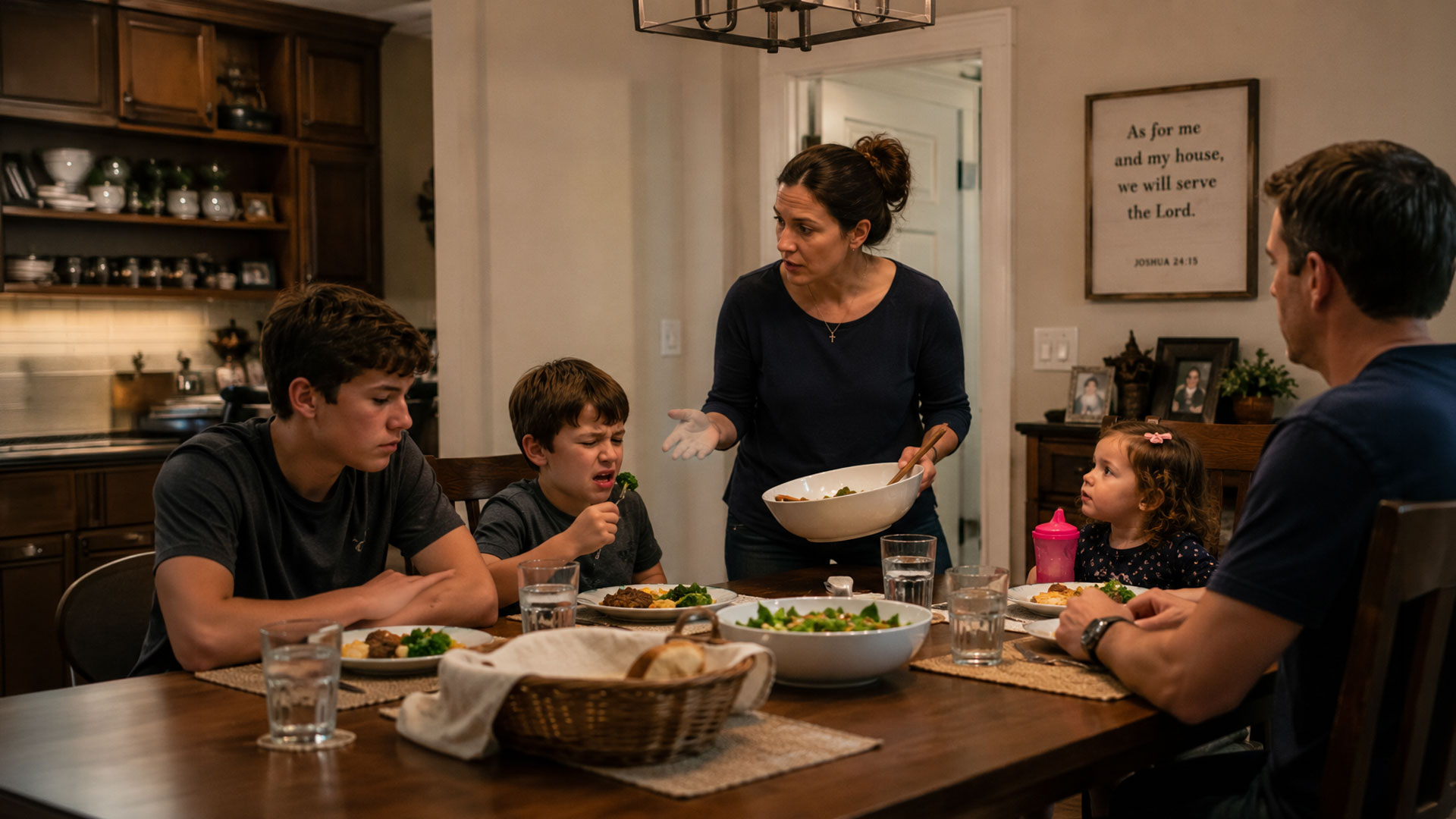
This all might sound very warm and fuzzy, but you might be thinking, “That’s great, but my toddler just threw his food across the kitchen and my three-year-old refuses to sleep in her own bed. How does ‘attentive silence’ help with that?” This is where everything comes together. The trust, security, and connection you build through presence and listening are the very foundation that makes discipline possible and effective.
Discipline and trust are not opposites; they are two sides of the same coin. The purpose of discipline isn’t to control our children, but to give them an “internal compass” that will allow them to navigate the world with self-possession. It’s about moving them toward genuine freedom, which is always rooted in responsibility.
But this guidance is only received well in a climate of trust. Sarcasm, intimidation, and anger are incompatible with trust. Loving discipline, however, actually pleases a child because it provides the boundaries they need to feel secure.
This is why the so-called “battlegrounds” of early childhood—sleep, meals, orderliness—are so important. They are the first place a child learns self-control. When a child feels unconditionally loved and secure in their connection with you, holding a firm boundary feels less like a power struggle and more like loving guidance. You can say “No” with confidence because the relationship isn’t on the line. The message is, “I am not angry with you, but what we’ve decided doesn’t change. I know you’re upset, but we want what’s best for you.”
Children who know what is expected of them are peaceful and happy. Predictability is security. When limits are clearly stated and acted upon in a kind but firm manner, children thrive.
This stands in stark contrast to the home where parents are too exhausted or insecure to hold the line, constantly giving in for the sake of temporary peace. That permissiveness, born of convenience, creates a storm of discontent for everyone. The spoiled child is often an unhappy one.
In the end, it’s not about finding the right technique or a magic formula. It’s about the relationship. It’s about showing up, day after day, with a love that is visible, audible, and unconditional. It’s about building a connection so strong that it becomes the secure base from which your child can launch happily into life, confident in who they are and secure in the knowledge that they are, and always will be, deeply loved.