“Are You Mad at Me?”
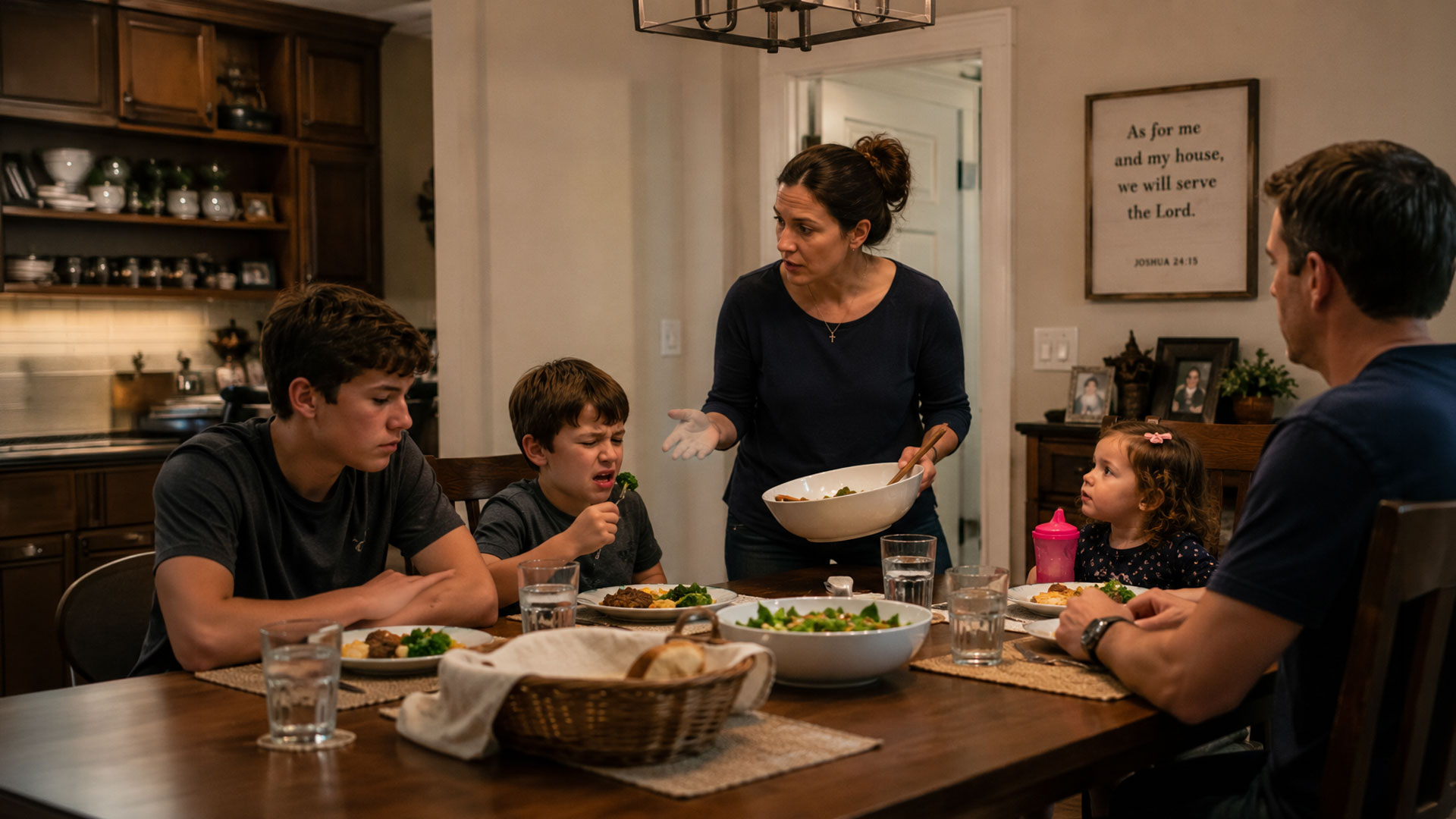
You correct your child. Their face tightens. The room shifts. And suddenly, you feel the urge to fix it, not the behavior, but their mood. You soften your tone. You explain it again. You throw in a smile or a joke to smooth it over.
They still obey, but something inside you second-guesses the whole thing.
Was I too harsh? Are they upset with me? Should I have just let it go this time?
You’re not alone. In an age of “gentle parenting,” self-esteem charts, and social media pressure, many moms and dads quietly feel like they’re parenting on probation, always waiting for a thumbs-up from their child before acting like a parent.
But here’s the hard truth: You’re not called to be your child’s best friend. You’re called to lead them.
This article isn’t about becoming authoritarian or cold. It’s about reclaiming the kind of calm, confident, formational leadership your child actually craves. Because if you don’t lead, someone, or something, else will.
The Culture of Permission-Based Parenting
Modern parenting culture is full of unspoken rules:
Don’t upset your child.
Don’t say no without a thousand reasons.
Don’t set boundaries that might feel like rejection.
And definitely don’t contradict the latest viral parenting tip unless you want judgment in the school parking lot.
In short, many parents have stopped acting on conviction. They’re parenting by consensus.
We wait to see how the child reacts before deciding if we did the right thing. We’re afraid to enforce a rule unless our child affirms it. We’re constantly walking the tightrope between discipline and disapproval.
But kids don’t need consensus. They need clarity.
They don’t need us to second-guess every decision. They need us to be stable, loving, and unshakably rooted in truth, even when it makes them uncomfortable.
Because comfort doesn’t form character. But clarity does.
Why We’re Afraid to Lead
For most parents, the hesitation to lead comes from love, and fear.
We love our kids so much, we don’t want to hurt them. We don’t want to drive them away. We remember our own childhood wounds and swear not to repeat them.
But underneath that love, fear sneaks in:
What if they resent me?
What if I lose the relationship?
What if I damage their confidence?
What if they like their friends more than me?
And that fear leads us to tiptoe. We explain rules with apology. We treat correction like negotiation. We try to “parent from behind,” hoping our kids just… get it.
But they won’t.
Because leadership isn’t something you hint at. It’s something you embody.
Your kids don’t need a buddy in the schoolyard. They need a compass in the storm.
Friendship Is a Fruit, Not a Foundation
There’s nothing wrong with wanting closeness with your child. But friendship is a byproduct of good parenting, not the starting point.
When you lead with love, consistency, and truth over time, friendship grows. But when you chase friendship instead of formation, you lose both.
Children don’t bond with parents who are always pleasing them. They bond with parents who stand for something.
Even if they fight you in the moment.
Even if they roll their eyes now.
Even if they storm off and slam a door.
Deep down, they’re watching. Measuring. Learning. Asking: Can I trust you to mean what you say? Can I count on you to protect what matters? Will you still lead me even when I push away?
And when the answer is yes, even quietly, they feel safe.
Because safety doesn’t come from approval. It comes from presence and principle.
You Are the Grown-Up. Act Like It.
This sounds obvious. But in a culture of performative parenting, many adults are shrinking themselves.
We edit ourselves around our kids. We hide our convictions to avoid a fight. We mimic their slang and their values in hopes they’ll like us more.
But respect doesn’t grow where adulthood is abandoned.
You’re the grown-up. That means you know more, see more, and are responsible for more.
Don’t apologize for that.
Be gentle, but firm. Be kind, but clear. Be warm, but grounded.
You are not on trial. You are on mission.
Your child may not understand that yet. But one day they will. And they’ll be grateful you acted like their parent, even when they couldn’t see the wisdom yet.
Lead With Authority, Not Arrogance
Parental leadership doesn’t mean ruling with an iron fist. But it does mean speaking, and acting, with calm authority.
You don’t need to yell. You don’t need to shame. You don’t need to over-explain every decision.
What you need is consistency and conviction.
Say what you mean. Mean what you say. Follow through when they test the boundary, and they will test it.
Let your word be solid enough that it stands even when they cry, complain, or pout.
Children who test boundaries are looking for security. They’re asking: Is this real? Can I push this without consequence? Are you strong enough to hold the line even when I’m angry?
And when you hold that line, without rage or panic, you teach them something powerful:
Love tells the truth. Love follows through. Love doesn’t flinch.
Don’t Mistake Discomfort for Damage
In a culture obsessed with trauma-talk, many parents live in fear of “messing up” their kids by saying the wrong thing or enforcing the wrong rule.
Yes, wounds are real. Yes, you should reflect and grow.
But being uncomfortable is not the same as being wounded.
When your child cries because you took the phone away, that’s not trauma. That’s accountability.
When they get angry because you said no to the sleepover, that’s not rejection. That’s parenting.
Children are allowed to feel upset. And you’re allowed to stand firm.
In fact, that’s how they grow. Through the tension. Through the limits. Through the truth that sometimes life, and love, includes disappointment.
Don’t rob them of that formation by folding every time they flinch.
When Your Child Pushes Back
No matter how solid your leadership, your child will push back. Especially as they grow.
They’ll say:
“You’re being unfair.”
“Other parents let their kids do this.”
“You’re so strict.”
“You just don’t get it.”
And your job is not to panic or pander. Your job is to calmly stay the course.
You can say:
“I understand you’re upset, and I love you. But I’m still responsible for guiding you. And that means saying no sometimes.”
Or:
“My job isn’t to keep you happy in the moment. It’s to help you become who you’re meant to be.”
Let them wrestle. Let them vent. Let them stew. And then, let them see you still standing there, calm and consistent.
Because that’s what teaches them trust.
When You’re the Only Parent Holding the Line
One of the hardest parts of principled parenting is feeling alone. The only parent who enforces curfews. The only one not giving their middle schooler a smartphone. The only one who says no to sleepovers or TikTok or certain video games.
You’ll feel it at the school gate. You’ll hear about it in the group chat. Your kids will tell you how “everyone else” gets to do the thing you’ve just said no to.
Hold the line anyway.
You’re not raising someone else’s child. You’re not building someone else’s family culture.
You’re building yours.
And you don’t need a crowd to do what’s right. You just need conviction, and consistency.
Because kids raised by principled parents may resent it in the moment, but they’ll recognize its value when they enter a world full of compromise.
And they’ll know what it means to lead.
Lead with Humility, Not Insecurity
Strong parents are humble parents. They admit when they’re wrong. They ask forgiveness when they fail. They listen when their kids share hard things.
But they don’t abdicate leadership in the name of humility.
Being humble doesn’t mean giving up authority. It means stewarding it well.
You can say:
“I got too angry earlier. I’m sorry for how I spoke, but I still stand by the rule.”
Or:
“I may not have all the answers, but I’m praying, thinking, and doing my best to lead you with love.”
That balance, of strength and softness, truth and tenderness, is what makes your leadership not just respected, but remembered.
The Legacy of a Parent Who Led
Think about your child at 25.
They’re standing in a college lecture, at a job interview, in front of a tough choice, or in a quiet chapel.
What do you want them to carry in that moment?
Confidence. Clarity. Conscience. A sense of identity. A memory of home where truth was told, where love had limits, where leadership was steady.
They won’t remember every lecture. But they will remember the presence of a parent who didn’t flinch.
A parent who didn’t ask for permission to lead.
A parent who knew that love isn’t always a smile. Sometimes it’s a no. Sometimes it’s a hard line. Sometimes it’s a boundary that feels like rejection in the moment, but becomes a lifeline years later.
That’s what you’re building.
Not compliance. Not comfort.
Character.
You Don’t Need Their Approval to Be a Good Parent
Your child may not like your decisions.
They may groan, grumble, or even say they hate you.
But you are not a vending machine for their happiness. You are a steward of their soul.
You don’t need to ask permission to guide them. To set rules. To expect virtue. To stand for truth.
You just need to love them enough to lead anyway.
Lead when it’s easy. Lead when it’s awkward. Lead when it’s lonely. Lead when it’s misunderstood.
Because in a world of insecure parenting, yours can be the home where formation is deeper than feelings, and where children grow not by being flattered, but by being led.
And one day, when they’re raising their own kids, they won’t remember the eye rolls.
They’ll remember that you didn’t flinch.
And they’ll thank you for it.