The Night the Shoes Stayed on the Floor
It was one of those ordinary nights that shouldn’t have mattered, but somehow did. Dinner was done, the house was finally quiet, and I walked past the front door to see a small pile of shoes kicked off in every direction. One pair belonged to my youngest. I had told him earlier to put them away. He nodded, said “okay,” and then… didn’t.
I stood there longer than I needed to. Not because the mess was overwhelming, but because I knew what was coming next. I could ignore it and pick them up myself. I could remind him again. Or I could walk him back to the door, have him fix it, and deal with the whining that would follow.
It felt like such a small thing. Just shoes.
But it wasn’t about the shoes.
That moment, and a thousand like it, is where childhood is actually formed. Not in classrooms. Not in report cards. Not in enrichment programs or early reading milestones. It happens in these quiet, repetitive, often frustrating moments where habits are either built or quietly ignored.
And most of that work happens before the age of seven.
The Years That Actually Shape Them
There’s a quiet misconception that real development starts when school begins. That before then, kids are just playing, growing, and preparing for something more serious later on. We treat those early years like a warm-up phase.
But in reality, those are the years when the foundation is poured.
Between birth and age seven, children are not just learning information. They are absorbing patterns. They are forming instincts. They are building default responses to the world around them. They are learning how to listen, how to respond, how to manage themselves, and how to relate to others.
These aren’t academic skills. They are life skills.
A child who learns to obey at five doesn’t suddenly become obedient at fifteen. A child who learns to tell the truth early doesn’t need to “find honesty” later. A child who learns to put things back, finish what they start, and respect small responsibilities carries that into everything else they do.
By the time school starts, the trajectory is already there.
What Actually Matters Before Seven
In those early years, three quiet habits carry more weight than anything else. They don’t look impressive on paper. You won’t hear parents bragging about them at playdates. But they shape everything that comes after.
The first is obedience.
Not blind obedience, not robotic compliance, but the ability to respond when called, to follow through when asked, and to recognize that they are not the center of the universe. A child who learns to respond to a parent’s voice is learning how to operate in a world where other people matter.
The second is sincerity.
This is where truth begins. It’s not just about avoiding lies. It’s about aligning words with reality. It’s about a child learning that honesty matters, even when it’s uncomfortable. That “I didn’t do it” matters. That excuses matter. That small distortions, if left alone, don’t stay small.
The third is order.
Not perfection. Not spotless rooms or rigid routines. But a basic sense that things have a place, that time has a rhythm, and that actions have structure. Order is what allows everything else to function. It’s what turns chaos into something manageable.
These three habits don’t just make childhood smoother. They make adulthood possible.
The Problem With Skipping This Stage
A lot of parenting struggles later on can be traced back to a simple issue. The foundation was never built.
We expect teenagers to be disciplined, but they were never taught to follow through when they were small. We want honesty, but we laughed off small lies as “cute” or “not a big deal.” We want responsibility, but we spent years doing everything for them because it was faster.
Then one day, we’re shocked when they resist everything.
But by that point, we’re not building habits. We’re trying to undo them.
And undoing is always harder than building.
It Looks Small Because It Is Small
The challenge with parenting in these early years is that everything feels insignificant.
Putting toys away. Saying thank you. Waiting their turn. Telling the truth about who spilled the juice. Getting dressed without a fight. Sitting at the table. Listening the first time.
None of these moments feel like defining experiences.
But they are.
Because children don’t build character in big moments. They build it in repetition. In patterns. In the thousand tiny interactions that slowly become automatic.
A child doesn’t become patient because of one lesson. They become patient because they’ve waited their turn a hundred times.
A child doesn’t become responsible because of one lecture. They become responsible because they’ve been expected to follow through again and again.
The Hidden Cost of Doing It For Them
There’s a temptation, especially when life is busy, to step in and just handle things ourselves.
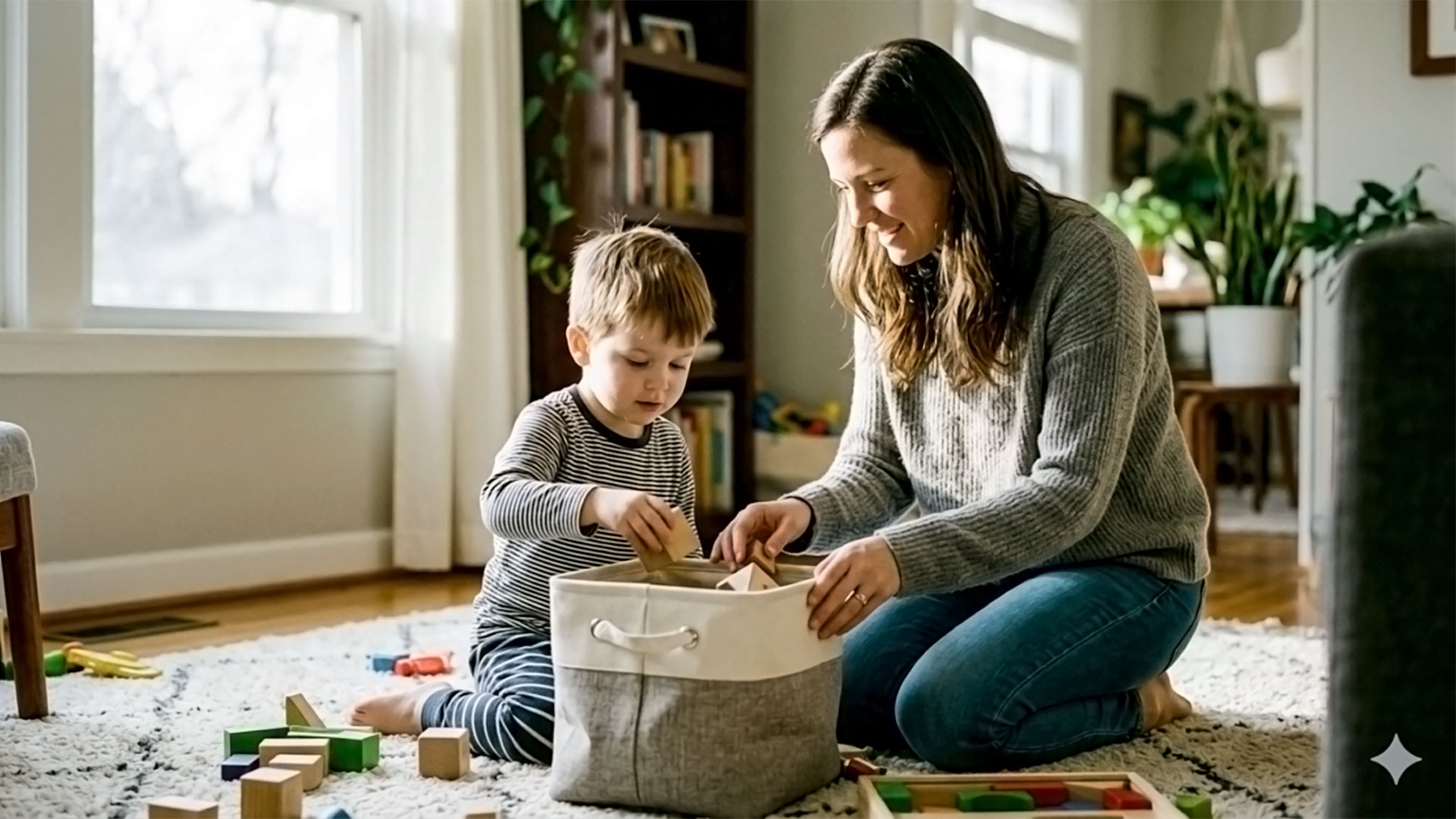
It’s faster to clean up the toys. Easier to carry them upstairs. Simpler to fix the mess without turning it into a lesson.
And in the moment, it feels harmless.
But every time we remove responsibility from a child, we delay their growth. We send a quiet message that someone else will take care of things. That effort is optional. That follow-through isn’t necessary.
Over time, that message sticks.
And then later, when we suddenly expect more from them, it feels unfair from their perspective. The standard changed, but the habits didn’t.
Discipline That Actually Builds Something
Discipline in these early years isn’t about control. It’s about formation.
It’s about helping a child see that their actions matter. That what they do affects others. That there is a right way to act, and that they are capable of choosing it.
This means slowing down enough to address small things. It means walking back to the door and fixing the shoes. It means asking them to try again when they ignore a request. It means not letting “kind of” become good enough.
It’s not always efficient. It’s not always easy.
But it works.
Because over time, the child begins to internalize what’s expected. Not out of fear, but out of familiarity. It becomes normal.
The Role of the Parent
In these years, the parent isn’t just a caretaker. They’re a model.
Children are watching everything. Not just what we say, but how we act. How we respond when we’re frustrated. How we speak to others. How we handle our own responsibilities.
If we want order, they need to see it. If we want honesty, they need to hear it. If we want discipline, they need to experience it.
You can’t outsource this part.
No program, no school, no system can replace the daily example a child sees at home.
Why This Matters Later
The reason these early habits matter so much isn’t because they make childhood easier. It’s because they make adulthood possible.
A child who learns obedience early is teachable later.
A child who learns sincerity early is trustworthy later.
A child who learns order early is capable later.
Without those, everything becomes harder. School becomes a battle. Relationships become strained. Responsibility feels overwhelming.
With them, everything has a starting point.
Back to the Shoes
That night, I called my son back to the door.
He didn’t want to do it. He dragged his feet. He sighed. He complained in the way only a tired kid can.
But he did it.
And the next night, it happened again. And again. And again.
Until one day, it didn’t.
He walked in, took off his shoes, and put them where they belonged without being asked.
That moment didn’t feel big either. There was no celebration. No announcement.
But something had changed.
Not the shoes.
Him.
The Long View
Parenting in the early years requires a long view. It asks you to care about things that don’t seem to matter yet. To invest in habits that won’t pay off immediately. To repeat yourself more times than feels reasonable.
It’s slow work.
But it’s lasting work.
Because by the time the world starts asking more of your child, they won’t be starting from zero. They’ll already have something built inside them. Something steady. Something reliable.
And that doesn’t come from academics.
It comes from the quiet, consistent, often unnoticed work of those early years.
From the shoes by the door.
From the small things that were never actually small.