“Say You’re Sorry. Now Give Them a Hug.”
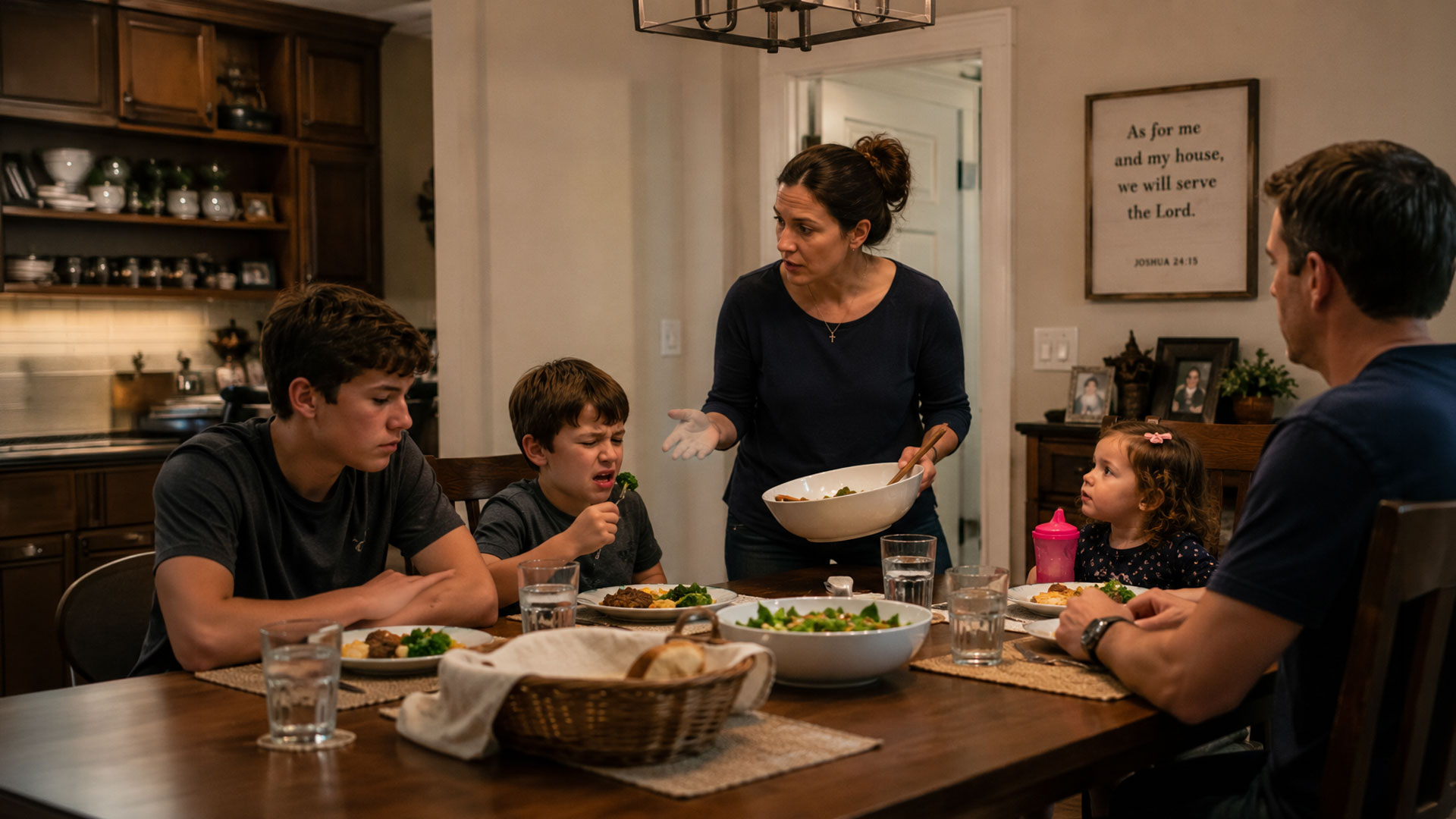
It’s the classic sibling standoff. One child offends the other, maybe they snatched a toy, called a name, or spilled a secret. A parent intervenes, asks what happened, assigns blame, and then comes the expected ritual: “Say you’re sorry.” And then, often: “Now give them a hug.”
The apology comes out through clenched teeth. The hug is limp, awkward, or actively avoided. The offended child tolerates it, arms stiff at their sides, face expressionless. Everyone resumes their day. Conflict resolved, right?
Not really.
In most homes, sibling forgiveness gets reduced to a formula: admit fault, say sorry, hug it out, move on. And while that rhythm can be helpful for very young kids, it often short-circuits the real formation we’re aiming for.
Because real forgiveness can’t be forced. And reconciliation isn’t a performance, it’s a process.
This article is about how to guide siblings through authentic forgiveness. Not performative apologies. Not coerced affection. But real understanding, real amends, and real healing.
Because one day, your kids will face relational conflict without you in the room. And if you’ve formed their hearts, not just their manners, they’ll know how to move toward each other with courage and grace.
What Forced Forgiveness Teaches (That We Don’t Mean to Teach)
When we push for quick apologies and physical gestures of reconciliation, we’re usually trying to keep the peace. And that’s understandable. No one wants lingering tension at the dinner table.
But over time, this habit can teach the wrong lessons:
That apologies are something you perform to avoid punishment, not something you mean to restore trust.
That emotional honesty should be buried for the sake of peacekeeping.
That the real issue is the behavior, not the heart behind it.
That relationships are fixed with words, not with humility or effort.
It can also teach the wrong thing to the hurt child: that their feelings don’t matter, that they’re expected to accept shallow apologies, and that forgiveness is something you do to avoid being “difficult.”
This isn’t the legacy we want to leave. What we want to form is something deeper: the habit of repair, not just apology.
The Goal Is Reconciliation, Not Just Resolution
Resolution is fast. It fixes the surface. Reconciliation takes time, and forms the soul.
When two siblings argue, the goal isn’t just to stop the fight. The goal is to lead them into deeper empathy, ownership, and understanding.
That means:
Slowing down the apology process.
Giving both parties time to cool off.
Allowing space for the why, not just the what.
Teaching language that goes beyond “I’m sorry” into “I understand how that hurt you.”
This isn’t about dragging things out. It’s about teaching kids that peace isn’t the absence of noise, it’s the presence of mutual respect.
And that takes practice. A lot of it.
The Power of Naming Emotions
Before there’s forgiveness, there needs to be understanding. And kids can’t understand what they can’t name.
So teach them how to articulate what they’re feeling:
“You seem really frustrated that she took your toy. Is that right?”
“It looks like you’re embarrassed because your brother laughed at you.”
Help them see beyond anger into the deeper emotion underneath: shame, fear, disappointment, jealousy.
Then help the offending child reflect: “Can you guess how your sister felt when that happened?”
This emotional vocabulary gives them a map. It helps them recognize what’s really going on. And it makes the apology more than a script, it becomes a human connection.
That’s the beginning of empathy. And empathy is the soil where real forgiveness grows.
Don’t Rush the Repair
Parents are often uncomfortable with lingering tension. So we rush to resolve it: “Come on, say sorry and let’s move on.” But that impulse, though well-intended, can rob kids of the chance to process.
Instead of rushing, guide.
Let them sit with their part in the hurt. Let the offended sibling process what forgiveness will look like. Let the moment breathe.
You can say:
“We’re not moving on until this is truly resolved, but we’re not rushing it either.”
“You don’t have to be ready to hug right now. You just have to be open to repairing.”
This teaches patience. It teaches that relationships are worth slowing down for. That healing can’t be hurried.
And when it does come, when the apology is sincere and the forgiveness real, it’s far more powerful than a scripted exchange.
Rewriting the Script
Instead of “Say sorry,” teach a new kind of language. More specific. More meaningful. More oriented toward restoration.
Try phrases like:
“I was wrong to do that. Will you forgive me?”
“I see now that what I did hurt you, and I want to make it right.”
“You matter to me. I don’t want to treat you that way again.”
These words don’t always come easily. Especially for kids. But you can model them. Coach them. Walk them through it line by line until it becomes familiar.
You’re not just teaching good behavior. You’re forming hearts that seek restoration, not just avoidance of guilt.
Make Repair Tangible
Sometimes words aren’t enough, especially for younger kids. That’s okay. Teach them to show reconciliation through action.
A handwritten note. A favorite toy shared. A job done for the other. A kind gesture.
These are not bribes or “penance.” They’re love made visible. They say, “I’m not just sorry, I’m invested in you.”
Let your kids brainstorm their own ideas. Encourage creativity in repair. Make it part of your family culture: we don’t just say we’re sorry, we show it.
And when they do? Celebrate it. Quietly. Sincerely. Let them feel the dignity of choosing restoration.
Separate Forgiveness from Affection
Here’s where we circle back to the hug.
Touch is powerful. But it’s not always appropriate in the moment. And forcing it, especially on a child who’s hurt or angry, can send the wrong message.
Forgiveness isn’t about feeling close right away. It’s about choosing to restore trust.
Let the physical expression come naturally, if and when the child is ready. Don’t make it a condition for moving on.
Instead, look for other signs: kind words, shared play, laughter.
Those are real too. Let forgiveness be a seed, not a performance.
Modeling Matters Most
Your kids won’t learn real forgiveness from scripts. They’ll learn it from you.
So show them how to apologize when you mess up. When you snap, when you forget, when you’re unfair. Don’t justify. Own it. Ask forgiveness. Show how reconciliation works.
Let them see you forgive each other. Let them hear you work through hard conversations. Let them see that love survives disappointment.
That’s how you normalize forgiveness, not as weakness, but as strength. As freedom. As maturity.
Your kids will imitate what you live. Make it count.
Practice, Not Perfection
Your kids will get it wrong. They’ll fake apologies. Resist responsibility. Hold grudges. We all do.
Don’t panic. Don’t shame. Just redirect.
Say:
“That sounded like you were trying to get it over with. Let’s try again.”
“You don’t have to feel forgiving yet. But are you willing to move toward it?”
“You don’t have to hug. But you do have to speak kindly and rebuild trust.”
Make forgiveness a journey. Not a checkbox.
And above all, keep the long game in view.
The Long-Term Vision: Adult Siblings Who Love Each Other
One day, your kids will be grown. And they’ll have choices.
To stay close, or drift. To show up for each other, or not. To carry childhood wounds, or let them go.
You can’t control how they turn out. But you can give them tools. You can give them the memory of a home where:
Hurt was named, not buried.
Forgiveness was real, not performative.
Conflict was resolved, not ignored.
Love was messy, but steady.
You’re not just raising kids who get along. You’re raising siblings who will know how to love each other even when it’s hard.
And that love? That’s the legacy.