Boring Builds Better
It doesn’t happen during the big speech. Or the motivational moment. Or the Instagram-worthy life lesson. Most of parenting, the real work, the shaping work, happens in the boring, predictable, repetitive, Monday-morning grind.
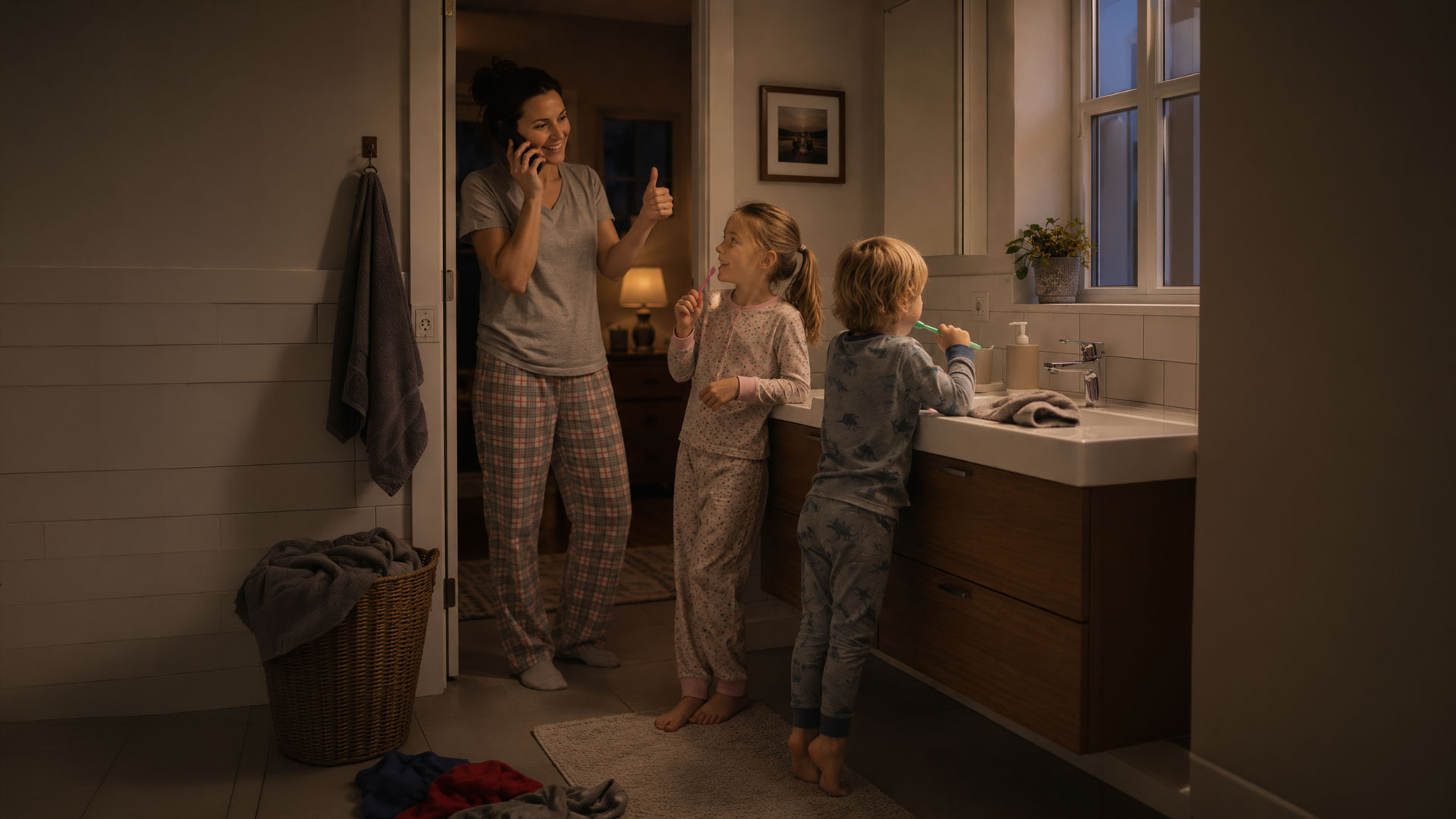
You know the moments. Making breakfast with half an eye open. Reminding them to brush their teeth again. Saying, “Please hang up your backpack” for the seventy-fourth time. These aren’t the heroic parenting wins that get likes or applause.
But they’re the moments that build people.
In a world addicted to drama and overnight transformation, it’s easy to forget that character is formed in repetition. Habits, those invisible grooves of daily life, are what shape our kids far more than any single lecture.
And while “habit” doesn’t sound exciting, it might be your greatest tool as a parent.
Because the boring moments? That’s where virtue becomes real.
Why Habits Shape the Soul More Than Speeches
We’ve all had those conversations with our kids, the ones where we’re sure we nailed it. Maybe it was about responsibility. Or honesty. Or the importance of prayer. We layered it with logic and love. Delivered it at just the right moment.
And they nodded. They even agreed.
But the next day? Same behavior. Nothing changed.
Why?
Because ideas don’t form habits. Repetition does.
The philosopher Will Durant (paraphrasing Aristotle) said it best: “We are what we repeatedly do. Excellence, then, is not an act, but a habit.” That’s true for your kids, too. They won’t become patient because you talked about patience. They’ll become patient because they’ve practiced waiting, again and again, without a meltdown. And you showed them how.
Virtue isn’t taught. It’s trained. It’s not about the occasional act of goodness. It’s about the muscle memory of choosing the good even when no one’s watching.
Which means your real work isn’t what you say, it’s what you repeat.
The Hidden Power of Repetition
If you’ve ever said, “How many times do I have to tell you?”, congrats. You’re normal. And also: you’re closer to success than you think.
Because repetition isn’t a sign that you’re failing. It’s the only way formation actually happens.
Think about how your child learned to walk. Or talk. Or tie their shoes. It wasn’t through explanation. It was through doing it again and again, with a guide nearby, cheering them on.
Habits form through what James Clear calls “automaticity”, the point where an action becomes second nature. Not because of willpower, but because the groove has been worn deep enough.
And you, parent, are the groove-carver. Your job isn’t to force it. It’s to repeat it until it sticks.
You’re not raising a robot. You’re raising someone whose instincts have been trained toward the good. And that takes a hundred boring Tuesdays.
The Myth of the Breakthrough Moment
Every parent wants the breakthrough. The “aha” moment where something finally clicks. And yes, those moments exist. But they are rare. And they are never enough.
One big family conversation won’t fix a habit of laziness. One heart-to-heart about social media won’t erase months of scrolling. One Sunday Mass doesn’t form a love of the Eucharist.
Those things come from rhythms, not revelations.
And that’s actually freeing. Because it means you don’t have to get every moment perfect. You just have to keep showing up.
If your kid rolls their eyes during the family rosary? Show up again tomorrow. If they forget their chores? Follow up again, kindly, clearly, consistently.
Breakthroughs are made of boring moments stacked on top of each other.
Routines Are Moral Formation in Disguise
Here’s the secret sauce: routines aren’t just time-savers. They’re character-shapers.
A morning routine isn’t just about brushing teeth and getting dressed. It’s about punctuality, order, and perseverance.
A bedtime routine isn’t just about winding down. It’s about obedience, serenity, and ending the day in peace and prayer.
A weekly chore? That’s not just about sweeping the kitchen. It’s about stewardship, teamwork, and delayed gratification.
Each habit you build is like planting a seed of virtue. And when done over time, those routines form moral reflexes, the ability to choose the good without stopping to think every time.
In short: what feels boring to you is deep training for them.
Daily Habits That Build Grit, Grace, and Godliness
So what does this look like practically? Here are five daily routines that do more than manage time. They shape souls.
1. The Morning Blessing
Before the day begins, make the sign of the cross together. Short prayer. Maybe a verse or saint of the day. It’s two minutes, but it trains the heart toward God before the world gets loud.
2. The Chore Without Complaining
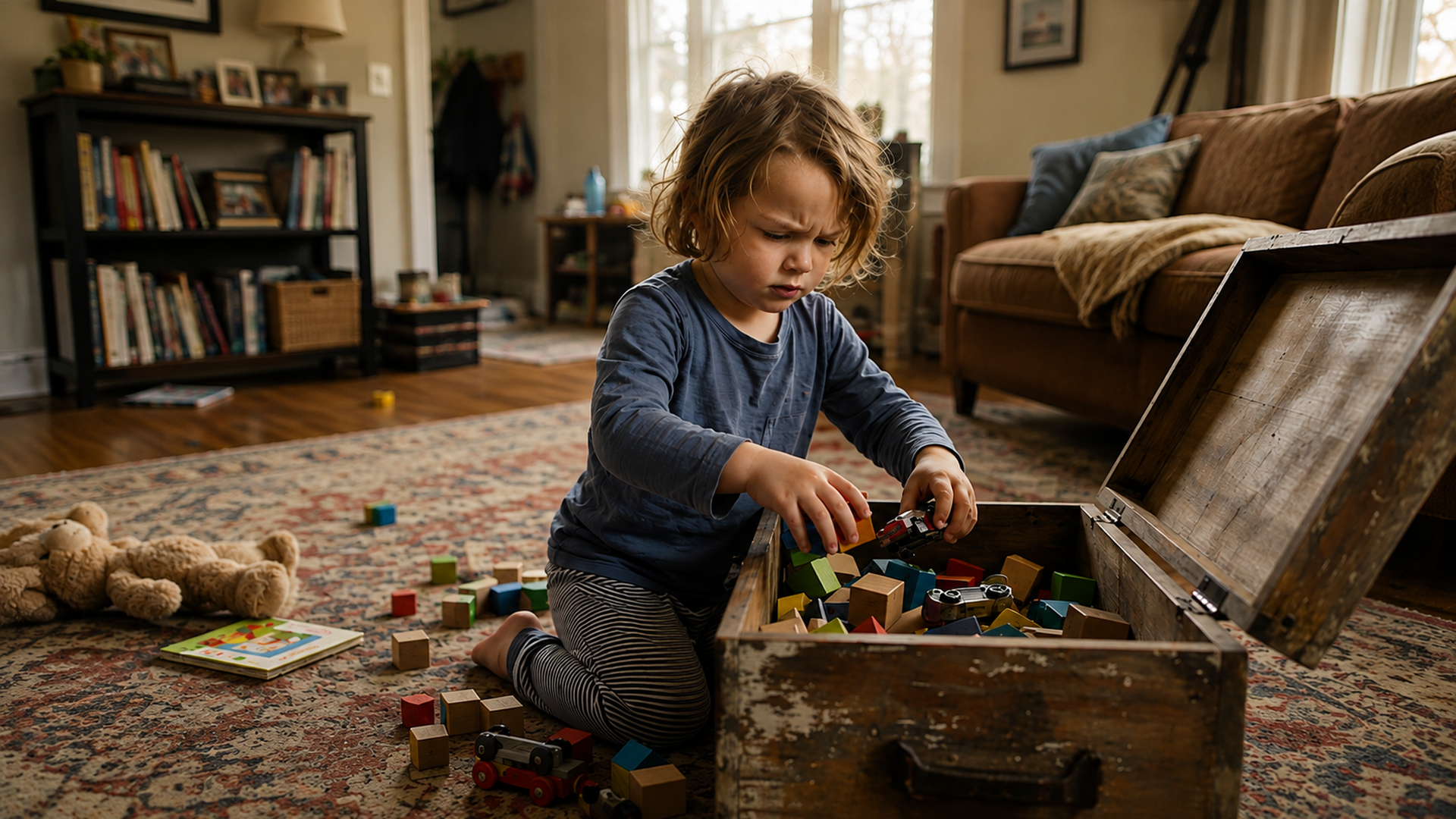
Assign a simple daily job. Rotate them. What matters isn’t perfection, it’s ownership. This builds responsibility and sacrifice.
3. The “We Always Finish” Rule
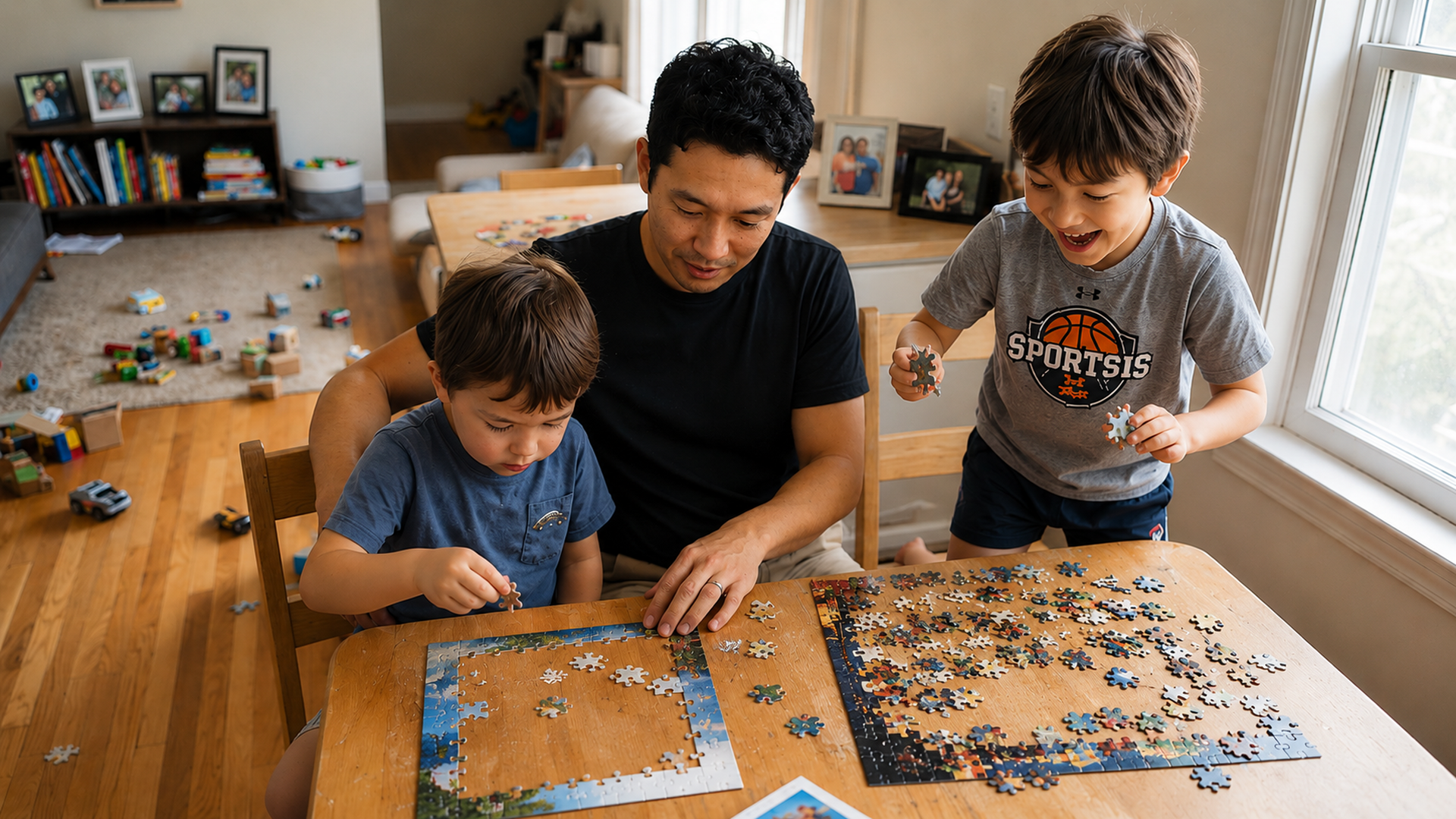
Whether it’s homework, a puzzle, or a game, you model perseverance. Quitting becomes the exception, not the norm.
4. The Gratitude Before Bed
Ask: “What are you thankful for today?” This habit rewires their brain toward joy, even when the day was rough.
5. The Weekly Sacrifice
Skip dessert, screen time, or choose something hard on Fridays. Not as punishment, but as a training ground for self-denial, which is at the heart of every virtue.
Each of these is small. But that’s the point. You don’t need big. You need repeatable.
How to Build a Habit When You’re Exhausted
Let’s face it, habits are hard. Especially when you’re sleep-deprived, overworked, or emotionally drained. So how do you keep going?
Start tiny. The smaller the action, the easier it is to repeat. Want your child to develop the habit of prayer? Start with ten seconds. A sign of the cross. One Hail Mary.
Link it to something. Habits form faster when tied to an existing one. Say grace right after setting the table. Review chores right after school bags are dropped.
Track it together. Use a sticker chart or calendar. Celebrate consistency more than performance.
Be kind to yourself. Missing a day doesn’t mean failure. Missing a week doesn’t either. The goal isn’t perfection, it’s persistence.
And remember: you’re not doing this for Instagram. You’re doing this for eternity.
When Your Kids Push Back (Because They Will)
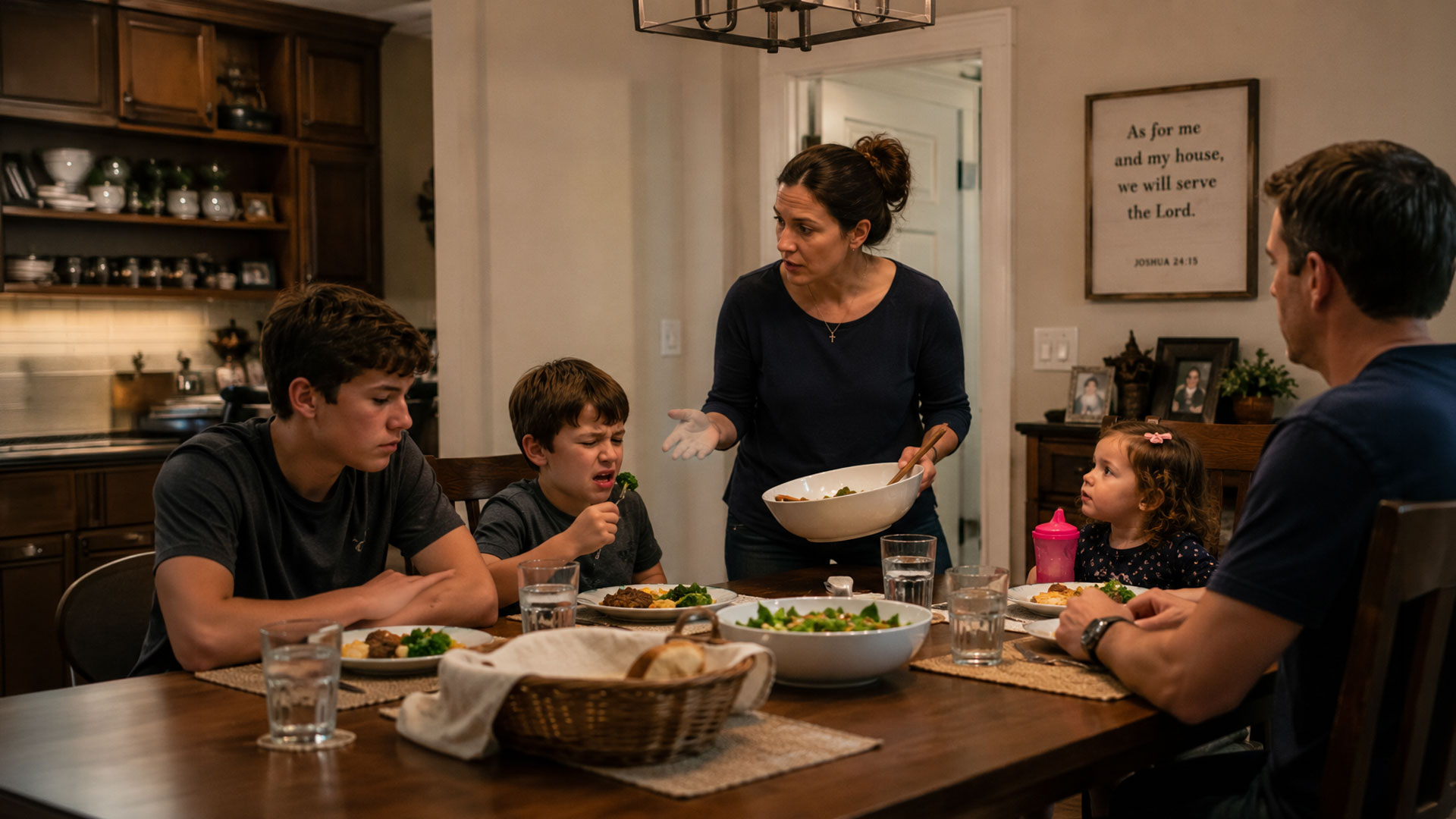
The second you try to build a new habit, whether it’s family prayer, a no-phones dinner rule, or a chore chart, expect resistance. Not because your kids are bad. But because you’re rewiring their rhythm.
They’ll push back. Complain. Forget. Negotiate.
Don’t flinch.
Hold the line with kindness. Reassure them with clarity. And be honest: “This isn’t about control. It’s about becoming stronger, together.”
Then, stay the course. One day, they won’t just accept the habit. They’ll own it. And that’s when you know formation is happening.
The Temptation to Micromanage
There’s a danger when we get excited about habits: we go too far. Suddenly, everything becomes a checklist. We start correcting tone, posture, time usage, sock placement.
Don’t confuse habit-building with hovering.
Your job is to guide, not control. Build the routine. Teach it well. Then let them practice it, imperfectly. And when they forget? Gently remind. Don’t re-preach the lesson every time.
If your child starts resenting the process, scale it back. Re-center it on love. “We do this because we care about the kind of people we’re becoming.”
Formation isn’t about micromanagement. It’s about mission.
Habits Are How You Parent When You’re Not There
One day, your kid will be out in the world without you. And that’s when habits reveal what kind of parent you’ve been.
Will they get up for Mass on their own?
Will they scroll all night or put the phone down?
Will they clean up after themselves without being told?
Will they pray when no one’s watching?
Your presence is temporary. Their habits are not.
That’s why every dish-washing reminder, every bedtime routine, every forced thank-you note, it’s all rehearsal for real life.
You’re training reflexes that will outlive your supervision.
A Faithful Reminder: God Works Through Repetition, Too
If this feels slow, good. God works through repetition, too.
Think about the liturgical year. It’s not one big celebration. It’s seasons. Cycles. Rhythms. Lent comes every year. Advent returns like clockwork. The Church knows what children need. And we are all children.
The saints didn’t become holy through hype. They became holy through habits, confession, prayer, service, silence. Over and over and over again.
You’re doing the same. Quietly. Faithfully. Behind the scenes.
And every time you repeat the habit, whether your kid seems to get it or not, you’re echoing the Father’s own way of working: slow, steady, always faithful.
Show Up for the Boring
You don’t need to be flashy. You don’t need to be a motivational speaker. You don’t even need to feel inspired.
You just need to show up for the boring.
Because the boring builds virtue. The boring forms grit. The boring is where character is chiseled, slowly, deeply, truly.
Your child may never remember the exact night you started a new routine. But ten years from now, they’ll be living in the strength that habit gave them.
And you’ll know: it wasn’t the hype. It was the habit.