Disconnected from Nature
Somewhere between the last scheduled lesson and the next screen-based activity, something essential has gone missing from childhood. It’s not a new app or educational subscription.
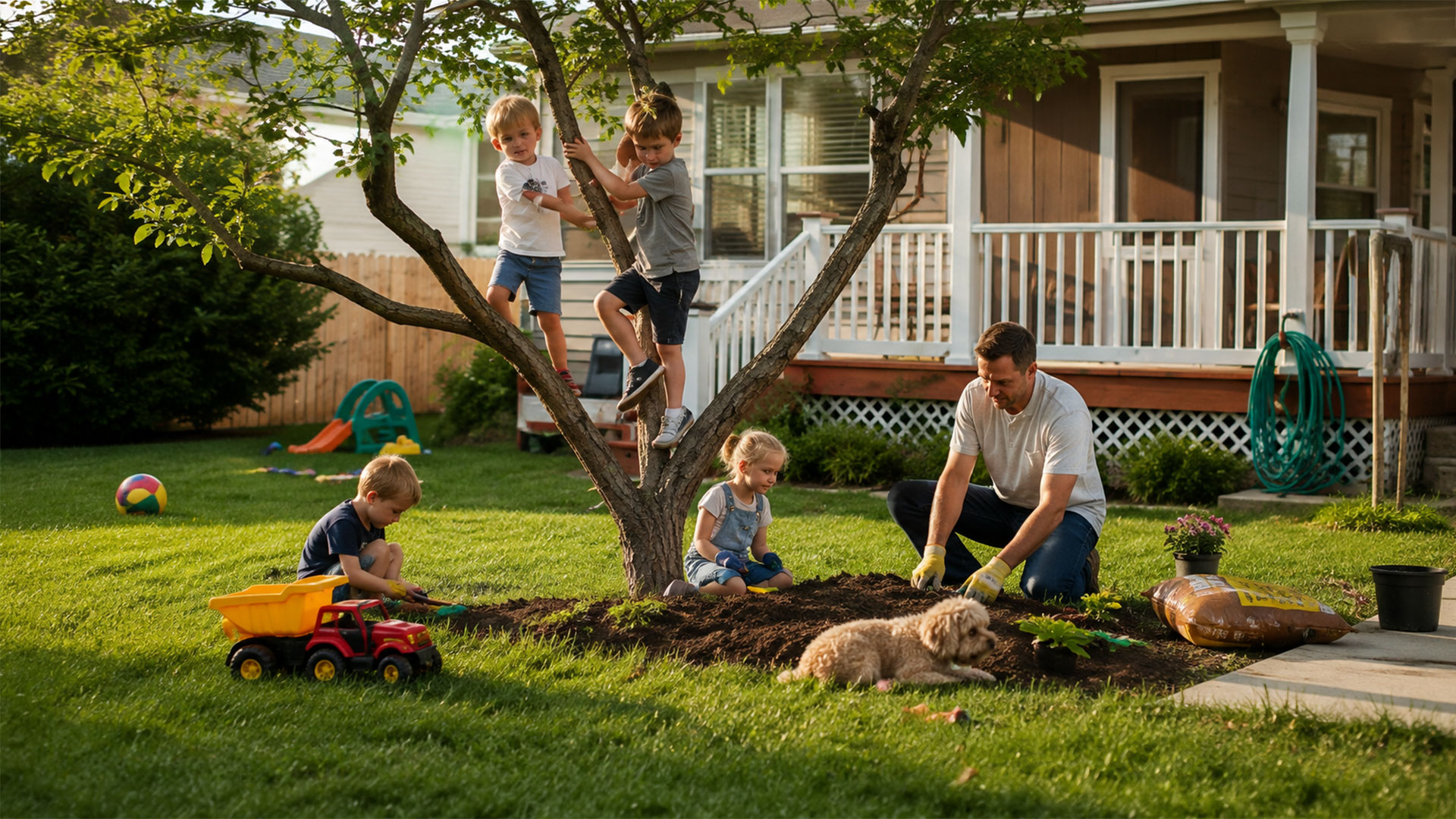
It’s a tree. A patch of wild grass. A stick, a mud puddle, and the slow confidence that builds when kids discover the world for themselves.
In today’s over-structured world, many kids are growing up indoors, disconnected from nature, unaware that they are missing something fundamental, not just for fun, but for formation.
This isn’t just about “fresh air.” It’s about growth. Nature offers what no device, school, or adult-led activity can: a living laboratory for courage, creativity, and resilience.
Author Richard Louv coined the term “nature-deficit disorder” to describe what happens when kids grow up without enough contact with the natural world.
The consequences range from physical to emotional to spiritual, and while it’s not a clinical diagnosis, its impact is very real.
This article isn’t a guilt trip about screen time or a rallying cry to move off-grid.
It’s a reintroduction to something we’ve all known, deep down, since we were children ourselves: that kids need to explore, get dirty, face a little risk, and feel small beneath a big sky in order to grow up strong.
Where Did All the Dirt Go?
Think about your own childhood. Maybe you played in a ravine, built forts in the woods, or climbed trees that felt like Everest. Now think about your kids, or your neighbors’ kids.
For many, the playground is padded. The backyard is trimmed. The schedule is full. And the wild places? They’re often replaced by screens or paved over entirely.
This change didn’t happen overnight.
A mix of cultural shifts, fear of injury, lawsuits, stranger danger, and the rise of structured enrichment, has squeezed out the unsupervised, spontaneous encounters with nature that once formed the backdrop of childhood.
We traded wandering for tutoring. Curiosity for control. Adventure for safety.
But in the effort to protect our children from risk, we may have accidentally protected them from growth. When everything is sanitized and supervised, kids never learn how to navigate the real, messy, uncertain world.
And that’s a problem, because life is messy. Nature is preparation for life.
Risk Builds Resilience
Risk is a dirty word in modern parenting. But kids don’t learn bravery from PowerPoints. They learn it when they scrape a knee, climb a little higher, or face a bee without screaming.
That doesn’t mean tossing them into danger. It means letting them test their limits in controlled, age-appropriate ways.
When a child balances on a log, walks barefoot on rocks, or handles a pocketknife under supervision, they’re not just learning a skill, they’re forming grit.
They’re discovering where their limits are, and pushing them a little. Risk is how courage grows. Not reckless, thrill-seeking risk. But the kind that teaches them to fall, brush themselves off, and try again.
Without exposure to manageable risks, kids are more likely to become anxious. They panic when something goes wrong because they’ve never been allowed to figure it out themselves.
Nature gently teaches that failure isn’t fatal. That scratches heal. That rain doesn’t ruin the day. And most importantly, that they are more capable than they think.
Unstructured Time, Unlimited Growth
Modern life is structured down to the minute. School. Homework. Practice. Bedtime. Repeat. Even “free play” is often supervised and time-boxed. Nature disrupts this rhythm with something radical: unstructured time.
In the woods, there’s no right way to build a fort. No test at the end of a hike. No score in rock-skipping. That freedom fosters creativity. It invites kids to invent, explore, and get bored enough to dream.
And boredom, by the way, is not a problem. It’s the seedbed of imagination. When kids aren’t constantly entertained, they begin to generate their own stories, their own goals, their own sense of wonder.
Nature doesn’t entertain. It invites. It provokes. It waits.
A child who can spend an hour observing ants or making boats out of bark isn’t wasting time. They’re cultivating patience, focus, and a habit of attention, all skills that will serve them long after the trail ends.
The Body and Soul Need the Same Earth
It’s easy to think of nature time as a bonus, nice if you can get it, but not essential. But our bodies know better. Outdoor play improves physical health: stronger immune systems, better motor skills, reduced obesity.
It helps regulate mood and attention. Studies show kids with ADHD benefit from time outdoors more than from many structured interventions.
But the deeper truth is that nature heals more than just bodies. It nourishes the soul. In a natural setting, children sense something bigger than themselves.
The vastness of the sky, the complexity of a leaf, the simple awe of a sunrise, these experiences speak a language that screens can’t replicate.
For families of faith, nature also invites quiet reflection and gratitude. Creation points to the Creator. A child who grows up in nature learns reverence, not because someone lectures them about God, but because wonder opens the door.
Even without explicit theology, nature humbles and lifts at the same time. It tells the child: you are small, but you are part of something magnificent.
Nature as Teacher, Not Just Playground
When kids learn in nature, they learn differently. A textbook tells them about ecosystems. A hike lets them feel one. A video explains erosion. A rainy afternoon shows them. Nature teaches by experience, immediate, sensory, and unforgettable.
And the lessons are endless. Perseverance, when the trail is steep. Observation, when a butterfly lands nearby. Empathy, when they rescue a frog from the pool.
Stewardship, when they clean up trash or build a bird feeder. Responsibility, when they pack their own gear and carry their own water.
You don’t need to be a biologist to turn a walk into a learning moment. Just notice. Just be there. Ask questions. Share awe. Invite them to name what they see. Let the lesson unfold without a quiz at the end.
Creating a Nature-Rich Childhood in an Urban World
“But we live in the city.” That’s the most common roadblock. And it’s real. Not everyone has a forest behind their house or a safe trail within walking distance.
But nature doesn’t demand acres of wilderness. It begins with intention.
Start with what you have.
A balcony garden. A nearby park. A patch of weeds with a few bugs to watch. Even a weekly trip to a wilder space, a beach, a ravine, a conservation area, can make a lasting difference.
Let your kids get dirty.
Don’t hover with the hand sanitizer. Let them feel cold water, rough bark, and the sting of mosquito bites. These are the textures of a real world. Embrace seasons, walk in rain, explore in snow, sit in heat.
Nature doesn’t stop being valuable because the weather is inconvenient. If anything, those moments stretch the character muscles even more.
Set aside time for unstructured nature play, no goals, no games, just open-ended exploring. Let them build things. Break things. Invent rules and abandon them.
Give them the gift of time and space to simply be.
Parenting Through a Wild Lens
Reintroducing nature into your family’s life won’t just shape your kids, it will change you. You’ll slow down. You’ll remember the joy of watching clouds or chasing fireflies.
You’ll find yourself less reactive, more rooted. Nature grounds the whole family.
It also gives you new tools as a parent. When discipline turns into power struggle, take a walk. When emotions flare, go dig in the dirt together. When anxiety rises, lay on the grass and watch the wind in the trees.
Nature doesn’t solve every problem, but it often helps you remember what actually matters.
And perhaps most importantly, it builds shared memories. Not just vacations or special events, but regular, earthy moments: feet in the sand, hands in the soil, heads under the stars.
These are the moments kids remember long after the toys are gone.
Raising Kids Who Know They Belong
We talk a lot about confidence, resilience, and emotional health. But often, the simplest path to all three begins outside.
When a child learns that they can handle mud, hunger, cold, and fear, they grow a quiet strength. When they see that the world is big but beautiful, they feel both wonder and worth.
A child rooted in nature doesn’t need constant validation. They’ve learned who they are by climbing trees, not just collecting likes.
They’ve heard their thoughts in the silence of a forest, not just the noise of a group chat. They belong, not just to a social circle or a family, but to a world that is vast, good, and waiting.
The best part? You don’t have to orchestrate it. You just have to open the door.