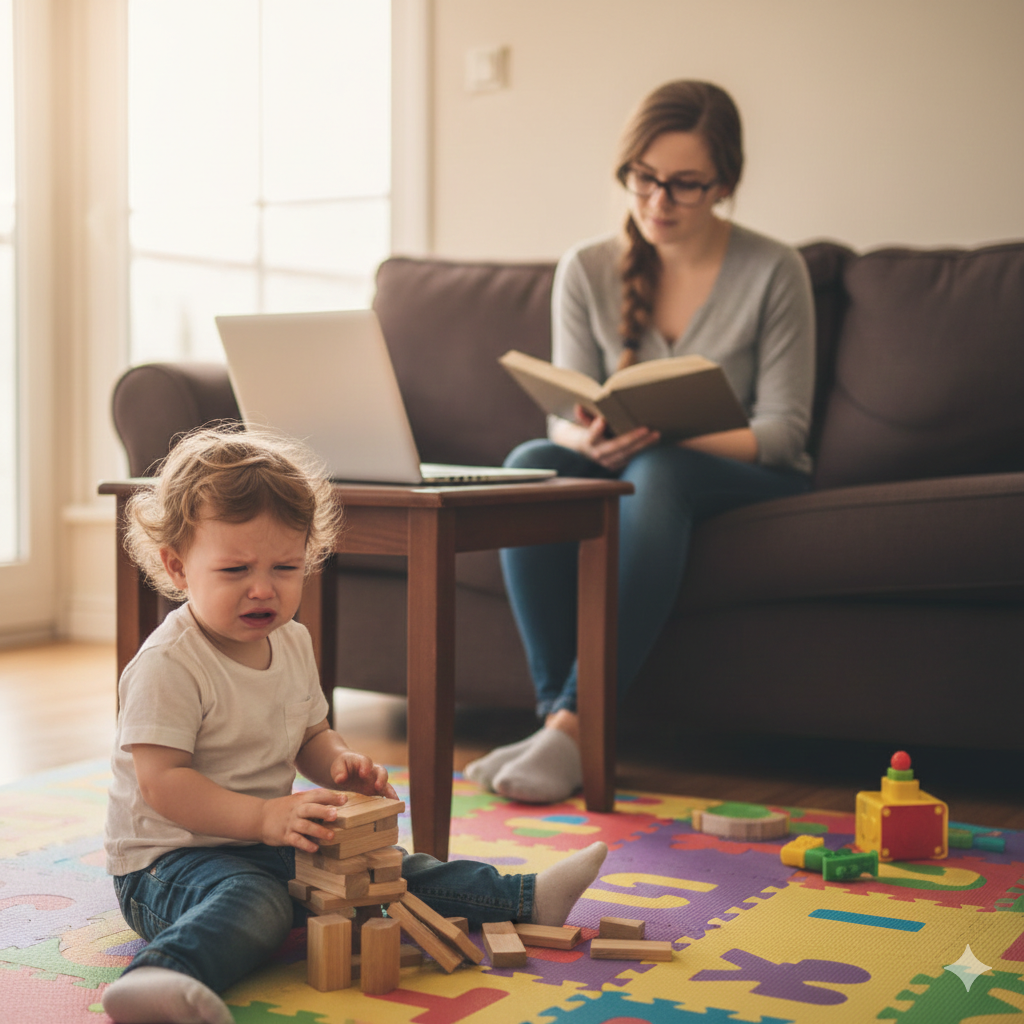
The Volcano in the Living Room
You told your son “no” to extra screen time, and now he’s in full meltdown mode on the floor. Your daughter didn’t make the team, and suddenly it’s like her whole world has collapsed.
One moment everything is fine, the next moment doors are slamming and tears are flowing. And if you’re being honest, you’re not exactly calm either.
You feel cornered, tense, and maybe a little ashamed. You know emotions are part of life, but does it always have to feel like you’re living with a human volcano?
Welcome to the world of emotional regulation, or more accurately, the lack thereof. Every child, no matter how well-raised, will face big emotions.
The question isn’t whether your kids will feel angry, disappointed, embarrassed, or overwhelmed. The question is what they will do with those feelings, and how you will help them grow through it.
This article isn’t about suppressing emotions. It’s about training them.
It’s about helping your child develop the inner strength to feel deeply without losing control, to face discomfort without imploding, and to communicate what’s going on inside with clarity and grace.
It’s the slow, messy, beautiful process of forming emotional intelligence. And it starts in your living room.
Emotions Are Not the Enemy
First, let’s stop treating feelings like enemies. They’re not. Emotions are data. They tell us something important: that something we care about has been threatened, lost, or changed.
Anger often signals injustice. Sadness reveals loss. Anxiety highlights uncertainty. Even jealousy is a clue that your child wants to belong.
Suppressing feelings doesn’t actually remove them, it just buries them deeper. And what gets buried often returns with more force later.
If your child doesn’t know how to express fear, they’ll act it out through avoidance. If they don’t know how to verbalize anger, it’ll come out in eye rolls, backtalk, or explosions.
Helping them bring emotions into the light is the first step toward forming the kind of self-mastery that adulthood demands.
But here’s the nuance, validating emotion doesn’t mean validating behavior. Your child can feel angry and not scream at their sibling. They can feel disappointed and not shut down.
Our role is to create a home where emotions are safe to feel, but still expected to be managed.
Name It to Tame It
A child who doesn’t have words for what they’re feeling is more likely to act it out than talk it out. That’s why emotional vocabulary is essential.
It gives kids power over their experience, not to manipulate, but to navigate. When children can say “I’m nervous” instead of just hiding in their room, or “I feel left out” instead of sulking for hours, they gain agency.
They’re no longer stuck inside the chaos, they’re starting to understand it.
This naming practice can begin surprisingly early. Even toddlers can learn to identify happy, sad, mad, and scared. As your kids grow, help them refine those categories.
Frustration is different from anger. Embarrassment feels distinct from shame. Disappointment, envy, guilt, these are the tools your child needs to understand what’s going on under the surface.
You can build this vocabulary together. Use books, movies, or bedtime conversations to reflect on how characters felt. Ask questions like, “Why do you think he acted that way?” or “How would you feel in her shoes?”
Over time, you’re not just increasing your child’s language, you’re training their inner awareness. And that awareness is the foundation for self-control.
The Power of the Pause
One of the most powerful tools in emotional regulation is the pause. It’s the small space between stimulus and response. And that space is where freedom lives.
That’s where your child learns, moment by moment, to choose rather than explode. And while it sounds simple, it’s one of the hardest and most transformative skills they’ll ever learn.
The pause isn’t about suppressing feeling. It’s about channeling it. Instead of letting an emotion run wild, your child learns to hold it in their hands, examine it, and then decide what to do next.
That’s real maturity. And it doesn’t come from lectures. It comes from practice. The pause might look like walking away from a sibling before saying something hurtful.
It might mean taking deep breaths before responding to a frustrating assignment. It might mean writing in a journal instead of yelling at a parent.
These small, concrete habits become the building blocks of interior strength. Give your child permission to pause. Let them know that stepping away to gather themselves isn’t disrespectful, it’s responsible.
And don’t just tell them. Show them. “I’m feeling irritated. I need a few minutes to calm down before we talk.” That sentence might be the most powerful thing they hear all day.
Connection First, Correction Second
Here’s where most of us struggle: we want to teach the right lesson now. Right after the door slam. Right after the shout. Right after the tears.
But a child in the middle of emotional flooding is not in a learning state. Their brain is in survival mode. Reason and logic are offline.What they need first is connection.
Not approval of their behavior, but the reassurance that they’re still seen and loved, even in the mess. “You’re really upset right now. I’m here.” “That was hard. I get it.”
You don’t need to fix it in that moment. Just anchor them with your calm presence. Once the storm has passed, then you correct. Then you explain what was out of line and why.
Then you walk them through a better response. But not before. Not while the amygdala is still lighting up like a fire alarm.
This sequence, regulate, then relate, then reason, builds trust. And trust makes discipline work. When your child believes you’re on their team, they’ll be more open to your guidance. Even after a meltdown.
Help Them Notice Their Triggers
Some kids unravel during transitions. Others lose it when they feel unheard. Some explode when they’re embarrassed or fail at something they expected to master.
These are their emotional tripwires, the moments when the emotional brain hijacks the rational one. Helping your child identify these triggers is a gift. It gives them a heads-up. A sense of agency.
They’re no longer blindsided by the same recurring situation, they’re starting to anticipate it, prepare for it, and eventually respond differently. You can do this gently, without accusation.
“Have you noticed that you get really upset when you don’t understand the homework right away?”
“It seems like crowded places really stress you out.”
“Transitions are tough for you sometimes, aren’t they?”
These aren’t judgments, they’re insights. And when you share them with warmth, they become building blocks of your child’s self-knowledge. That knowledge, over time, will grow into self-regulation.
Practice in the Calm Before the Storm
The best time to train emotions isn’t during a tantrum, it’s during calm moments when your child feels safe, loved, and open. That’s when you build tools.
Practice what to say when a sibling is irritating. Brainstorm how to respond when someone makes a hurtful joke at school. Talk through the feeling that comes up before they slam the door.
Make emotional reflection part of your daily rhythm. It doesn’t have to be deep or dramatic. Just consistent. One dad had a “daily rewind” routine at bedtime.
He’d ask, “What made you feel big today? What made you feel small?” Those simple questions gave his daughter a language for reflecting on her emotions, and an anchor for their relationship.
You don’t need a psychology degree. You just need presence. Time. And a willingness to sit with your child in their mess, helping them sort it out, one word at a time.
Shape the Response
Shame teaches kids that their emotions make them unworthy. That crying is weakness. That anger is bad. That fear is failure. But these messages don’t lead to maturity. They lead to secrecy, denial, and self-hatred.
Your job isn’t to eliminate emotion. It’s to shape the response. “It’s okay to be frustrated. But hitting isn’t how we solve problems.” “You’re allowed to be mad. But yelling isn’t how we talk to each other.”
These statements separate the feeling from the action. They affirm the humanity while setting a clear standard for behavior.
This boundary is where virtue grows. Because virtue isn’t the absence of feeling, it’s the ability to choose the good in the midst of it.
You’re not raising kids who never get upset. You’re raising kids who know what to do when they are.
Empathy Is Emotional Maturity’s Best Friend
Kids who grow in self-awareness are better equipped to grow in empathy. When they learn to recognize their own internal storms, they begin to recognize those storms in others. That’s the foundation of compassion.
Encourage your child to reflect on how others might feel.
“How do you think your friend felt when you left them out?”
“What do you think was going on in your teacher’s day when she seemed upset?”
These aren’t interrogations, they’re invitations. You’re helping your child build the capacity to step outside themselves and see someone else’s world. This isn’t just a social skill. It’s a spiritual one.
Because empathy opens the heart. It builds bridges. It creates relationships where love can actually grow. And in a world addicted to outrage and self-focus, kids with empathy will stand out like lights on a hill.
Your Regulation Becomes Their Model
Here’s the hard truth: kids don’t just listen to what you say about emotions. They absorb how you handle your own.
If you explode at traffic, snap during conflict, or simmer in passive resentment, they learn to do the same. If you breathe through stress, own your mistakes, and model calm in chaos, they see that too.
Your regulation becomes their training ground. And yes, that’s a lot of pressure. But it’s also an opportunity. You don’t have to be perfect. You just have to be honest.
Own your outbursts. “That wasn’t okay. I’m sorry. I lost my cool.” Celebrate your growth. “I was really frustrated, but I took a breath and handled it differently.”
These moments teach your child something no lecture ever could: that emotions can be mastered, not by ignoring them, but by meeting them with virtue.
Raising Calm Souls in a Noisy World
You’re not raising an emotionally detached robot. You’re raising a soul. A person. A future adult who will face rejection, fear, temptation, failure, and success, and will need to respond with grace.
Teaching your child to handle emotions without losing control isn’t a side project. It’s core formation. It’s part of teaching them how to love, how to forgive, how to persevere.
It happens in the spilled milk moments. In the sibling fights. In the panicked cries over forgotten homework. In the messy, beautiful chaos of everyday family life.
You’re not just helping your child stop yelling or crying or storming off. You’re helping them become the kind of person who can be fully alive, without being ruled by their reactions.
And in the process, you’re becoming that kind of person too.