“But Everyone Else Has One”
It starts innocently enough. A friend gets a new tablet. A cousin gets upgraded sneakers. A classmate shows up with a newer version of the same toy your child already has. Suddenly, the object that once lit up their whole world now sits untouched.
“But mine’s old.”
“It’s not as fast.”
“It doesn’t do the new thing.”
“Can’t we just get the better one?”
You pause. You want to say yes. It’s not outrageously expensive. You could swing it. And it would make them happy, at least for the afternoon. But something deeper tugs at you. Because this isn’t just about a toy.
This is about training the heart to be content.
We live in a culture that breathes dissatisfaction. Newer, faster, sleeker, shinier. Kids are taught early that joy comes from what’s next, not what’s here. And if we’re not careful, we’ll raise children who don’t just crave upgrades, they need them to feel okay.
This article is about resisting that drift. About choosing to form a heart that finds joy in enough. Because the toy still works. And when our kids learn to love what they already have, they gain something that no upgrade can offer: freedom.
When Good Is No Longer “Good Enough”
Every parent has watched it happen. A beloved toy that brought months of play is suddenly “boring.” A bike is “too small” even though it fits fine. A tablet is “slow” because it’s last year’s model.
They’re not being ungrateful on purpose. They’re just swimming in the same waters we are, commercials, influencers, classmates, trends.
Discontent is marketed.
But if left unchecked, that dissatisfaction grows into something more than consumerism. It becomes restlessness.
The kind that seeps into everything.
This house isn’t big enough.
This school isn’t exciting enough.
This friend isn’t cool enough.
This job isn’t satisfying enough.
The sooner we help our children push back against that tide, the more prepared they’ll be to find joy rooted not in more, but in meaning.
The Toy Is Just a Symbol
The issue is rarely the object itself. It’s the story that comes with it.
New equals better. Old equals broken. Everyone else has this. Why don’t we?
That narrative creeps into the imagination quickly. And it can only be countered with formation, not finger-wagging.
Instead of lecturing them for wanting more, invite them to look again.
What can that toy still do? What memories is it attached to? Who else in the world would be thrilled to have even one of these?
Reverence is taught in how we speak about things. Gratitude is caught by how we respond to lack.
A toy isn’t just plastic. It’s an opportunity, to either fuel comparison or cultivate contentment.
Don’t Demonize Desire, Discipline It
It’s okay that your child wants the new thing. That instinct isn’t evil. It’s human.
Desire isn’t the enemy. But it needs training.
When we treat desire like a mistake, kids learn to hide it, or feel ashamed. Instead, we want to teach them to govern their desires, not be governed by them.
That means helping them pause. Evaluate. Reflect.
Is this something I truly need?
Will this bring lasting joy or quick distraction?
Can I be happy without it?
These aren’t just good shopping questions. They’re life questions.
And the more we ask them out loud, the more natural they become for our children.
Not to eliminate desire, but to order it toward what really matters.
Joy Is a Skill, Not a Circumstance
Most kids think joy is a reaction to something fun or exciting. A toy. A surprise. A treat.
But real joy is something deeper. Something you carry, even when things are quiet. Even when the world says you should want more.
Joy is the skill of seeing beauty in what already exists.
The child who learns to find fun in last year’s toys is more likely to find joy in ordinary friendships, rainy days, awkward family dinners, and quiet Masses.
The teen who learns to wear the same jacket without shame is more likely to enter a room without needing to prove themselves.
The adult who can sit with “enough” will build a life on gratitude, not comparison.
That kind of joy doesn’t come from speeches. It comes from small, repeated experiences of being told: You don’t need the upgrade. The joy is already here.
Let Them Be Slightly Disappointed
This part is hard.
You want them to be happy. You want to say yes. You want to protect them from envy, from being the “only one” without the new thing.
But sometimes, the best gift is letting them sit in that disappointment, and not rescuing them from it.
Because disappointment is how we learn detachment.
It teaches that “no” doesn’t mean “you’re unloved.” That waiting isn’t suffering. That joy isn’t only for the ones who get what they want.
It also teaches them to be countercultural.
To say, “I still like mine.” To say, “I’m okay with this.” To say, “We don’t need to upgrade.”
That strength takes time. But it starts with allowing space for it to grow.
Don’t apologize for teaching it.
The Family Culture That Resists Upgrades
You don’t need to run an anti-materialist monastery. You just need to build a family culture where value isn’t based on novelty.
That starts with how you speak.
“This still works. That’s worth celebrating.”
“This toy has been through a lot with you. That’s pretty special.”
“You don’t need the newest to have the best time.”
It continues in what you praise.
Instead of praising the child for getting something new, praise them for taking care of something old. For sharing it. For finding new uses. For fixing something broken instead of tossing it.
And finally, it grows in what you model.
If you complain about your car, your phone, your home, your kids learn that old = bad. But if you speak with gratitude, even about inconvenience, they’ll learn a deeper truth:
Joy is not delayed by imperfection. It thrives in spite of it.
Let Them Re-Love What They Already Have
There’s a hidden joy in rediscovery.
When your child gets bored of something, don’t just replace it. Reintroduce it.
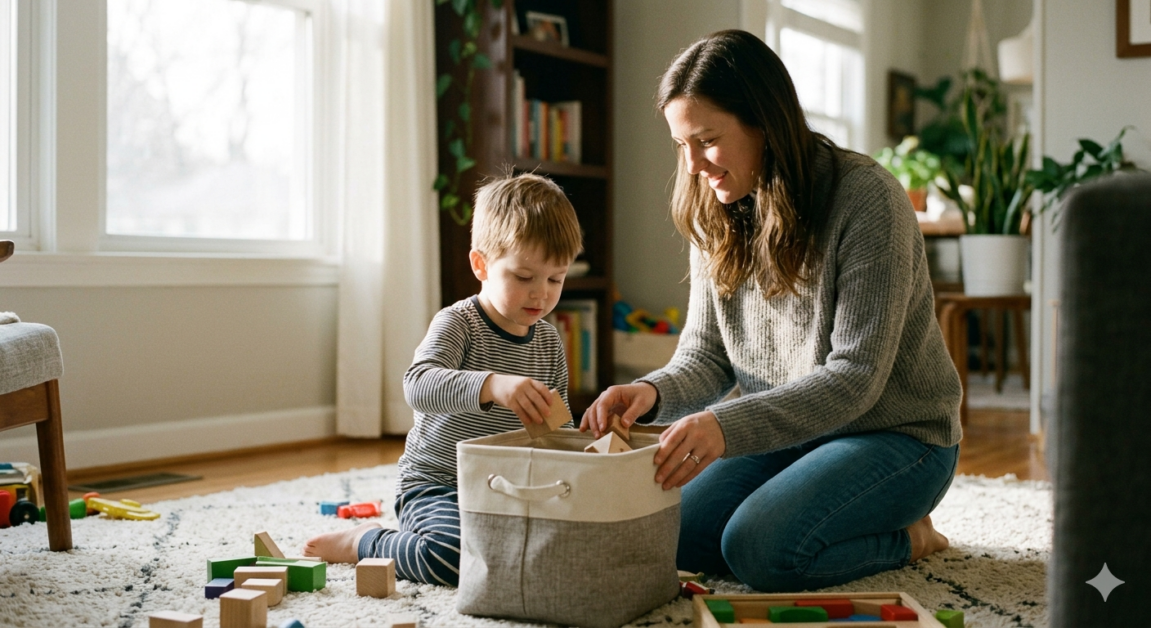
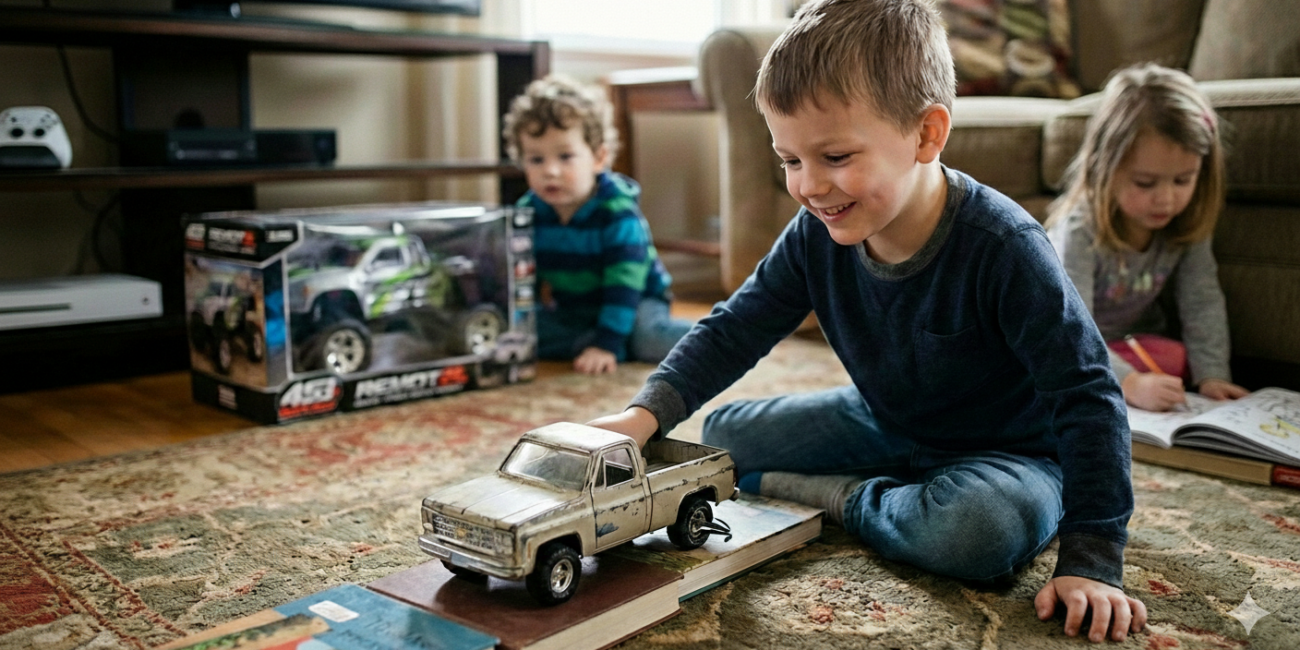
Pull it out from the bin. Sit with them. Ask what they remember about it. Make up a new game. Connect it to a new challenge.
Suddenly, the toy feels fresh, not because it changed, but because they re-engaged.
This doesn’t just save money. It saves imagination.
Because when kids learn to re-love old things, they learn to re-see the world. To adapt. To create. To build relationships that last. To work with what they have.
And that’s a life skill far more powerful than any Amazon delivery.
You Can Still Give Generously, Just Differently
This isn’t about never buying anything.
It’s about when and how you give.
Instead of reacting to comparison or pressure, give with intention. Make gifts meaningful. Occasional. Personal. Anchored in memory, not trend.
And when you do give something new, pair it with language of stewardship.
“This is a blessing. Let’s take care of it.”
“We’re not owed this, it’s a gift.”
“Let’s use this well. It’s not about having more, but doing more with what we have.”
That kind of language builds humility without guilt.
And it teaches them that joy can come from receiving gratefully, not just consuming constantly.
It’s Not About the Toy
At the end of the day, this isn’t really about plastic or batteries.
It’s about forming a child who doesn’t chase happiness. Who doesn’t need upgrades to feel loved. Who can walk into a world of marketing and competition and say:
“I’m okay.”
“I have what I need.”
“I don’t need to prove anything.”
That kind of detachment is rare. But it’s possible.
And it starts with moments as small as saying no to a new toy, and saying yes to the chance to grow.
The Gift of Enough
Your child doesn’t need the next thing.
They need you to show them that enough is beautiful.
That joy isn’t in the package. It’s in the play.
That love isn’t in the label. It’s in the laughter.
That worth isn’t in the upgrade. It’s in the ordinary, faithful use of what they already have.
Let them feel that. Let them learn that. Let them carry that into a world that will always try to convince them otherwise.
Because the toy still works.
And so does gratitude. And virtue. And simplicity.
And your child’s heart?
It’s being shaped right now, one unbought toy at a time.