“Should I Pick Them Up Again?”
It’s 2:00 a.m. The baby cries. You wait. Is it gas? Is it discomfort? Is it manipulation? (Wait, can babies even manipulate?) Your heart pounds. You want to swoop in, hush the noise, cradle the tension away.
But you also remember the advice, let them settle. Don’t rush in. They need to learn to soothe themselves.
And in that moment, conflicted, tired, and unsure, you ask the question every parent of a crying baby asks. Am I helping, or hurting, by not rescuing right now?
This article isn’t about sleep training versus attachment parenting. It’s not a parenting war manifesto. It’s a deeper invitation: to reflect on how we form a child’s sense of security, not just through comfort, but through presence, rhythm, and restraint.
Because not every cry is a crisis. And not every loving response is a rescue.
In a world obsessed with immediate gratification and total control, we need a countercultural parenting instinct, one that teaches babies to feel safe in the discomfort, not just after it.
One that teaches parents to respond with calm confidence, not anxiety.
One that roots security in presence, not panic.
Crying Isn’t the Problem, Our Response Often Is
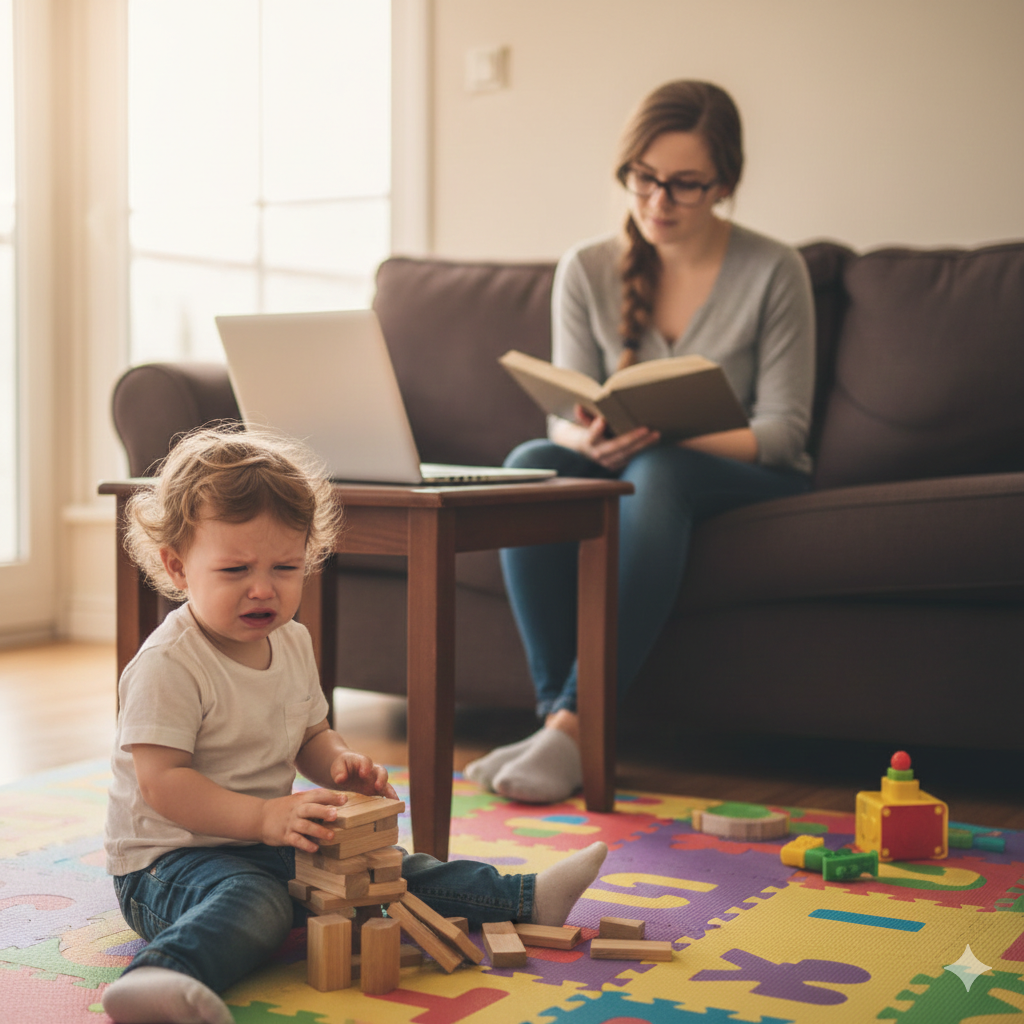
Babies cry. It’s their only language at first. They cry when they’re wet, tired, hungry, gassy, overstimulated, bored, scared. It’s not a malfunction, it’s communication. The question isn’t if they cry, but how we respond.
Some parents hear a cry and instantly feel they’re doing something wrong. Others swing to the opposite extreme and ignore it entirely.
But the best parenting often happens somewhere in between, when we’re attentive, not anxious. Responsive, not reactive. Present, but not panicked.
Because when we treat every cry as an emergency, we communicate to our baby that all discomfort is dangerous. And when we rush to fix, we teach them nothing about patience, rhythm, or trust.
But when we stay near, listen closely, and sometimes wait, we teach something powerful to the young one. You are not alone, and you are stronger than you think.
Rescuing Isn’t the Same as Loving
We often confuse rescuing with loving. If they’re crying and we don’t stop it immediately, are we being cold? Detached? Unloving?
No.
Love doesn’t always look like fixing. Sometimes it looks like staying. Observing. Trusting.
Your child doesn’t need a parent who eliminates all discomfort. They need one who models calm in discomfort. Because that’s the world they’re entering, a world full of friction, frustration, and waiting.
If we rescue them from every little discomfort now, we’re not forming peace, we’re forming panic.
A loving parent isn’t always the fastest one to swoop in. It’s the one who builds enough trust that the child learns to weather discomfort without fear.
You’re not ignoring your child when you pause. You’re showing them that you’re confident enough to stay steady, and that they can be, too.
The Gift of Rhythm and Predictability
Babies thrive on rhythm. Feed, sleep, wake, repeat. When those rhythms are consistent, their nervous systems begin to stabilize. They learn: I don’t have to cry louder, I can trust the pattern.
This is why rescue-mode parenting backfires. It teaches the baby that the world is unpredictable. That the loudest cry wins. That the only way to feel okay is to escalate.
But rhythm builds resilience.
When you give your baby a consistent pattern, feeding cues, bedtime routines, soothing rituals, they don’t need to cry as much. And when they do, they begin to cry differently, more honestly, more clearly, less frantically.
You’re teaching them: Discomfort comes, but it doesn’t last. You’re not alone. The world has order. You are safe.
That’s formation.
Letting Them Cry (Sometimes) Builds Self-Soothing
Self-soothing is one of the earliest and most important developmental milestones. It’s the ability to regulate emotions without immediate external help. And it doesn’t come from lectures, it comes from practice.
When you occasionally let your baby cry briefly before intervening, you’re not being negligent. You’re giving them space to discover what helps them calm down, fingers, thumb, blanket, rocking, humming, even silence.
And when they do? You’ve planted a seed that will serve them for years: I can handle big feelings. I don’t need the world to change for me to be okay.
This isn’t about leaving a child to scream for hours. It’s about watching with love, and waiting just long enough for them to stretch that emotional muscle.
Because like all strength, it grows through effort, not escape.
Reading the Cry, Not Reacting to It
Not all cries are the same. Part of your job as a parent is to learn your baby’s cry “vocabulary.”
The hungry cry: rhythmic, urgent, escalating.
The tired cry: whiny, fading, fussy.
The overstimulated cry: sharp, sudden, eye-contact avoiding.
The bored cry: short, spaced-out, half-hearted.
Over time, you’ll learn to distinguish them. And when you do, you’ll know when to respond instantly, and when to wait, watch, and let them settle.
This helps you build confidence as a parent, and it helps your baby feel understood, not just appeased.
You’re Not Training Detachment, You’re Training Trust
One of the biggest fears parents have is that letting their baby cry for even a few minutes will damage attachment. But attachment isn’t built in minutes, it’s built in rhythms, tone, and consistency.
Your baby learns you’re safe not because you rescue them instantly, but because you’re always there. Because you speak gently. Because you show up over and over again, in the big and small ways.
Letting them cry doesn’t break trust. It builds it, when it’s done with presence.
You’re still watching. Still listening. Still near. But you’re also letting them learn: I can handle this. I’m not alone. Mom and Dad trust me, and I can trust myself.
That’s not detachment. That’s secure attachment in action.
Responding Without Anxious Energy
Babies feel your tone before they understand your words. If you rush in frantic, they feel frantic. If you approach calm, they feel calm, even if they’re still upset.
So when you do respond, do it with steadiness. Don’t fling the door open, gasping, “It’s okay, it’s okay!” Don’t swoop and shush in panic.
Enter slowly. Speak softly. Make eye contact. Let your body say: You’re okay. I’m okay. We’re okay.
That tone becomes their inner voice. And one day, when they’re crying in a college dorm or in their first apartment or in a hospital room, they’ll remember it.
Because you didn’t just stop the crying. You taught them how to stand in it.
Making Space for Patience in the Parent
This isn’t just about forming the baby. It’s about forming you.
When you pause before rushing in, you’re building your own strength. You’re learning to trust your gut, not your fear. You’re giving yourself permission to be imperfect, steady, and human.
You don’t have to do everything right. You just have to show up, not always quickly, but always faithfully.
That rhythm will serve you later, too. When your toddler tantrums. When your teen sulks. When your adult child stumbles. You’ll already have the habit: don’t rush in. Be present. Stay steady.
And that presence? That’s what forms parents into pillars.
Building the Long-Term Vision of Security
Security isn’t built by removing every hardship. It’s built by being trustworthy in hardship.
Your baby won’t remember every night they cried. But they’ll remember what their nervous system learned: My parents are near. I am safe. I can handle distress. The world isn’t scary. I am not alone.
That foundation shapes everything. It becomes their compass. Their confidence. Their calm.
You’re not trying to raise a baby who never cries. You’re raising a child who doesn’t fear discomfort. Who doesn’t panic at the first sign of sadness. Who trusts that hard things pass, and love stays.
That’s a gift. A quiet, steady, invisible gift. But it lasts longer than the night.
Comfort Is Good, But Formation Is Better
In those early months, you’ll get it wrong. You’ll rush in when you didn’t need to. You’ll wait too long when they needed you sooner. You’ll second-guess and overthink and feel everything twice.
But if your compass is love, and your posture is steady, you’re doing it right.
Because the goal isn’t to eliminate crying.
It’s to respond in a way that forms strength, not just stops sound. It’s to let your baby feel held, even when they’re not being physically picked up. It’s to teach them that safety comes not from being rescued, but from being known, loved, and trusted.
So take a breath the next time the cry starts. Listen. Watch. Decide. Maybe they need you now. Maybe they need a minute. Maybe you both do.
Either way, you’re forming something beautiful, not just in them, but in yourself.
That’s parenting. Not rescuing. But raising.