The Cookie Conundrum
You ask your kid to take the garbage out. They do it, after three reminders, and then wait expectantly. “Can I get a cookie now?”
You smile, sort of. Because you’re proud of them for doing it. But also… isn’t this just life? Why does everything have to be a transaction?
Welcome to the reward-hungry world our kids are growing up in. Gold stars. YouTube likes. Gamified homework apps. Praise for breathing.
It’s a system wired to crave constant feedback, and it makes real perseverance feel almost alien.
But if we want to raise kids who can hold the line when nobody’s clapping, we’ve got to teach them something deeper.
That’s where grit comes in. Not hustle culture. Not burnout mode. Just plain, steady resilience: doing the right thing when it’s hard, thankless, or invisible. And the home is where it starts.
In this article, we’ll unpack how to raise kids who don’t expect a standing ovation every time they function.
Kids who understand that effort is its own reward. That the real prize is becoming someone strong, steady, and quietly excellent. No cookie required.
Grit Is Built in the Boring
There’s nothing glamorous about folding laundry or practicing scales for the hundredth time. That’s the point. Real grit grows in the mundane.
We often talk about grit like it’s forged in crisis, in setbacks, failures, or dramatic adversity.
And yes, those moments test character. But they don’t form it. Formation happens in the ordinary. The daily. The boring.
Kids build resilience when they do chores even when they don’t want to. When they finish the math worksheet without begging for a break.
When they stay kind to a sibling who’s being, well, a sibling. These moments don’t feel like moral triumphs. But they are.
Every time a child pushes through something dull, inconvenient, or uncomfortable, and does it anyway, that’s grit under construction.
And every time we swoop in with an immediate prize? We risk tearing down what they’re quietly building.
Stop Paying for What They Owe Themselves
Let’s be clear: celebration isn’t the enemy. We’re not saying “never praise.”
Encouragement is essential. But when reward becomes routine, motivation becomes external. And when motivation is external, character stays shallow.
Think of it like this: if your kid expects a cookie, sticker, or screen time bonus every time they act like a human being, they’re being trained to outsource their willpower.
They won’t choose right unless there’s a visible payoff. That’s a dangerous habit to bring into adulthood.
Instead, teach them that certain things are owed to themselves. Not in a guilt-trip way. But as a call to dignity.
“You made your bed not because I’ll cheer you on, but because your space deserves order.” “You told the truth not for a reward, but because honesty matters, even when no one notices.”
It’s not cold. It’s freeing. They begin to see their actions not as tokens to earn adult approval, but as habits that shape who they become.
Replace Praise with Purpose
So what do you say when they do something well? How do you affirm without accidentally reinforcing the reward trap?
You point to purpose. You anchor their effort to meaning, not cookies.
Instead of:
“Good job taking out the trash! You get extra screen time.”
Try:
“I noticed you took responsibility for something that helps our whole family. That’s real maturity.”
Instead of:
“You practiced piano, so let’s get a treat!”
Try:
“You showed up today, even when you didn’t feel like it. That’s how excellence grows.”
You’re not being stingy. You’re being strategic. Purposeful praise doesn’t coddle, it calls them up. It tells them: your effort has value, not just outcome.
Teach the Joy of Doing Hard Things
Here’s a radical idea: doing hard things can actually be satisfying. Even, dare we say, fun.
Kids aren’t allergic to difficulty. They’re allergic to meaningless difficulty. But when they understand the “why,” they’ll rise.
The human spirit is wired to meet challenge with fire. The trick is showing them how.
When your daughter struggles with a hard book, don’t just sympathize, celebrate the stretch. “This book is stretching your brain muscles. You’re building something that didn’t exist last week.”
When your son is asked to share his toy, don’t just bark “Be nice!”, narrate the virtue. “Sharing when it’s hard shows generosity. That’s real love.”
When the kids finish a long hike or clean out the garage, don’t say, “Glad that’s over.” Say, “Look what we can do when we don’t quit.”
Reframing hard things as good things flips the script. And the next time they face resistance, they might just smile and push through.
Create a Culture of Contribution, Not Consumption
Modern childhood is often steeped in consumption. Devices. Toys. Entertainment. Experiences.
Kids become passive recipients of stimulation, and the default question becomes: “What do I get?”
Counter that by building a culture where kids contribute. Not occasionally, but as a habit. As identity.
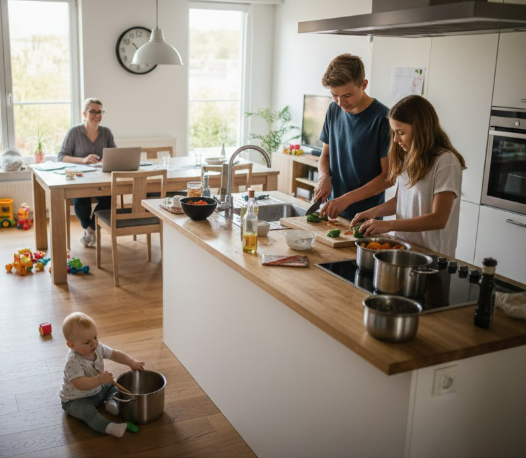
Make family life something they build, not just receive. Age-appropriate chores aren’t punishment, they’re participation.
Ask for help planning meals. Let them teach a younger sibling a new skill. Involve them in hospitality when guests come over.
When kids see themselves as contributors, they stop waiting for life to entertain them, and start shaping the world around them. That’s the beginning of grit.
Let Them Sweat, Struggle, and Start Over
You want to help. Of course you do. But grit needs friction. And if you cushion every stumble, correct every misstep, and smooth every path, they’ll never learn to walk when the road isn’t paved.
Let them forget the homework once in a while. Let them rebuild the Lego tower after it falls. Let them start over when they mess up the art project.
Then stay present, but don’t fix it.
“Looks like that didn’t work. What will you try next?”
“That’s frustrating. Want to take a breather and then try again?”
“You’re capable. Let’s see what you can do.”
That’s the tone of a grit coach, not a rescue helicopter. Your belief in their capacity will speak louder than a thousand safety nets.
Model Grit with Your Own Life
Kids don’t listen to half of what we say. They watch everything we do.
If you give up easily, complain constantly, or need applause to keep going, they’ll absorb that.
But if they see you waking early to exercise, finishing chores when you’re tired, sticking to goals even when no one notices, they’ll absorb that, too.
Talk out loud about your efforts. Not boastfully, but honestly.
“I didn’t want to make dinner tonight, but I pushed through. Feels good to get it done.”
“I messed up at work today. But I owned it and tried again.”
“I’m tired, but I’m still going to finish cleaning this room.”
They’ll see that grit isn’t some superhero trait. It’s daily effort. It’s quiet faithfulness. It’s human, and available to them, too.
Delay Gratification, Together
Grit and delayed gratification are cousins. They grow up in the same house.
Help your kids practice waiting. Not in punishing ways, but in purposeful ones.
Wait till the weekend for that dessert. Save up for that toy. Postpone that fun activity until the hard one’s done.
Then talk about how it felt.
“Wasn’t it more fun to watch the movie knowing your room was clean?”
“You didn’t spend your allowance right away. Now you can buy something you really want. That’s real freedom.”
You’re training their muscles of restraint, and showing that self-control unlocks real joy.
When They Quit, Don’t Panic
Quitting happens. Especially with kids. The important part isn’t the failure, it’s the follow-up.
Instead of lecturing:
“You always quit. Why can’t you stick to anything?”
Try investigating:
“What made you want to stop? What part was hard?”
“Was it boring, scary, or just not fun anymore?”
“What would you need to try again?”
Sometimes quitting is a moment of clarity. Sometimes it’s fear in disguise. Either way, it’s a teachable moment. The goal is to help them reflect, not retreat.
Let them try again. Or try something else. Just don’t let quitting become the final word on who they are.
Celebrate Grit Like You Celebrate Talent
If your child wins an award or scores the winning goal, you clap. Of course.
But what about when they study for the test and still get a B? Or when they lose the game but played their heart out?
Celebrate the grit as much as the win.
“I saw how hard you worked, that matters more than the grade.”
“You didn’t get the trophy, but you showed courage. That’s what lasts.”
This tells them: we care more about who you’re becoming than what you’re producing.
That’s not just encouraging. That’s identity-shaping.
Raise Builders, Not Reward Seekers
In a world obsessed with instant feedback, our kids don’t need more sugar-coated praise. They need guts. Resolve. Endurance.
The quiet confidence that they can do hard things without expecting a prize for showing up.
That starts at home. With habits. With language. With rhythms that reward virtue over victory.
They’ll whine. You’ll doubt. But over time, if you stay consistent, they’ll surprise you. They’ll take the trash out without asking.
They’ll keep going when no one’s watching. They’ll rise, not because someone handed them a cookie, but because they know they’re capable.
And one day, they’ll thank you, not with words, but with lives that stand tall and strong in a world that always wants to trade grit for gold stars.