Stop Rescuing, Start Raising
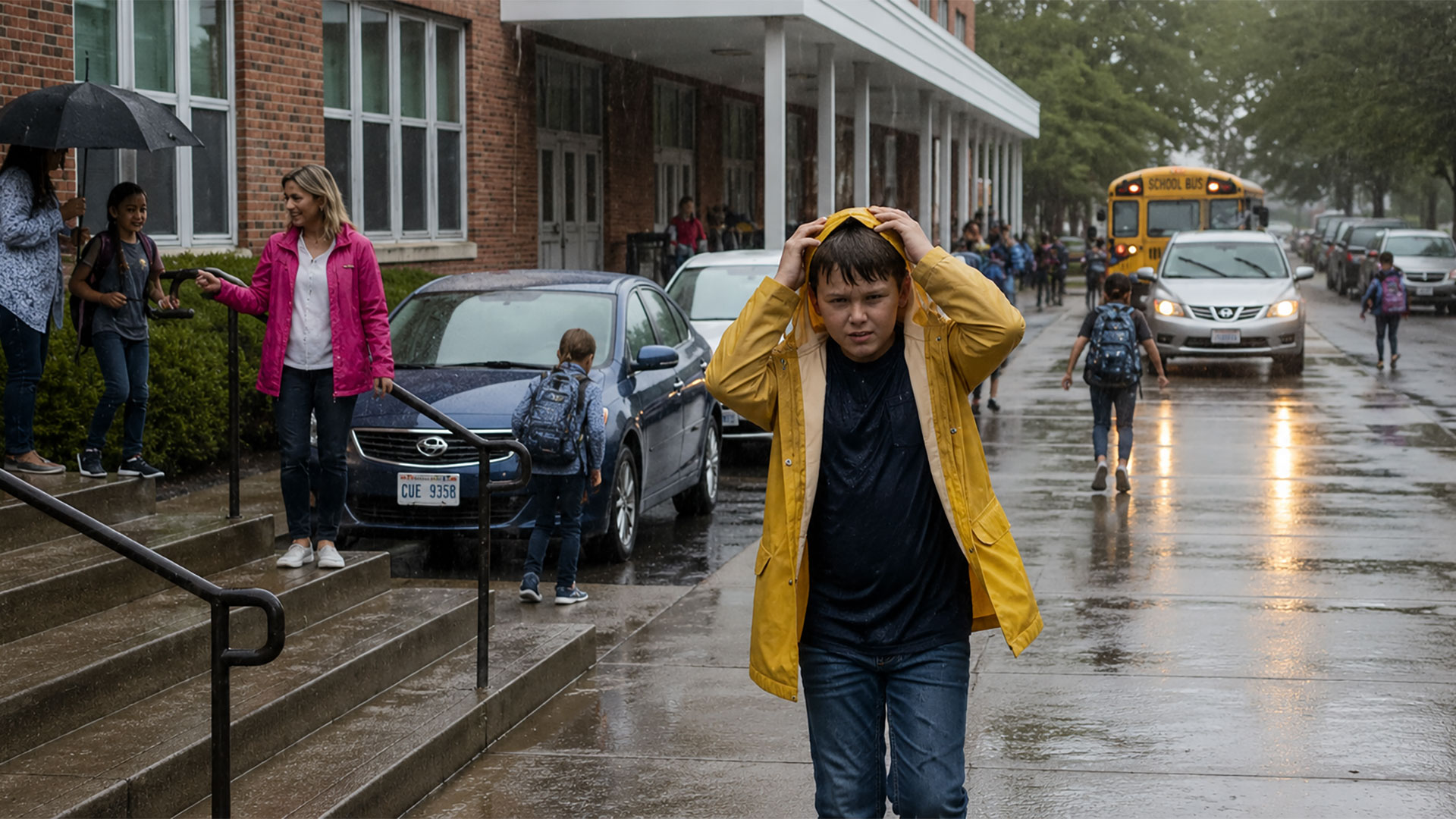
It was a regular Monday morning when my middle child discovered her shoes were still soaked from yesterday’s soccer practice. With exactly three minutes before the carpool left, she looked at me, holding the dripping sneakers like a soggy kitten.
I opened my mouth to say something, then closed it. This wasn’t my mess. It was hers. She shrugged, slid her feet into the squish, and sprinted out the door. I watched her go—wet, uncomfortable, but alive.
Here’s the deal: love doesn’t mean preventing every unpleasant moment. In fact, a lot of times, love means letting them feel it. Letting them mess it up. Letting them walk into a small storm they could’ve avoided with a little foresight.
Not because we don’t care—but because we care enough to raise someone who won’t need rescuing forever. Modern parenting tends to confuse love with intervention. We treat bumps in the road like sinkholes and forget that character is formed exactly in those messy moments.
Kids don’t grow when we solve everything. They grow when they survive the fallout of their own decisions and learn that the world didn’t end. That’s where confidence begins.
Why Failure Feels Scary (For Us)
Let’s be honest. We don’t just rescue them because they’re fragile. We rescue because we’re afraid. Afraid of how it looks. Afraid of what others will think. Afraid that one mistake will set off a chain reaction that ends in unemployment and a deep resentment of their childhood.
But usually, that fear isn’t about their future. It’s about our image. No parent wants to be the one whose kid forgets the costume on dress-up day or turns in the science project with peanut butter fingerprints.
We feel like their flubs reflect our worth. Their failures trigger our insecurities. And so, we overcompensate. We remind them ten times, we re-pack their bags. We sneak into school with the forgotten instrument, hoping no one notices us in our sweatpants and panic.
The irony is that in trying to look like we have it together, we’re slowly robbing our kids of the chance to develop actual togetherness—the kind that comes from stumbling, recalibrating, and doing better next time.
The Power of Micro-Failure
Failure, when served in small, safe doses, is one of the best parenting tools we’ve got. I’m not talking about watching your kid walk into traffic or learn to swim by being tossed into the deep end.
I’m talking about everyday, manageable failures—the kind you can survive with a bruised ego and a better plan. Forgetting their lunch? Let them learn what a hungry afternoon feels like.
Overspending their allowance? Welcome to personal finance 101. Turning in a late assignment? Nothing teaches time management like watching your grade drop.
These moments aren’t mean. They’re training. They build internal systems that no checklist, reminder app, or lecture can create. When a child realizes “that didn’t work,” and connects it to a concrete consequence, something essential clicks.
It’s not theory anymore. It’s life. Micro-failure helps develop foresight. The next time, they remember. Or at least they understand why remembering matters. And every time they get up after a stumble, their self-belief grows.
How to Let It Happen (Wisely)
There’s an art to stepping back. Not everything is a teachable moment. Not every failure is safe. Letting go doesn’t mean abandoning common sense or watching your kid sink when you could toss them a rope.
You start by asking: is this a safe place to fail? Is the price of the mistake something they can absorb without trauma? Is the pain just enough to teach, not to crush?
If so, you let it play out. And then you resist the urge to say, “I told you so.” You don’t rush in with a moral or a whiteboard diagram. You just sit beside them and say, “Tough day, huh?”
When they’re ready to talk, you ask, “What would you do differently?” You let them wrestle. You let them own the solution. Because if they can solve the aftermath, they’ve already grown stronger than they were yesterday.
You’re not cold or uninvolved. You’re the net beneath the tightrope—not the voice shouting instructions every two seconds. You’re the safe place they can crash into, not the helicopter hovering to prevent takeoff.
What They Gain from Getting It Wrong
There’s a certain grit that only comes from getting it wrong and surviving. Kids who never fail aren’t confident. They’re fragile. They’re waiting for the next rescue, terrified of what happens if no one shows up.
But kids who’ve failed and recovered? They walk different. They don’t panic when plans go sideways. They don’t crumble under a low grade or a forgotten chore. They’ve felt discomfort and learned that it’s not fatal.
That kind of resilience doesn’t come from pep talks. It comes from consequences. From small stings. From silent car rides and long walks home.
They also gain humility, because failure strips away the illusion of invincibility. It reminds them that growth is a process and that mistakes are part of that path.
They learn to admit when they’re wrong. They learn to laugh at themselves. They develop compassion for others who stumble, because they know what it feels like.
Failure also teaches responsibility. Not the kind that comes from nagging, but the kind that lives in the gut.
The quiet, internal voice that says, “I don’t want to feel that again. What can I do differently?” That’s the voice of maturity. And it only shows up when we stop shielding them from every bruise.
Messing Up Is a Gift
We all want to raise capable, thoughtful, resilient adults. But the road to that outcome is paved with scraped knees, forgotten projects, and learning the hard way.
Controlled failure—real, unbuffered, age-appropriate failure—isn’t cruel. It’s the workshop where grit and courage are built. It’s where self-knowledge grows. It’s where kids figure out what they can handle—and what they still need to work on.
So let them bomb the quiz they didn’t study for. Let them go to practice in damp cleats. Let them feel the sting of a missed deadline or a misjudged moment. Then be there. Not to rescue, but to walk alongside.
Our job isn’t to protect them from every fall. It’s to make sure they learn how to get back up—and to believe that they can.
Courage grows in the gap between mistake and rescue. Let them sit in that gap a little longer. That’s where the transformation happens.