When the To-Do List Becomes the Whole Job
You wake up to a full plate: pack lunches, find the missing cleats, respond to school emails, pay that bill you forgot, and finally replace the lightbulb your spouse mentioned last week.
The carpool schedule feels like a military operation.
Dinner is a relay race between leftovers and drive-thru.
Everyone’s alive, mostly on time, and doing okay. But at the end of the day, you wonder: Is this it?
You’re not neglecting your family. You’re doing everything for them. But somehow, it still feels hollow. Like the days are full but the meaning is thin. The rhythm of family life starts to feel like a treadmill, constant motion, no direction.
This article is about how easy it is to confuse running a household with raising a family. And how rediscovering your role, not as manager-in-chief, but as legacy-builder, can shift everything.
Because you weren’t made to just get through the week. You were made to lead your family toward something eternal.
The Trap of the Manager Mindset
Modern family life runs on logistics. Calendars, group texts, school portals, extracurriculars, dentist appointments. There’s no getting around it. But when logistics become the main thing, they start to define the mission.
The result? Families that are efficient but exhausted. Structured but spiritually starving.
You become a project manager, not a parent. You wake up thinking about drop-offs and permission slips instead of virtue and vision. You spend your best energy on coordination, not connection.
And worst of all, you begin to mistake movement for meaning.
The goal of family life is not to execute plans. It’s to form people. And people don’t just need rides, they need reasons.
They need to know what this family stands for. What it exists to do. Where it’s headed. And that requires more than management. It requires leadership.
You’re Not Raising Kids, You’re Building a Culture
Families aren’t just groups of people who share a home. They are cultures, small civilizations with their own language, values, expectations, and memory.
And like any culture, your family is always being formed. The only question is: formed by what?
If your days are shaped only by external pressures, school demands, work schedules, activity rosters, your family culture becomes one of survival. “Just get through today.” “We’ll reconnect later.”
But if your days are shaped by an internal mission, you begin to lead. You begin to say, “In this house, we…,” and you finish that sentence with truth.
We pray together.
We serve each other.
We rest on Sundays.
We speak with respect.
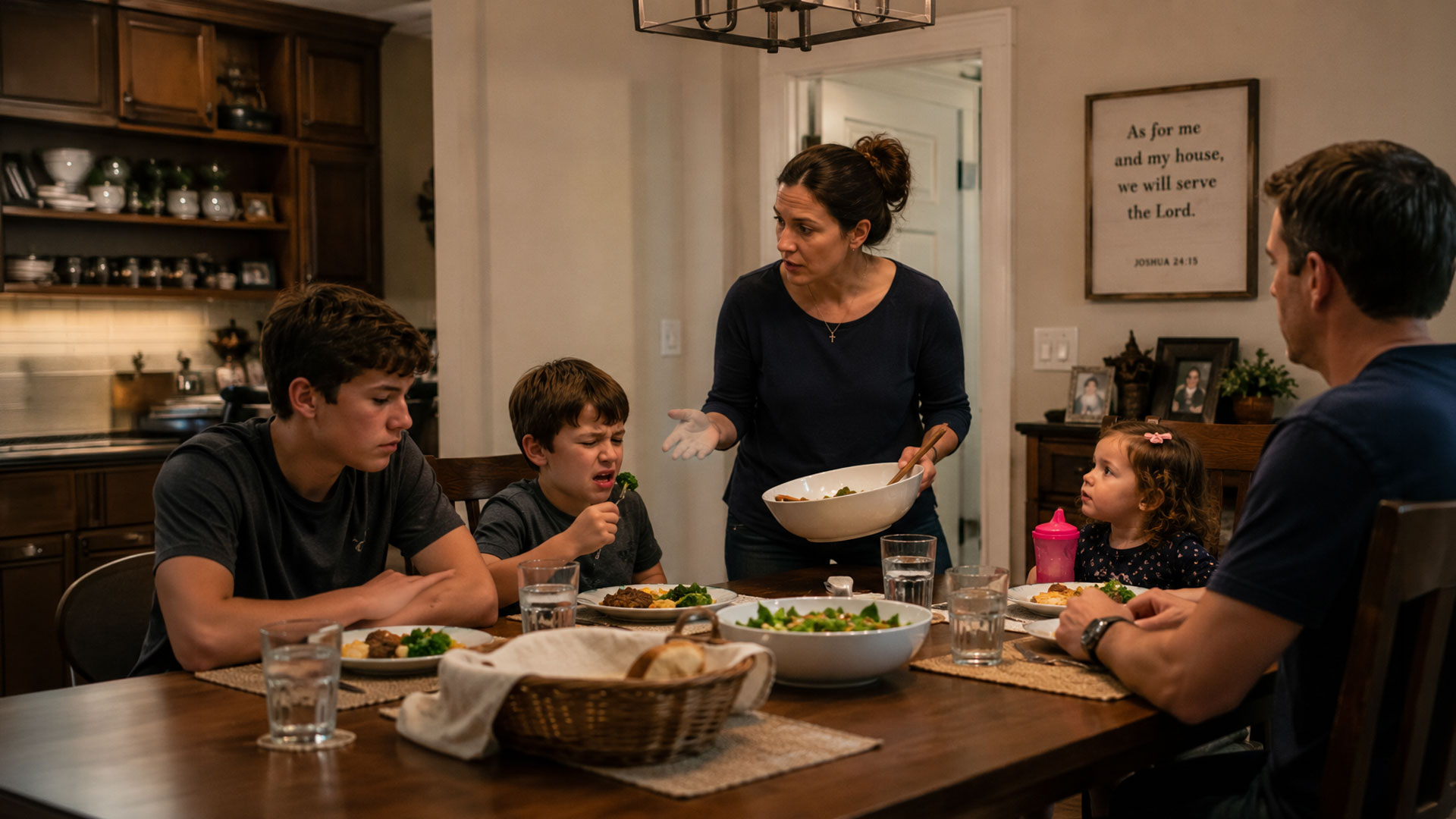
We eat at the same table.
Those values don’t appear out of nowhere. They have to be led. And that’s your job.
When You Only Aim for Efficiency, You Lose Formation
Efficiency isn’t a bad thing. It can save time, reduce stress, create clarity. But it makes a terrible god.
When you make efficiency your top priority, formation takes a back seat. Conversations get rushed. Rules get enforced without explanation. Opportunities for correction or encouragement get skipped because “we don’t have time.”
Kids become items on the checklist: get them there, get them fed, get them quiet.
But formation doesn’t run on speed. It runs on rhythm. On presence. On margin.
You can’t microwave virtue. You can’t text-message character. You have to live it with them, over time, with patience.
And that means slowing down. Not everywhere, not always, but enough to make room for what matters most.
What Legacy Actually Means
We often think of legacy as something financial. A will. A trust. A house passed down. But your real legacy isn’t something you leave behind, it’s something you plant now.
Legacy means forming habits and memories that live longer than you. It means raising kids who remember more than rules, they remember love, sacrifice, direction, identity.
Legacy is when your son opens the Bible because he remembers seeing you do it every morning.
When your daughter stands up for someone because you taught her what courage sounds like.
When your kids raise their own children with structure, prayer, and joy, not because they were told to, but because they know how.
Legacy is not what you give. It’s what you form.
And the way you live as a parent, especially when no one’s watching, is forming that legacy every single day.
Signs You’re Managing More Than Leading
Sometimes the shift from leader to logistics manager happens so gradually, you don’t even notice. But there are clues:
You’re constantly in a rush, even at home.
Conversations are mostly about schedules, grades, and reminders.
Faith formation feels squeezed in, not built in.
You feel more like a personal assistant than a parent.
Your kids are “doing well” by the world’s standards, but you don’t feel deeply connected to them.
These aren’t failures. They’re invitations. They show you where to pause, where to ask, “Are we aiming at the right thing?”
Because a full calendar doesn’t mean a full heart.
And a well-managed household doesn’t mean a well-formed family.
Start Leading With the End in Mind
What do you want your child to remember about their childhood?
That you were always on time? That every recital went perfectly? That every lunch was Pinterest-worthy?
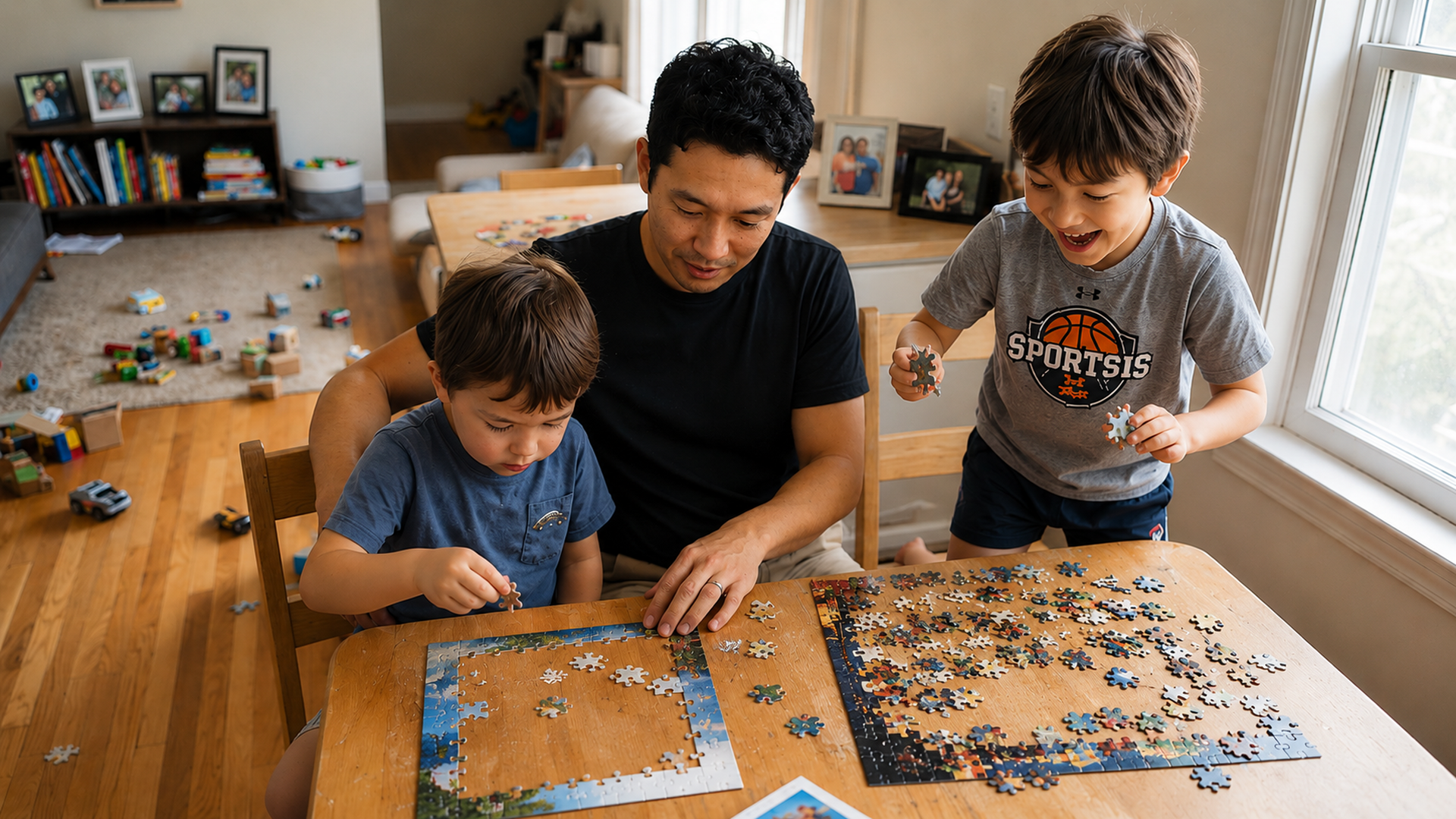
Or that you were present? That they were known and loved? That your home had a mission?
Start with the end. Picture your child at 25. What do you want them to be like? What do you want your relationship with them to feel like?
Now reverse-engineer that vision.
If you want them to be faithful, how are you modeling trust in God today?
If you want them to be kind, how are you correcting without sarcasm or shame?
If you want them to love family life, how are you making the home a place of peace?
You don’t need to be perfect. You need to be intentional.
Leadership is about holding that long-term vision, and taking small, faithful steps toward it, even when it feels like no one notices.
Build Rituals That Reflect Your Mission
One of the simplest ways to shift from logistics to legacy is to build rituals that embody your family’s values.
Not rules, rituals. Regular, repeated moments that express who you are and what you’re about.
Like:
Lighting a candle before family dinner and saying a short prayer.
Having a weekly Sabbath walk together.
Choosing one night a week for family-only time, phones off, faces up.
Holding a five-minute Sunday meeting to set intentions for the week.
These don’t have to be perfect. They just have to be yours.
When kids experience rituals, they internalize rhythm. They begin to feel: “This is who we are. This is what we do.”
That’s how identity is built. Not through lectures. Through rhythm.
Talk About the “Why”, Not Just the “What”
Managing a household often means giving a lot of instructions. “Pick that up.” “Do your homework.” “Clean your room.” It’s efficient.
But if your family only hears what to do, and never why, they’ll comply without understanding.
And eventually, they’ll stop caring.
Leadership takes the extra moment to explain. Not in a long-winded way, but in a way that connects the action to the mission.
“We clean up after ourselves because this house belongs to all of us.”
“We go to church every Sunday because we belong to God first.”
“We say thank you because gratitude changes the way we see everything.”
These moments take five seconds. But they echo for decades.
Your tone shapes your child’s conscience. Speak like a leader, not just a list-maker.
Lead by Living It First
You can’t fake leadership in the home. Kids are the best lie detectors in the world.
If you want to lead with purpose, you have to live with purpose.
That means being the first to apologize. The first to turn off your phone. The first to protect prayer time. The first to ask forgiveness when you snap.
Legacy doesn’t come from perfect behavior. It comes from consistent example.
When your child sees that you’re aiming at something bigger than busyness, that you care about character, not just appearances, they’ll follow.
Not because you said so. Because they see so.
When It Feels Like It’s Too Late
What if your family has been running on logistics for years? What if the teens are distant, the routines are dry, the culture feels stuck?
It’s never too late to lead.
Start with a conversation. Gather your family and say something honest:
“I’ve realized we’ve been running hard, but I want us to slow down and grow closer. I want this family to feel like a team again. Not just a place where we get things done.”
You don’t need a full plan. Just start.
Pick one thing to change. One moment to protect. One value to reclaim.
And then be consistent.
Culture shifts slowly. But it shifts.
And when your kids see you fighting for the soul of your family, even late in the game, they’ll remember.
Because leadership is noticed most when it’s needed most.
The Mission Isn’t Done at Drop-Off
You weren’t made to just drop your kids off at school, sports, and youth group while you juggle bills and meal prep.
You were made to lead them.
Not as a CEO. Not as a drill sergeant. But as a guide. A shepherd. A witness to the beauty and purpose of family life.
Your leadership won’t be perfect. But it will matter.
Because your kids are watching. Listening. Learning. Every rushed evening. Every small tradition. Every quiet apology.
They’ll forget most of the logistics. But they’ll remember the legacy.
So stop running the house like a task list. Start living it like a mission.
Speak like a leader. Live like a witness. Love like it’s eternal.
Because it is.