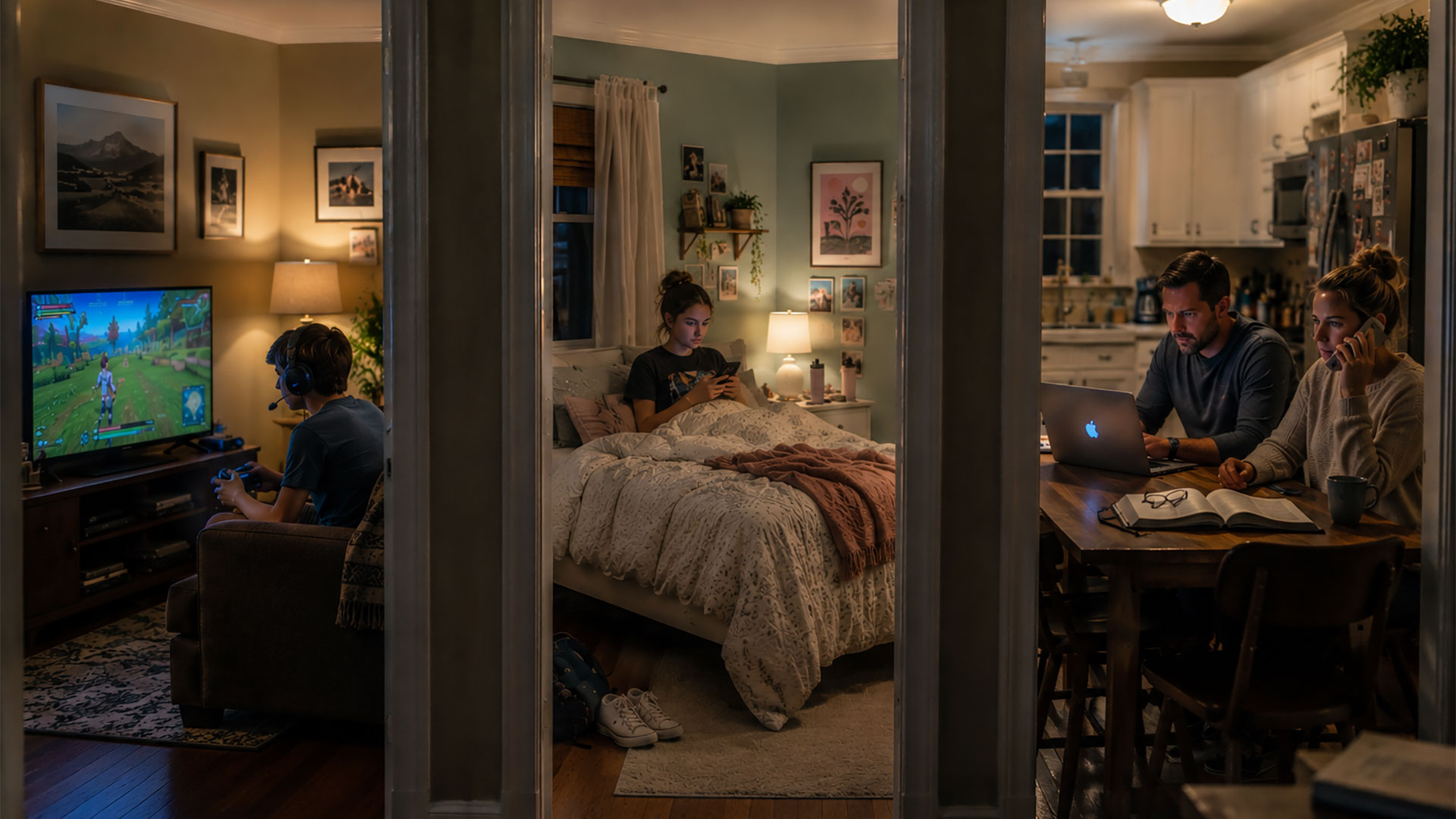
The Modern Family Evening
It’s 7:30 p.m. The workday is done. Dinner was inhaled. The dishwasher hums.
One kid is in their room scrolling. Another is playing Xbox with a headset on. Your spouse is reading the news on a tablet. You’re catching up on emails on your phone.
No one is fighting. No one is asking for anything. It’s peaceful. But you pause for a moment and wonder: Where is everyone?
The house is full, but it doesn’t feel like family.
You call it a night, everyone eventually wanders off to bed, and the next morning the routine resets. School, work, food, screens, sleep. Repeat.
This is not chaos. It’s not brokenness. It’s something more subtle, disconnection disguised as peace.
And it’s a symptom of something deeper: we’ve stopped sharing time. We’ve stopped gathering. We’ve allowed a gentle drift to take over our evenings, until what was once family time became individual time with shared Wi-Fi.
This article is about why that matters, and how to pull the family back into one room again, not out of guilt, but out of mission. Because what happens on Tuesday night forms your family far more than you think.
The Silent Drift of Together-Apart
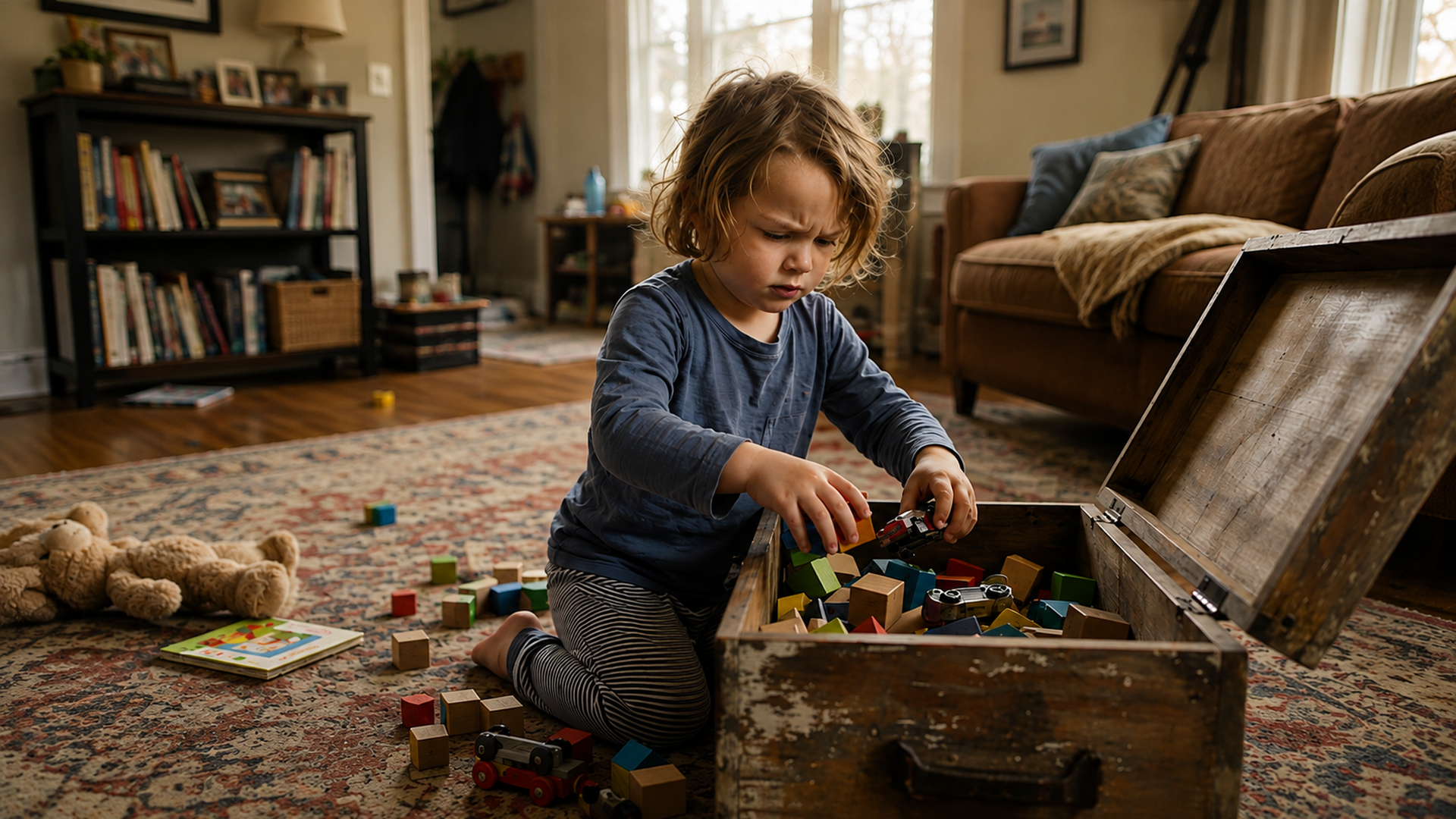
Most families don’t plan to separate. It just happens. One child needs to finish homework. Another needs to “chill” after practice. You need quiet after a long day. There’s nothing dramatic about it, it’s just what everyone needs.
But that low-grade drift, night after night, becomes normal. And then normal becomes identity.
Your kids grow up remembering the house as quiet. Not intimate. Functional. Not formative. Everyone was nice. No one was rude. But the glue was missing.
Because connection doesn’t happen by default. It happens by design.
And most modern homes are no longer designed for connection. They’re designed for customization. Personalized rooms, personalized playlists, personalized content. Everything is set up to serve the individual.
Which means no one feels the need to come together anymore.
Unless we create that need, and protect it.
Presence Is the Culture
What you consistently do as a family becomes your culture. And the culture that forms at night is often the strongest one.
Mornings are rushed. Afternoons are scattered. But evenings? That’s when presence is possible.
And if your evening pattern is everyone in their own space, doing their own thing, that becomes the unspoken rule of the home. “We retreat. We isolate. We check out. Togetherness is optional.”
But when you create moments, planned or spontaneous, that bring the family together, something shifts. You form a culture that says, “We belong to each other. This house is not a collection of roommates. It’s a home.”
And that culture doesn’t just shape the evening. It shapes the conscience. The memory. The identity of your children.
Screens: The Great Separator
This isn’t a screen-time rant. But it’s worth naming the obvious: technology has made it easy, too easy, for families to escape each other.
Everyone has their own device. Their own content. Their own schedule. Their own world. Even if you’re in the same room, you’re often in different realities.
And the result is emotional isolation in plain sight.
You may not even realize it until you look up and notice that no one’s talked in an hour.
The answer isn’t banning devices. It’s creating boundaries, clear, predictable, meaningful ones.
Like: “After dinner, we’re together.” Or “No phones between 7:00 and 8:00.” Or “One show, one couch, one family.”
When screens are always the default, people are no longer the priority.
And if you want to form souls, not just entertain brains, you need to fight for presence.
What Happens in a Shared Room
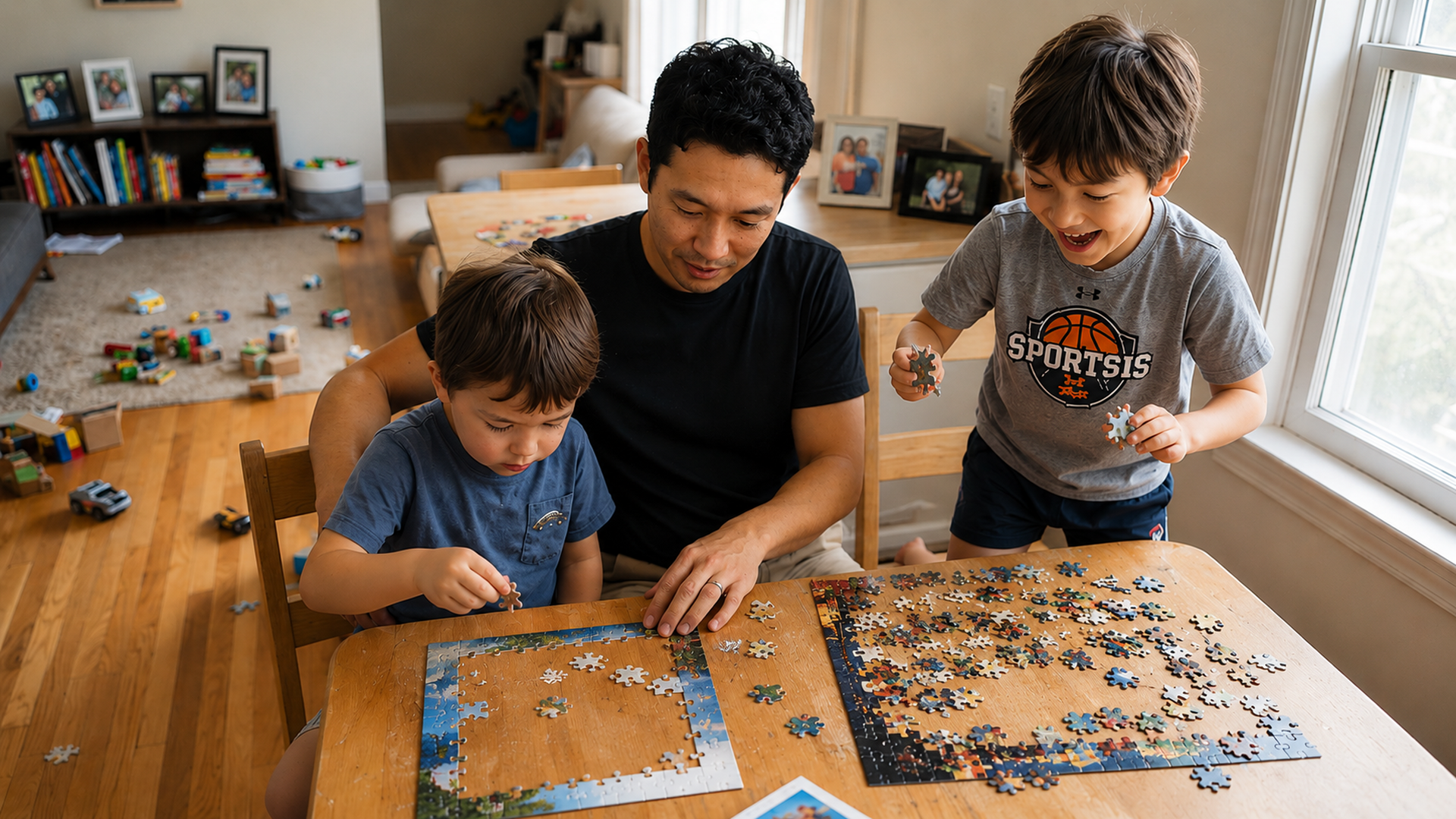
Bringing the family into the same room isn’t about forcing conversation. It’s about allowing it.
When people share physical space, the invisible things begin to form:
Body language.
Eye contact.
Shared jokes.
Unscripted moments.
The quiet comfort of being seen.
Kids don’t always want to talk. But when they’re in the same room as you, they feel your love, even in the silence. And when they do want to talk, they’re already close enough to start.
The family room, the kitchen, the table, these aren’t just places. They’re invitation zones. The more time your family spends in them, the more those little micro-moments of connection can happen.
You don’t need big talks. You just need shared space.
When They Resist (Because They Will)
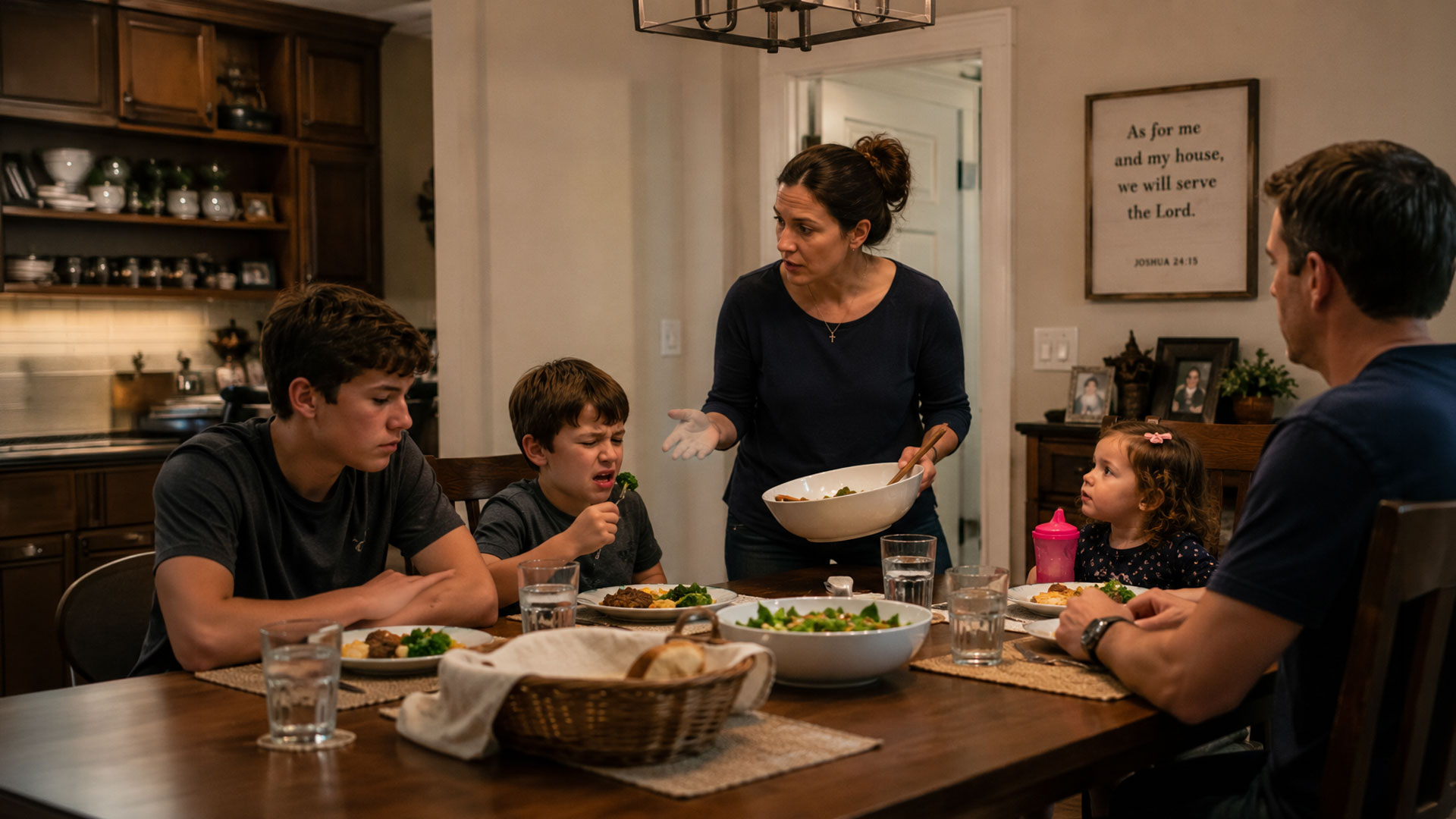
You call everyone into the living room for family time. One rolls their eyes. Another asks, “Do I have to?” Someone else says they have homework.
You’re tempted to cave. To say, “Fine, whatever, maybe tomorrow.”
Don’t.
Hold the line.
You can say, “Yes, I know it’s a shift. I know it’s awkward. But this matters. You matter. We’re going to be in the same room for a bit. You don’t have to perform. You just have to show up.”
The goal isn’t perfect behavior. It’s presence. And resistance doesn’t mean it’s not working. It means you’re swimming upstream, which is exactly what formation requires.
Kids resist what stretches them. But they also respect it.
They may not thank you now. But they’ll remember that you fought for family, even when it was easier not to.
Start Small and Stay Consistent
If your family hasn’t shared space consistently in a while, don’t go full throttle. Don’t declare “Game Night Every Night Forever.”
Start with one night. One meal. One show. One walk.
Then make it a rhythm.
Maybe Tuesdays become “together night.” Phones off. Everyone in one room. Nothing fancy, just presence.
Over time, that rhythm becomes identity. Your kids know: “This is what our family does.”
And when they move out, start their own lives, and think back on their childhood, it won’t be the individual memories that shape them most, it’ll be that rhythm.
That sense of belonging. That knowledge that there was always a place to be, together, without performance.
What About Teenagers?
Teenagers love their rooms. Their phones. Their space. And that’s developmentally normal. But even teens need tethers. They need rhythms that bring them out of themselves.
You don’t need to be their best friend. You need to be the steady presence that says, “You belong here.”
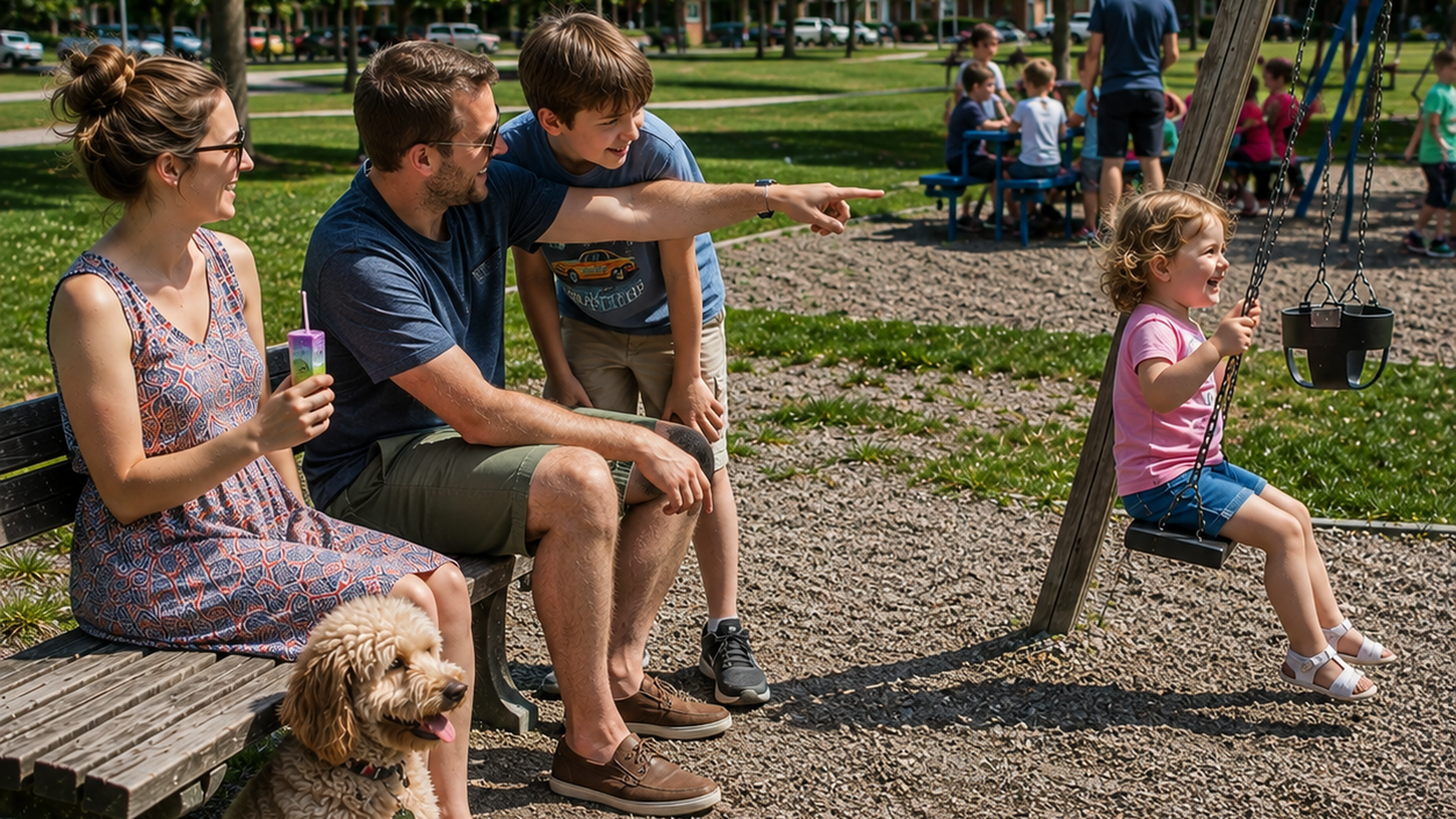
Invite them into shared space. Let them pick the movie. Sit on the floor and talk about their interests. Ask questions with no agenda. Let the moment breathe.
Teenagers won’t always give you the warmth you want. But they’ll notice your effort. And deep down, they want to be known, even if they can’t admit it.
Keep showing up. Keep inviting. Keep making room. They may not come every time. But they’ll know the door is open.
And that matters more than you think.
What You’re Teaching Without Saying a Word
When your family gathers, even quietly, you’re forming deep beliefs. Your kids are learning:
I don’t have to perform to belong.
My presence matters.
Home is a place of welcome.
Being known is better than being entertained.
These truths sink in slowly. But they shape everything.
In a world of noise and distraction, families that gather are radical. They are countercultural. They are formational.
You’re not just reclaiming a Tuesday night. You’re reclaiming the idea that home is the center, not a pit stop between commitments.
That’s powerful.
The Role of Ritual
Families need rituals. They need small, predictable things that anchor them.
Even simple ones:
A shared prayer before bed.
One show you always watch together.
Ice cream every Sunday night.
Talking about your highs and lows of the day.
Sitting together for 10 minutes before everyone scatters.
These moments are the bricks that build connection.
You don’t need eloquence. Just presence. Just rhythm. Just the quiet commitment to keep showing up.
Ritual is where love becomes visible.
Why This Matters Long-Term
One day, the house will be quiet, not because everyone’s in different rooms, but because they’ve moved out.
And what they carry with them will be the culture you formed.
They’ll remember the living room where you laughed. The silence you shared. The rhythm of presence.
And when they build their own families, they’ll imitate what they knew.
They’ll gather their children. Turn off the screens. Light a candle. Say a prayer. Watch a movie. Tell a joke. Sit in silence.
And it won’t feel like a chore. It’ll feel like home.
That’s the legacy.
The House Is Full, Let the Heart Be, Too
It’s Tuesday night. Everyone’s home. The doors are closed. The lights are on. The fridge is stocked.
But the question remains: Are we together?
Not just physically, but emotionally. Spiritually. Formationally.
Because your child isn’t just learning from what you say. They’re learning from what you prioritize.
If you want them to know they belong, bring them into the same room. If you want them to feel seen, sit where they are. If you want them to form habits of presence and connection, give them that rhythm now, before the noise of life tells them they don’t need it.
You don’t have to do something extraordinary tonight.
You just have to be there.
Same room. Same moment. Same family.
And trust that in that small act of presence, God is forming something eternal.